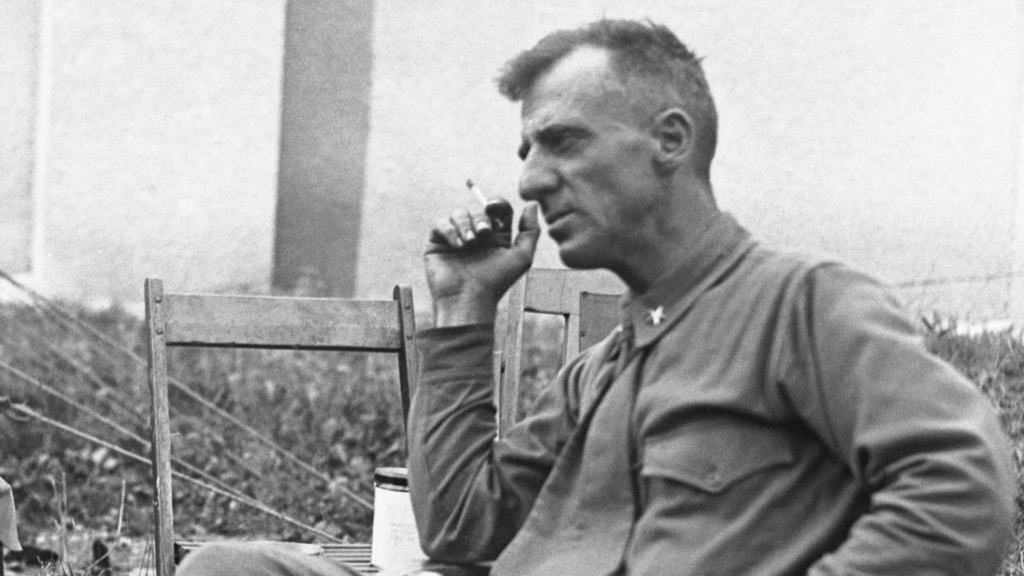
Smedley Butler: Marine Legend Turned War Critic

Smedley Butler is a Marine legend and one of the most decorated Marines in history, yet he is relatively unknown to most Americans. Unless you are part of the Marine Corps or a history enthusiast, you may have never heard his name. Why is that?

One main reason is his dramatic shift in views on war. Butler transitioned from being a two-time Medal of Honor recipient to becoming a vocal anti-war critic—a significant change. He played a crucial role in exposing what we now refer to as the Military-Industrial Complex. As a result of this shift, his contributions have been largely overlooked in history.

In this article, we will explore Smedley Butler’s life, his military service, and his book, “War is a Racket.”

Early Life: Quaker Roots and a Thirst for Adventure

Smedley Darlington Butler was born on July 30, 1881, in West Chester, Pennsylvania. He was the eldest of three sons in a family deeply rooted in Quaker traditions of pacifism, non-violence, and moral integrity. His parents, Thomas Butler and Maud Darlington, provided him with a privileged upbringing. Thomas Butler was a lawyer, a judge, and a long-serving U.S. Congressman from Pennsylvania (Republican, 1897–1928). He also chaired the House Naval Affairs Committee under Presidents Harding and Coolidge. Their home is now recognized as a historic landmark.

Butler’s maternal grandfather, Smedley Darlington, also served as a Republican Congressman from 1887 to 1891. Samuel Butler, his paternal grandfather, was a prominent figure in the Pennsylvania state legislature and served as state treasurer from 1880 to 1882. This political legacy exposed young Butler to the world of public service. His Quaker heritage added an ironic dimension to his path, emphasizing peace and empathy for the underdog—qualities that fueled his anti-war advocacy.

High School and Path to Enlistment

Butler attended West Chester Friends Graded High School and the elite Haverford School, a Quaker-affiliated institution for Philadelphia’s upper class, where he excelled in athletics as baseball captain and football quarterback, overcoming early physical frailty through determination. He sharpened his public speaking skills with a shocking performance that hinted at his dynamic, profane style in later speeches. Despite his father’s disapproval, Butler was so outraged by the explosion of the USS Maine in 1898 that he lied about his age and enlisted in the U.S. Marine Corps at the age of 16. He received a direct commission as a second lieutenant on June 10, 1898. Haverford awarded him a diploma retroactively on June 6, 1898, for completing the scientific course “with Credit.” This impulsive decision marked the beginning of a 34-year career that would take him across the world, blending heroism with growing skepticism.
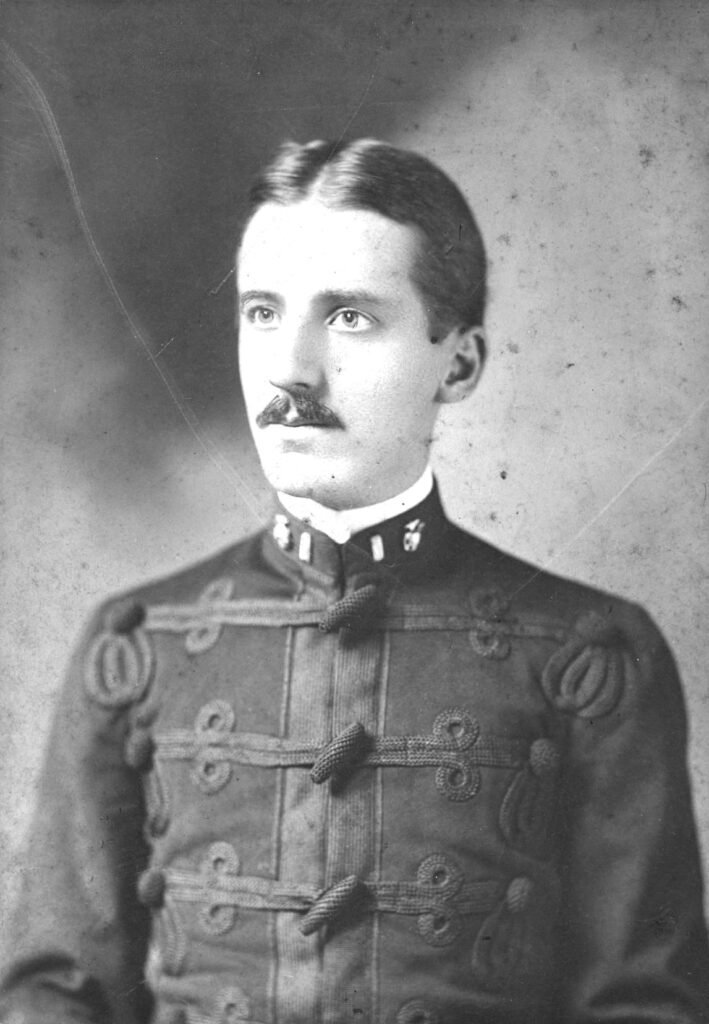
Early Photo of Lt Smedley Butler

Military Career: Bravery, Innovation, and Emerging Doubts

From 1898 to 1931, Butler served in nearly every major conflict involving the U.S., earning the title of the most decorated Marine in history by the time of his death. He received a total of 16 medals, including two Medals of Honor, the Marine Corps Brevet Medal, the Army and Navy Distinguished Service Medals, and various campaign awards. His path was not just one of combat but also administrative innovation, personal challenges, and subtle shifts in worldview.

Early Career

Butler was trained at the Marine Barracks in Washington, D.C., before deploying to Guantánamo Bay, Cuba, shortly after its capture during the Spanish-American War. He served aboard the USS New York for four months before mustering out in February 1899 and then recommissioning as a first lieutenant in April. During the Philippine-American War (1899–1900), he led 300 Marines in the capture of Noveleta from Filipino insurgents. Despite enduring the tropical heat, the mission resulted in the loss of one Marine and ten others being wounded. Butler faced personal fears but persevered despite them. Life at the barracks was filled with gambling and heavy drinking, leading to a temporary relief from duty. A tattoo he received in Manila symbolized his commitment to the Marines, highlighting the contrast between glorified war stories and the harsh realities he encountered.

The Boxer Rebellion in China (1900) tested his valor. During the Battle of Tientsin on July 13, 1900, and the Gaselee Expedition, Butler was shot in the thigh while rescuing a wounded officer under fire. He carried the officer miles to safety and, before turning 19, received a brevet promotion to captain. In 1921, Butler was awarded the Marine Corps Brevet Medal, one of only 20 recipients. He fought alongside international forces, admiring Russian prowess and noting shifting alliances that sowed early doubts about the prospect of perpetual enemies.

Banana Wars

The Banana Wars defined much of his career. These wars were a series of U.S. interventions in Latin America and the Caribbean to protect economic interests like those of the United Fruit Company. In 1903, he arrived in Honduras, landing at Puerto Cortés and Trujillo. He witnessed a 55-hour battle that ended upon the Marines’ arrival, earning him the nickname “Old Gimlet Eye” for his feverish eyes. He described the expatriates in the area as a “pretty poor lot.” On June 30, 1905, he married Ethel Conway Peters, with Littleton Waller serving as his best man. Together, they had three children: Ethel, Smedley Jr., and Thomas. From 1905 to 1908, he served on garrison duty in the Philippines but suffered a nervous breakdown. This led to a nine-month stint managing a coal mine in West Virginia before he returned to military duty.

In Nicaragua from 1909 to 1912, Butler enforced U.S. policy amidst widespread illness. He was involved in the relief efforts in Granada in 1909, as well as military expeditions during the Battle of Masaya on September 19, 1912, and the capture of Coyotepe Hill in October 1912. However, Butler privately criticized these operations, describing them as “rotten to the core.” He believed they were financed by American investors, such as Brown Brothers, to create monopolies. He also expressed concern about the “useless slaughter” of over 3,000 natives, which he felt contributed to widespread famine. This experience marked the beginning of his anti-imperialist shift, as he prioritized the needs of common people over those of the elites. As governor in Granada, he redistributed looted property, earning local support but alienating influential figures.

Smedley Butler in China, 1900

Medals of Honor

Veracruz

The next two conflicts would cement Butler’s legacy. In January 1914, he undertook a secret spy mission to Mexico City, posing as a railroad official named “Mr. Johnson.” During this mission, he gathered crucial intelligence on the Mexican Army’s weapons, units, readiness, and railroads amid the ongoing revolution. He was described as “eager, intrepid, dynamic, efficient, and unshaven.” This intelligence played a key role in the occupation of Veracruz in 1914, where he led his battalion under Colonel Lejeune. They successfully captured the city with minimal casualties. This achievement earned Butler his first Medal of Honor for distinguished conduct in battle. He demonstrated remarkable courage and skill while leading his men during the final occupation of the city. After World War I, he attempted to return the medal, viewing its widespread awarding as a “foul perversion.” However, he was ordered to keep it, underscoring his unwavering principles.

Gendarmerie d’Haïti

Between 1915 and 1917 in Haiti, Butler organized and led the Gendarmerie d’Haïti. He successfully defended against an ambush at Fort Dipitie on October 24, 1915, and conducted a daring assault on Fort Rivière on November 17, 1915. During the intense hand-to-hand combat, he scaled the walls while under fire to defeat the Caco resistance, achieving victory with minimal casualties. His bravery earned him a second Medal of Honor, as well as the Haitian Medal for “extraordinary heroism” for capturing the fort and overcoming the Caco resistance. He famously commented on “hunting the Cacos like pigs.”

Butler also built infrastructure, including 21 miles of roads, and held paternalistic views of Haitians, referring to them as “my little chocolate soldiers.” He advocated reforms to prevent rebellions, but his frustration with corruption, combined with insights from banker Robert Farnham on capital development, revealed the presence of corporate interests. In 1917, at the U.S.’s behest, he dissolved the Haitian Assembly to facilitate foreign ownership, deepening his understanding of the imposed economic interests in Haiti. Four of his men also received Medals of Honor, highlighting his leadership and impact.

World War I: Sowing the Seeds of Disillusionment

During World War I in 1918, Butler was denied frontline duty because his superiors deemed him “unreliable”. Instead, he commanded Camp Pontanezen in Brest, France, where he significantly improved sanitation amid disease outbreaks by implementing innovative “duckboards.” This effort involved coordinating a “raid” with 7,000 men and earned him the nickname “General Duckboard.” For his “exceptionally meritorious services,” he received both the Army and Navy Distinguished Service Medals, as well as the French Order of the Black Star, in recognition of his remarkable success in solving numerous challenges.

Marine Barracks, Quantico

After World War I, Butler served as the commander of the Marine Barracks in Quantico from 1919 to 1923. During his time there, he transformed the barracks into a permanent post and a center for sports, promoting football and organizing large Civil War reenactments to secure funding. Notably, in 1921, he exhumed Stonewall Jackson’s arm to dispel a rumor surrounding it.

Following his tenure at Quantico, Butler became the Director of Public Safety in Philadelphia from January 7, 1924, until December 23, 1925. He launched a campaign against vice, conducting raids on over 900 speakeasies, including high-profile locations such as the Ritz-Carlton and the Union League. To combat corruption within the police force, he rotated officers, provided them with armored vehicles and shotguns, and established checkpoints.

While these measures effectively reduced crime, they also drew criticism from community leaders due to Butler’s aggressive tactics, which included using profanity on the radio and suggesting that law enforcement should be influenced by wealth. Butler eventually resigned under pressure, stating that his experience in this role was “worse than any battle” and lamenting that elite venues remained untouched because of their political connections.

China (1927-1929)

Commanding the San Diego Marine base (1926), Butler reported Colonel Williams for drunkenness, leading to a court-martial, demotion, and Williams’ suicide; Butler faced harassment as a “tin soldier” and “fanatic.” In China (1927–1929), he led the Marine Expeditionary Force in Tianjin, protecting U.S. interests during civil unrest, including fighting a fire at Standard Oil’s facility—blurring military and corporate lines he later criticized. Promoted to major general in 1929 (the youngest at 48), he pursued but was passed over for the Commandant in 1930, leading to bitterness. The 1931 “Mussolini Incident”—recounting a hit-and-run incident involving Cornelius Vanderbilt IV—sparked uproar, his arrest, and a court-martial ordered by President Hoover; charges were dropped amid public support, with Butler drafting his own reprimand (no formal apology to Mussolini). He retired on October 1, 1931.

Innovations

Butler’s innovations included two patents: an Infantry Fire Control Scale (1918) for range finding and a stable method for carrying machine guns by donkey or mule. His personality—confrontational, uncompromising, direct, profane, quick-thinking, tough-talking, humorous, distrustful of politicians and publishers, sentimental toward soldiers, stubborn, and a principled lone wolf—shone through, as did his gruff, gravelly voice in advocacy. Motivations blended financial security (writing for family tuition, $15,000 speaking contracts), family protection (deepened by his father’s 1928 death in China and brother’s 1930 car accident), protection of ordinary citizens, principle over popularity, anti-profiteering reforms, and altruism (donating earnings to relief).

“11 November 1930: Major General Smedley D. Butler, USMC, Cheerleader at a football game at Franklin Field, where the American Legion versus the U.S. Marines at football.”

Breakdown of Military Service

Key Military EngagementsDateRole and OutcomeAwards/Notable Insights
Spanish-American War (Guantánamo Bay)1898Deployed post-capture; limited action on USS New York.Emulated officers like Captain Goodrell for bravery; first taste of patrols.
Philippine-American War (Noveleta)1899–1900Led 300 Marines capture; endured heat, 1 killed/10 wounded.Admitted fear; contrasted glory with realities; heavy drinking incident.
Boxer Rebellion (Tientsin)1900Rescued wounded under fire; shot in thigh; carried miles.Brevet to captain; Marine Corps Brevet Medal (1921); skepticism on alliances.
Honduras (Puerto Cortés/Trujillo)1903Intervened in battle; arrival ceased fighting.“Old Gimlet Eye” nickname; viewed expats poorly.
Nicaragua (Granada/Masaya/Coyotepe)1909–1912Relief, battles; criticized as “rotten” for investments.Early anti-imperialism; redistributed property; >3,000 native deaths.
Mexico Spy Mission (Mexico City)1914Posed as “Mr. Johnson”; gathered intel on army/railroads.“Eager, intrepid”; informed Veracruz.
Veracruz Occupation1914Led battalion capture with minimal casualties.First Medal of Honor; attempted return as “perversion.”
Haiti (Fort Dipitie/Rivière)1915Ambush defense; wall-scaling assault/hand-to-hand.Second Medal of Honor; “hunted like pigs”; built roads/gendarmerie.
World War I (Pontanezen Camp)1918Sanitation improvements; “duckboard raid.”Army/Navy DSMs; “General Duckboard”; French Order of the Black Star.
Philadelphia Public Safety1924–1925Raided 900+ speakeasies; anti-corruption.“Worse than any battle”; satirical wealth-based proposal.
China (Tianjin)1927–1929Protected interests; Standard Oil fire.Criticized corporate protection; father’s death during service.

Post-Retirement: Activism, Politics, and the Business Plot

Freed from military constraints after retiring in 1931, Butler’s perspective shifted dramatically, shaped by his Quaker upbringing, personal losses, and reflections on interventions in Latin America and Asia as safeguards for corporate giants such as the United Fruit Company. He viewed himself as a former “high-class muscle man” for big business, Wall Street, and bankers. From 1931 to 1933, he lectured extensively to veterans’ groups, civic organizations, and peace advocates, donating half his earnings (e.g., $3,500 from a 1931 cross-country tour of 14,600 miles and 52 speeches) to unemployment relief. In 1932, he supported the Bonus Army veterans in Anacostia, speaking on July 19 to urge humor and persistence against MacArthur’s dispersal. His whirlwind 1932 tour covered 27 states and 62 cities, including one-on-one talks with 1,500 people, where he lowered fees to $25 for veterans’ groups and expressed reluctance to aid Europe until anti-war measures were in place.

Political Ambitions

Butler announced a Senate candidacy in Pennsylvania’s 1932 Republican primary as a “dry” (Prohibition-supporting) candidate, allying with Governor Gifford Pinchot but losing decisively to James J. Davis (37.5% vs. 60%) amid back-room deals and betrayal, swearing off politics forever due to corruption and naivety—polls showed 75% of Pennsylvanians favored repeal, alienating supporters. Touring with James E. Van Zandt for the VFW in 1933, he denounced the Economy Act and big business ties, calling American Legion leaders “sold out.” He served as spokesman for the American League Against War and Fascism (1935–1937), associating with communist groups despite warnings, prioritizing principle. Butler co-authored books like Walter Garvin in Mexico (1927) and Paraguay: A Gallant Little Nation (1935), and formed writing partnerships with reporter E.Z. Dimitman (Philadelphia series) and Arthur J. Burks for financial security.

The Business Plot

A pivotal moment came in 1933 when intermediaries, including Gerald MacGuire, approached Butler on behalf of wealthy businessmen tied to J.P. Morgan, DuPont, Al Smith, and the American Liberty League, allegedly plotting to recruit him to lead 500,000 veterans in a $3 million-backed fascist coup to overthrow President Franklin D. Roosevelt and install a dictatorship inspired by European events. Despite criticizing FDR’s policies, Butler feigned interest, gathered details, and exposed the scheme. He testified before the McCormack-Dickstein Committee in November 1934, providing evidence; the committee verified some statements but, due to political sensitivities, no significant prosecutions followed. Historians debate the plot’s extent—some see it as credible whistleblowing, others as exaggerated—but it deepened Butler’s conviction that elites manipulated policy for gain.

War is a Racket: Chapter-by-Chapter Breakdown

These experiences culminated in Butler’s 1935 bookWar is a Racket, a short but scathing critique based on his speeches, defining war as a scheme that benefits insiders at the masses’ expense. Drawing from his career, Butler admitted being a “racketeer, a gangster for capitalism.”

Chapter 1: War is a Racket

Butler defines a “racket” as something that appears beneficial but is orchestrated by elites for profit, fitting war perfectly. He cites World War I, creating 21,000 new U.S. millionaires and billionaires. Nations acquire territories for corporate exploitation, with publics paying in lives and taxes. U.S. trade with China was $90 million annually under the “Open Door” policy. In comparison, the Philippines cost $600 million over 25 years for <$200 million in investments—yet anti-Japanese sentiment risked war (prescient before Pearl Harbor). National debt exploded from $1 billion in 1898 to $25 billion post-WWI (equivalent to over $500 billion today). Butler highlights physical/mental scars on soldiers and escalating taxes benefiting munitions makers, bankers, shipbuilders, and manufacturers.

Chapter 2: Who Makes the Profits?

Contrasting peacetime profits (6–12%) with wartime surges (20–1,800%), Butler cites Senate Document No. 259 (65th Congress): DuPont’s earnings jumped from $6 million pre-war to $58 million (950% increase); Bethlehem Steel from $6 million to $49 million (717%); U.S. Steel from $105 million to $240 million; copper firms averaged 171%, leather 100–400%, chemical/nickel/sugar similarly. Absurd purchases, such as McClellan saddles for unused cavalry, illustrated waste. The war cost $52 billion ($39 billion during hostilities), yielding $16 billion in profits.

Chapter 3: Who Pays the Bills?

The public bore the taxes and manipulative Liberty Bonds: sold at $100, then depressed to $84–$86 by bankers, then boomed back for profit. Human toll: 116,000+ American WWI deaths, maimed/scarred veterans. Soldier pay evolved—Civil War bounties up to $1,200; Spanish-American prize money; War of 1812 land grants—but WWI conscription used propaganda, with $30 monthly pay halved for dependents under the 1917 War Risk Insurance Act ($6 for insurance, leaving <$9). Troops bought $2 billion in bonds, with total sales of $17–20 billion, often leaving no pay. Families endured loss and trauma.

Chapter 4: How to Smash This Racket

Solutions: Conscript capital/industry/labor with manpower, limiting all (including executives) to $30 monthly soldier wages; restrict military to defense (Navy within 200 miles of coast); limit war votes to combat-eligible individuals.

Chapter 5: To Hell With War!

Exposes U.S. WWI hypocrisy: Wilson campaigned on neutrality in 1916 but entered the war months after reelection, due to billions in Allied loans—if the Allies lost, defaults loomed. Bankers’ interests mobilized the nation.

Butler’s claims are largely accurate: Senate Document No. 259 confirms profits; the War Risk Act mandated deductions; bond sales totaled ~$21.5 billion, with soldier contributions; and historical incentives like bounties/prizes are documented.

Butler speaks to the Bonus Army. July 19, 1932.

Does the Racket Persist Today?

Defense Companies

The data suggests yes, arguably worsened by globalized finance and perpetual conflicts. Defense contractors like RTX (formerly Raytheon), General Dynamics, Lockheed Martin, Boeing, and Northrop Grumman surged post-9/11. Pentagon spending 2001–2021: $14 trillion, half to contractors; primes consolidated from 51 (1990s) to five today.

  • General Dynamics: Pre-2001 average $6.5 billion/year (1996–2000 total: $32.53 billion); post-2001 >$31 billion/year (total: $777.71 billion through 2025).
  • Lockheed Martin: Pre-2001 $26.4 billion/year (total: $132.04 billion); post-2001 ~$49 billion/year (total: $1.22 trillion).
  • Northrop Grumman: Pre-2001 $8.4 billion/year (total: $42.02 billion); post-2001 ~$30 billion/year (total: $743.4 billion).
  • RTX/Raytheon: From $16.86 billion (2001) to $80.74 billion (2024); post-merger totals >$852 billion through 2025.
  • Boeing: Total revenue from $237.35 billion pre-2001 to $1.78 trillion post; defense segment $25–30 billion/year recently.

Endless wars, including Ukraine proxies: As of July 13, 2025, U.S. aid is ~$89.5 billion since 2022 ($46 billion military, $34.5 billion economic/humanitarian). Many cycles to contractors—$8.87 billion replenishing stocks for Lockheed (Javelins) and RTX (Stingers). Senator Mitch McConnell noted in 2022 that it boosts U.S. jobs.

Big Banks Profit

Banks profit via borrowing: U.S. debt $35 trillion in 2025, partly war-related. JPMorgan Chase/Citigroup holds trillions in Treasuries, earning billions in interest; loans/underwriting to defense (e.g., European banks €2.5 billion in 2024–2025). Sanctions create opportunities (Goldman Sachs with Russian debt); reconstruction loans like the EU’s €35 billion for Ukraine enrich banks. For deeper insights, see The Creature from Jekyll Island by G. Edward Griffin.

Since Butler’s era, little has changed—perpetual conflicts ensure profitability, echoing his call for reform.

Death and Legacy

Butler died on June 21, 1940, at the Naval Hospital in Philadelphia from upper gastrointestinal cancer and was buried at Oaklands Cemetery in West Goshen Township, Pennsylvania. His funeral at home drew Marines and police. Honors include USS Butler (DD-636, 1942), Marine Corps Base Camp Smedley D. Butler in Okinawa (1955), a Boston Veterans for Peace chapter named after him, and appearances in documentaries such as The Corporation (2003). Huey Long considered him for Secretary of War. Butler’s evolution from imperialist fighter to isolationist critic, always pro-soldier and principled, remains a testament to questioning power.

Smedley Butler posing in his dress blue uniform.

Leave a Reply

Your email address will not be published. Required fields are marked *