
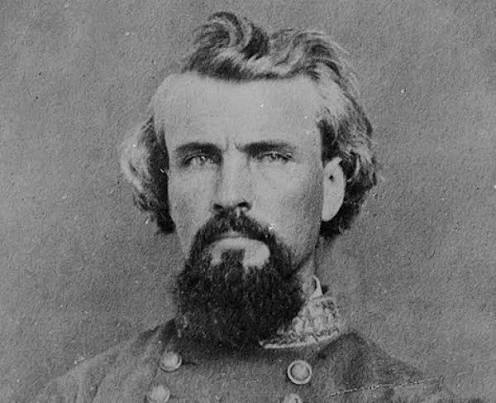
Ask most Americans about Nathan Bedford Forrest, and you’ll usually get two answers: he founded the Ku Klux Klan, and he was responsible for Fort Pillow. A Civil War buff can tell you more, but only someone who’s actually looked at the postwar record can get past the mythology. I’m not dealing with Fort Pillow here. That’s a separate fight for another day. This is about Forrest after the war, and why the popular version of him doesn’t hold up.
The World Forrest Came From
Before you judge Nathan Bedford Forrest, you have to understand the world he lived in. Life in the antebellum South was hard and often violent in a way most people today can’t really grasp. Before he was even 25, Forrest had already been in multiple life-or-death situations. At 15, he shot a neighbor’s ox that was eating the family crops. The owner came looking for him, ready to kill. Forrest fired a warning shot, and the man ran. At 23, he stopped four men who were on their way to murder his uncle—shot two, stabbed a third, and ran the last one off while getting wounded himself. Another time he confronted a man who had just gunned down his friend, James K. Morse, right in front of Forrest. The young Forrest drove him off at gunpoint.¹
I’m not telling these stories to excuse anything. I’m telling them because this was the normal temperature of that world, especially in the antebellum South. When people talk about violence during Reconstruction like it came out of nowhere, they’re missing the baseline. Violence was already part of how disputes got settled.
The Klan
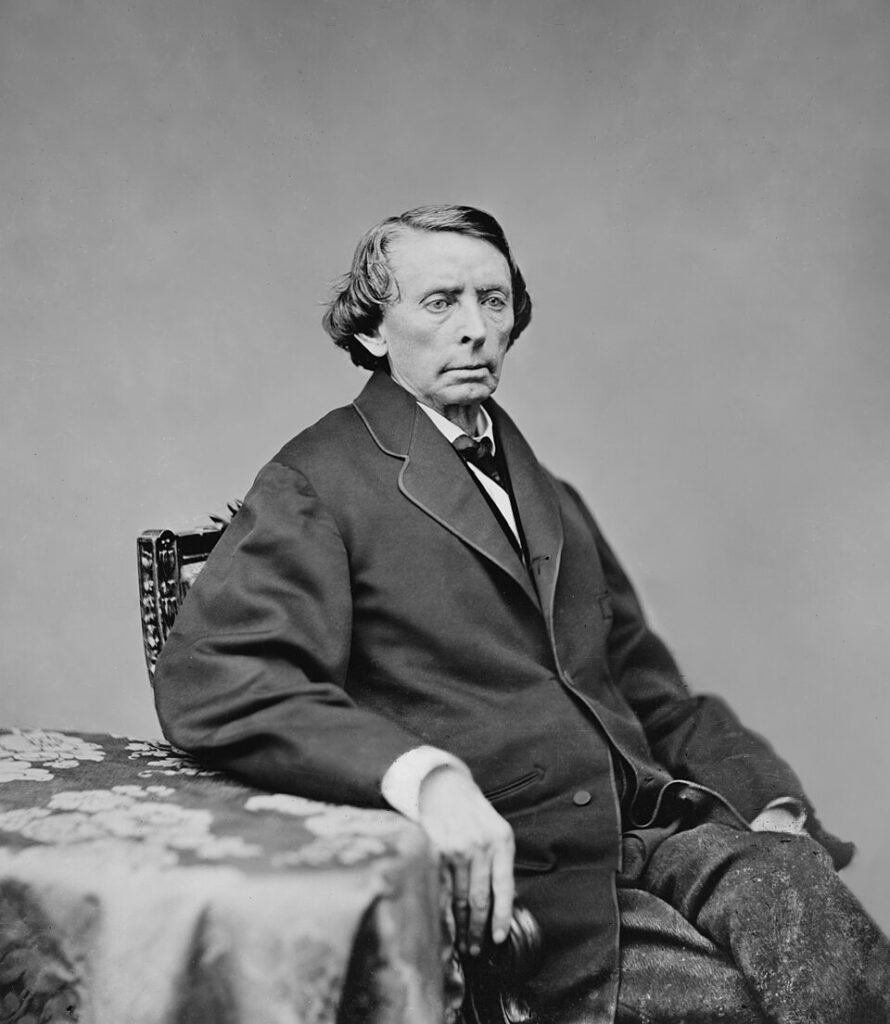
The claim that Forrest founded the Ku Klux Klan is simply false. Six former Confederate cavalrymen started it in Pulaski, Tennessee, as a social club for bored veterans: Major James Crowe, Captain John C. Lester, Captain John Kennedy, Lieutenant Calvin Jones, and Privates Richard Reed and Frank McCord.² It grew quickly. By 1866 it had become something else—protection for Southerners against carpetbaggers, scalawags, and the general lawlessness that followed the war.
That lawlessness was real. Gangs of carpetbaggers, scalawags, freedmen, and opportunistic criminals were robbing, burning, and sometimes killing people across the South. Forrest himself saw it firsthand in Chicot County, Arkansas. A gang of black freedmen forced white families out of their homes at gunpoint, robbed them, and burned the houses.³ That kind of violence wasn’t rare.
Tensions got worse when William Brownlow became governor of Tennessee. Brownlow hated former Confederates and talked openly about taking their land and eliminating them. That’s the climate in which Forrest joined the Klan. His name carried weight, so someone suggested he take a leadership role, and he did. He turned it into a more organized force aimed at stopping what many Southerners saw as a real threat of Radical domination and further violence.
This is the part people always get wrong. Nathan Bedford Forrest’s focus was not “kill black people.” His focus was the Radical Republicans and the system they were imposing. In one speech he made it plain: if they brought another war, he wasn’t going to “waste powder on Negroes” as long as he could find a white Radical to shoot, because the Radicals would be the ones who started it.⁴
Disbandment
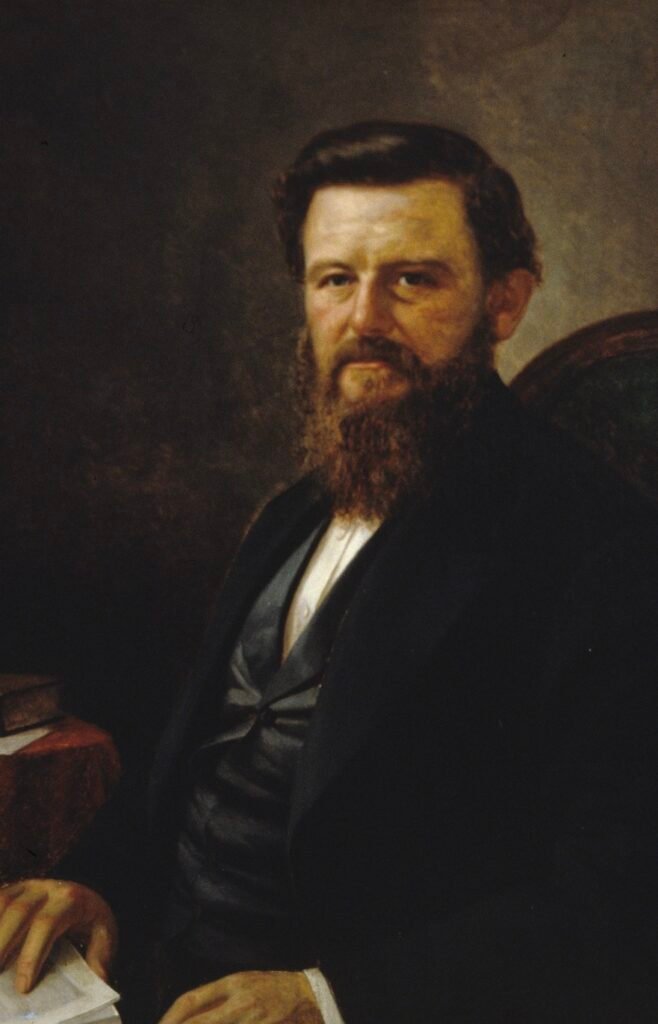
Brownlow’s term ended in 1869. The new governor, DeWitt Senter, wanted to restore voting rights to former Confederates and get rid of Brownlow’s State Guard. With the immediate threat reduced, and with some local dens getting out of control and going too far, Forrest ordered the Klan disbanded. His General Order No. 1 stated:
“The Order of the KKK is in some localities being perverted from its original honorable and patriotic purposes; and whereas, such a perversion of the Order is in some instances defeating the very objectives of its origins, and is becoming injurious instead of subservient to the public peace and public safety for which it was intended…”⁵
Another thing to understand is that the early Klan never had a tight, military-style command structure. The chapters were loosely affiliated at best. Local dens often operated with considerable autonomy, and there was no strong central authority to force every group to fall in line. So when Forrest issued the order to disband, it didn’t mean every single chapter automatically obeyed. Some ignored it and kept going on their own. That lack of centralized control is part of why the organization became harder to rein in once certain dens started going too far.
But, in 1869, Forrest walked away from it. While some chapters ignored the order and kept going, the organization was completely done by 1877.
I’m not going to pretend there was no violence. Of course there was. It was a violent time and place. But the idea that Forrest joined the Klan for the purpose of terrorizing black people doesn’t match what he said or what he did when he ordered it shut down.
Forrest’s Stance on the Law
This is an important point that usually gets ignored. After the war, Forrest publicly and repeatedly said Southerners should obey the law. In his correction to the 1868 Cincinnati interview, he stated that he had promised the legislature his personal influence and aid in maintaining order and enforcing the laws. He said he had never advised the people to resist any law. Instead, he told them to submit to the laws until they could be corrected through legitimate legislation.⁶
On Brownlow’s militia, Forrest said there would be no trouble unless the militia itself violated the law by carrying out the governor’s proclamation—which directed them to shoot men down without trial. He also stated that members of the organization recognized the federal government and would obey state laws as well while protecting peaceable citizens from oppression.⁷
That is not the language of a man trying to keep the war going or undermine the government. It is the language of someone who had accepted the outcome and was trying to keep order while working inside the system that existed.
1871 Testimony
In 1871, Congress investigated the Klan and called Forrest as a witness. He distanced himself from it by that point and said its original purpose had been protection against oppression. He also claimed that not every crime blamed on the Klan was actually committed by its members. Outsiders, criminals, and political enemies sometimes put on the disguise to commit crimes and then point the finger at Southerners.⁸ Is every part of that true? Nobody can prove it one way or the other now. But the claim isn’t crazy. People have always used the cover of someone else’s cause to commit their own crimes.
The Sherman Letter
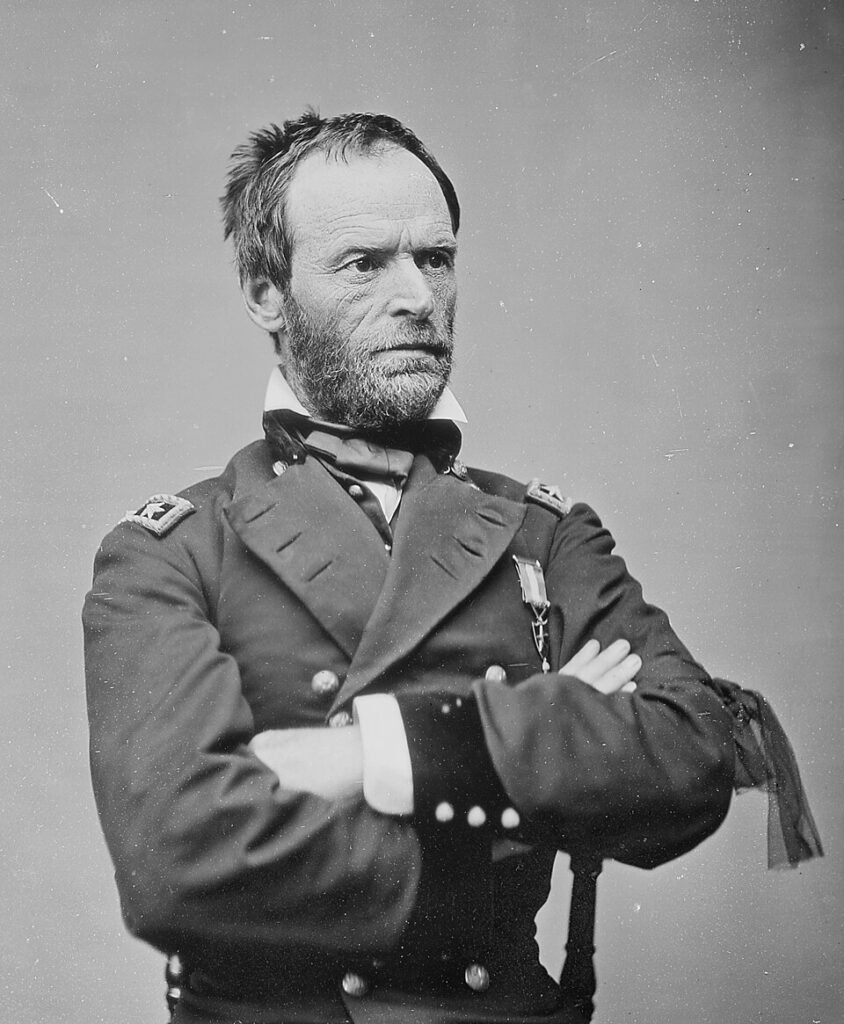
One of the most overlooked parts of Forrest’s postwar life is what he did in 1873. When the Virginius Affair nearly started a war between the United States and Spain over Cuba, Forrest wrote to General William T. Sherman—the same Sherman he had spent years fighting—and offered his services. He said he could raise 1,000 to 5,000 former Southern soldiers on short notice and assemble them at Gulf ports as cavalry or infantry.⁹
Sherman didn’t dismiss him. He forwarded the letter to the War Department and wrote that he regarded Forrest as “one of the most extraordinary men developed by our civil war.” If war came and cavalry was needed, Sherman said he would unhesitatingly accept Forrest’s services and give him a prominent place.¹⁰ That’s not the action of a man still trying to overthrow the United States.
Forrest’s Evolving Views on Race
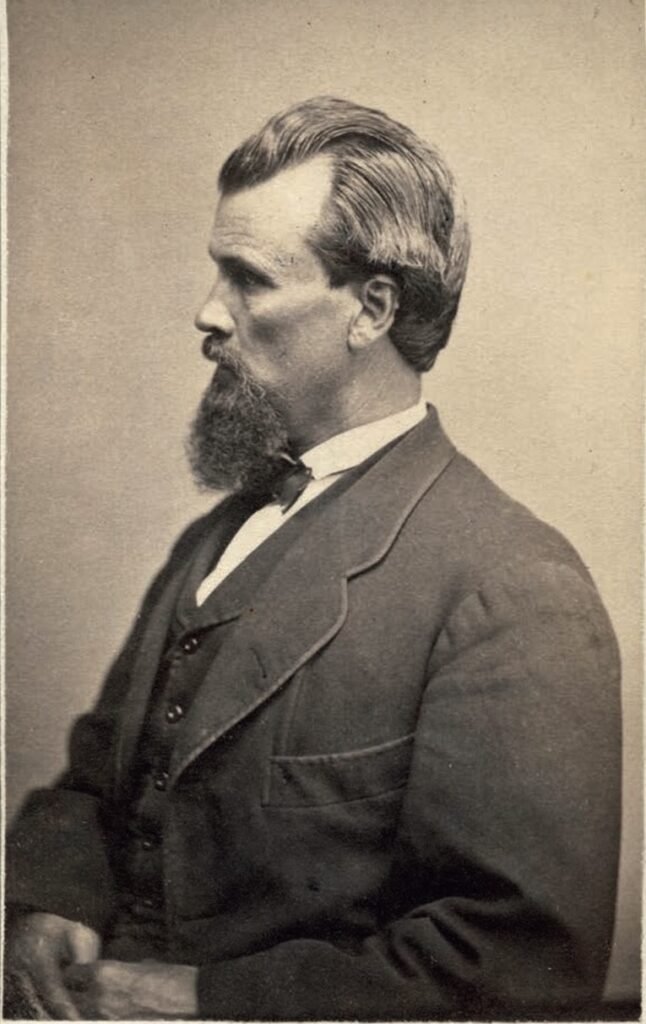
After he left the Klan, Forrest’s public positions on race moved further than a lot of people want to admit. In August 1874, a white mob in Trenton, Gibson County, Tennessee, took sixteen Black men from the jail and killed several of them. Forrest publicly condemned the killings. At an indignation meeting in Memphis he protested the outrage and said he was ready to hunt the murderers down and bring them to justice. He offered to help track down the “white marauders who disgrace their race by this cowardly murder of negroes.”¹¹
Then came the moment that got him a lot of criticism. On July 4, 1875, he accepted an invitation to speak to the Independent Order of Pole-Bearers, a black civic organization in Memphis. A young black woman named Lou Lewis presented him with flowers. Forrest gave a speech calling for reconciliation between the races and said the men who had fought for the Confederacy were, with few exceptions, the friends of black Southerners. He talked about living together as brothers on the same soil. Then he kissed Lou Lewis on the cheek.¹²
Some newspapers lost their minds. The Charlotte Observer tore into him and said he was worse than James Longstreet, a scalawag who joined the Republicans. Other papers were even uglier.¹³ Forrest didn’t seem to care. He had already made up his mind about the direction he was going.
Closing
Nathan Bedford Forrest was a hard man from a hard time. He joined and briefly led an organization that used force and intimidation. Forrest also ordered it disbanded when he decided it had become a problem and its original purpose was no longer necessary. He accepted the outcome of the war, told people to obey the law, offered to fight for the United States in 1873, and in his later years took public positions on race that would probably be considered liberal for their time. The cartoon version of him—the cartoon that only knows “Klan founder” and “Fort Pillow”—is incomplete and often just wrong. The real postwar record is more complicated, and it deserves to be looked at honestly.
Endnotes
- Samuel W. Mitcham Jr., Bust Hell Wide Open: The Life of Nathan Bedford Forrest (New York: Regnery History, 2016).
- Standard accounts of the Pulaski founding; also Mitcham.
- Mitcham, Bust Hell Wide Open, p. 298.
- Reported in the 1868 Cincinnati Commercial interview and Forrest’s subsequent corrections; see Montgomery Advertiser, September 13, 1868.
- The text of General Order No. 1 has been preserved through John C. Lester, one of the original founders of the Klan (see Lester & Wilson, Ku Klux Klan: Its Origin, Growth and Disbandment).
- Forrest’s September 3, 1868, letter correcting the Cincinnati Commercial interview; published in the Montgomery Advertiser, September 13, 1868, and other papers.
- Same 1868 correction letter.
- Forrest’s June 1871 testimony before the Joint Select Committee; contemporary summary in the Charleston Daily Courier, June 28, 1871.
- N. B. Forrest to W. T. Sherman, November 24, 1873, published in the Memphis Appeal and reprinted December 27, 1873.
- Sherman’s endorsement and reply, same source.
- Memphis Daily Appeal, August 29 and September 6, 1874.
- Speech to the Independent Order of Pole-Bearers, Memphis, July 4–5, 1875.
- Charlotte Observer, July 11, 1875, and other Southern newspaper reactions.

More lost cause-ism.
Please indicate what points in the article that are inaccurate and provide sources. I will gladly provide sources for everything written in this article.