

How the Greatest Generation Transformed America
The Baby Boomer generation receives a lot of criticism—and rightfully so. They created unaffordable assets and housing, they contributed to skyrocketing national debt through expansive government spending and entitlement programs that they benefited from but left future generations to pay for, and they blindly follow supposed “experts.” They are single-handedly keeping legacy media in business, never questioning a word of what it preaches. The median age of MSNBC viewers is 72! Of course, there are exceptions; there are some great people from this generation.
Then there’s the Greatest Generation, born between 1901 and 1927, who are held in high esteem and rarely criticized. They grew up during the Great Depression, and when war broke out, they quietly enlisted in droves at recruiters’ offices. While the men fought overseas, the women took up tools for manufacturing back home. When the war ended, the men returned to their jobs without complaint. They were truly admirable. But was everything they did great? Far from it. In fact, they deserve much of the blame for America’s decline. How dare I question the Greatest Generation? Let’s dive in.
American Immigration Before 1965
The Early Days: 1790 to the Early 1900s
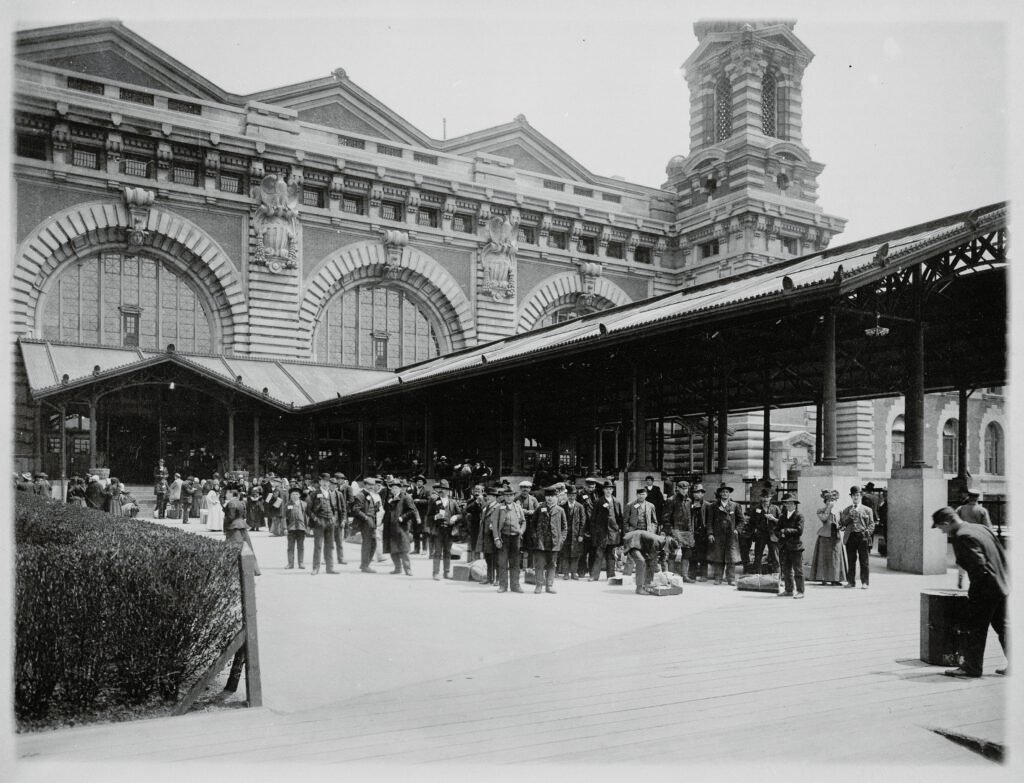
Before 1965, U.S. immigration laws were much different. Before discussing the Johnson-Reed Act of 1924, let’s review the United States’ immigration policy up to that point. In the early days of the Republic, immigration was encouraged to populate the young nation. The Naturalization Act of 1790 limited citizenship to “free white persons” of “good character.” After two years of residency, they could become citizens by proving good character and swearing loyalty to the Constitution. Immigration grew steadily, and in the mid-1800s, America experienced a drastic surge. Millions arrived from Ireland and Germany. In Ireland, famine drove many to flee in search of a better life. Then, in 1848, revolts across Europe led to a surge of various ethnic groups, mostly Germanic. They were drawn by America’s economic opportunities, political freedom, and abundant land. However, many of these immigrants brought socialist views with them.
During the mid-1800s, immigration was virtually unrestricted, as it was needed to settle vast, newly acquired territories. Northern manufacturing cities exploded during this time. However, by the late 1800s, the landscape began to change, and America’s immigration policy became more restrictive in response to perceived threats. The Page Act of 1875 barred Asian women suspected of prostitution and convicts. The Immigration Act of 1882 imposed a 50-cent head tax and excluded “idiots,” “lunatics,” and convicts. Then the Chinese Exclusion Act of 1882 did exactly what its name implies.
The Quota Era: National Origins Restrictions and Immigration Policy (1924–1965)
The early 1900s saw even more control measures as a new wave of immigrants arrived from Southern and Eastern Europe. From 1890 to 1920, more than 15 million new immigrants arrived. The Anarchist Exclusion Act of 1903 barred political radicals in response to the assassination of President McKinley. The Immigration Act of 1917 further restricted immigration and introduced a literacy test. These restrictions culminated in 1924.
The Immigration Act of 1924
The Immigration Act of 1924, also known as the Johnson-Reed Act, was signed into law by President Calvin Coolidge on May 26, 1924. This act was built on the temporary Emergency Quota Act of 1921. One of its main components was the National Origins Quota System, which set annual quotas for each nationality at 2% of that group’s population in the U.S. based on the 1890 census. The annual limit was capped at approximately 165,000. By this point in U.S. history, there was no longer a need to settle vast lands, and there were plenty of workers for manufacturing. This represented an 80% reduction from pre-WWI levels and built on the “Asiatic Barred Zone.” However, immigrants from the Western Hemisphere (e.g., Mexico, Canada) were not subject to quotas, though border enforcement was strengthened with the creation of the U.S. Border Patrol.
The Red Scare
This act arose from several factors. Russia had just undergone a Communist Revolution, raising fears of communist infiltration. Economic uncertainty was widespread. From 1880 to 1920, the U.S. saw over 20 million arrivals, transforming cities and fueling anxieties about labor competition and cultural change. If the United States wanted to survive as a nation, it was imperative to maintain its culture. Culture is the backbone of a nation—without a unifying culture, a nation cannot endure. After World War I, America emerged as a world power and economic powerhouse, with a burgeoning middle class. It was crucial not to undercut their wages. The Red Scare amplified concerns about political radicals among immigrants. In 1919, a series of anarchist bombings was carried out by the Galleanists, targeting government officials, judges, and businessmen to incite class war.
Revisions and the McCarran-Walter Act
The 1924 Immigration Act was revised several times, but it remained largely intact until 1952. The Immigration and Nationality Act of 1952, or McCarran-Walter Act, consolidated U.S. immigration laws into a single framework, removed explicit racial barriers to naturalization (allowing limited Asian immigration for the first time since 1924), introduced a preference system prioritizing skilled workers and family reunification, and expanded exclusions and deportations for suspected subversives amid Cold War fears. However, it preserved the national origins quota system from the 1924 Act, maintaining annual limits based on ethnicity that heavily favored immigrants from Northern and Western Europe while assigning minimal quotas to other regions. Regardless of these eased restrictions, American culture remained intact.
The Immigration and Nationality Act of 1965
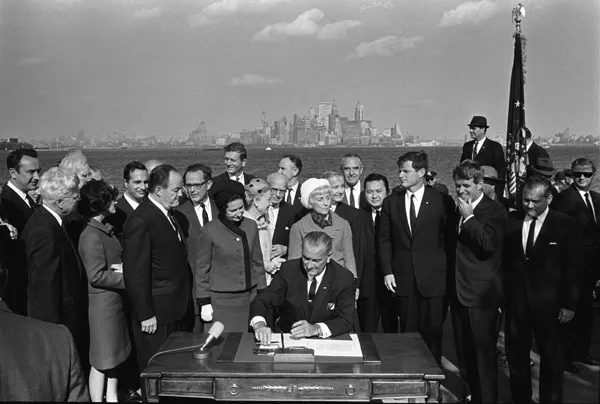
Fast forward to 1965—a turbulent time. U.S. involvement in Vietnam was escalating, and the Civil Rights movement was in full swing. Amid it all, the Immigration and Nationality Act of 1965, also known as the Hart-Celler Act, was signed into law by LBJ on October 3. This legislation fundamentally transformed U.S. immigration policy—and America itself. It abolished the national origins quota system but imposed overall annual limits: 170,000 from the Eastern Hemisphere and 120,000 from the Western Hemisphere, totaling about 290,000 annually (though actual numbers grew due to exemptions and adjustments).
The act preserved some elements, such as overall restrictions and preferences for skills and family, but the quotas were gone. Several factors contributed to this shift: the Civil Rights movement, Cold War pressures (America wanted to appear inclusive to win allies in Asia and Africa), and post-WWII refugee crises.
At the time, 51% of Americans favored the act. Proponents, such as Johnson, emphasized that it would “repair a deep and painful flaw” without drastically altering demographics—a claim that proved wildly inaccurate! The law passed with large majorities: 76-18 in the Senate and 320-70 in the House. Opponents feared cultural shifts and job competition, which undercut Native Americans’ wages.
Demographic Transformation Post-1965
Post-1965, inflows surged from Asian countries such as India, China, the Philippines, Korea, and Vietnam, as well as from Latin America and Africa. Up until 1970, the increase wasn’t drastic. In 1960, there were 9.7 million foreign-born in the U.S., with 84% from Europe or Canada, 6% from Mexico, 4% from Asia, and 6% from Central/South America or other regions.
By 1970, while the foreign-born population was only 9.6 million, there was a steady ethnic shift: 68% European/Canadian, 7% Asian, 8% Mexican, and the rest from Latin America or other regions. In 1980, it exploded to 14.1 million: 42% in Europe/Canada, 15-16% in Asia, 16% in Mexico, 16% in other Latin America, and 2-3% in other regions.
By 1990, 2000, and 2010, it continued growing, reaching nearly 40 million foreign-born by 2010, with European immigration at just 14%. In the 2020s, it grew out of control, with about 46 million foreign-born. This doesn’t even count illegal immigrants—today, there are an estimated 30 million illegals in the country, a conservative figure.
The Impact on America, Today
So, how has this impacted the United States? This shift has completely transformed the country. In 1880, the U.S. was 86.5% of European descent, 13% African descent, and the rest a mix of Asian and Latin American descent. With small fluctuations, this remained relatively stable until 1970, just five years after the Hart-Celler Act. It drastically changed over the next 50 years, with a sharp transformation from 2010 to 2020. In 2020, those of European descent made up 61.6% of the population, 12.4% African descent, 6% Asian, 18.7% Latino, and 8.4% other.
This has completely altered the landscape of the United States. With the floodgates opening in 2020, waves of immigrants arrived with zero assimilation. This has adverse effects on the country. Many “Americans” no longer identify as such. We don’t prioritize what’s best for America anymore. Politicians now pander by talking about what they’ll do for Latinos, Asians, Indians, etc., rather than for Americans.
2025 and Beyond
This is where we stand in my beloved country. Many no longer view themselves as American. For example, in the 2025 New York City mayor election, Zohran Mamdani won. Mamdani is a Ugandan communist of Indian descent. In his victory speech, he thanked Yemenis, Mexicans, Senegalese, and Uzbeks—but not Americans. Minneapolis is even worse. Incumbent Jacob Frey won re-election for a third term, defeating opponent Omar Fateh, a Somali-American born in Washington, D.C. Frey delivered parts of his victory speech in Somali, highlighting the cultural divide. Fateh’s campaign drew support tied to old Somali clan feuds, showing how foreign loyalties persist.
This is precisely what the strict immigration laws of the past tried to prevent with national quotas—they wanted immigrants to assimilate into American culture. My ethnicity is Polish, Swedish, and a mix of other European backgrounds, but I don’t give those countries a second thought. I view myself strictly as American and embrace American culture. At most, I might dine at a Polish or German restaurant occasionally and mention my descent. The only time I lean on my ethnicity is to root for a second or third team in the World Cup after the U.S. loses.
The Greatest Generation
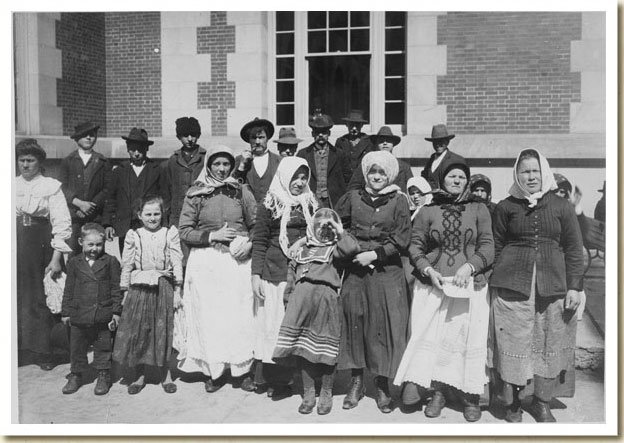
So, how do I tie this back to the Greatest Generation? This erosion of American culture traces directly to the Immigration and Nationality Act of 1965. All of it stems from that—and it was primarily their doing. Of the 76 senators who voted in favor, an estimated 57 were from the Greatest Generation—that’s 75%. For the House, the numbers are more complex to pinpoint, but I estimate that about 200 of the 320 yeas came from that generation, or roughly 62%. But it wasn’t just the 1965 Act; that was the foot in the door. It was modified many times, such as the Refugee Act of 1980, the Immigration Reform and Control Act of 1986 (which granted amnesty to about 3 million illegals), and the Immigration Act of 1990, which really opened the floodgates.
What Next?
Maybe I’m being a little harsh, but I don’t think so. What they endured—the Great Depression, fighting the second-largest war in American history, then returning to work without complaint—is admirable. But American culture has been destroyed, and it all stems from the Immigration and Nationality Act of 1965. There’s no getting it back. We will never be the Christian nation we once were, all identifying as Americans. Can we return to our roots somewhat? I hope so, but the outlook is not good.
Sources
- U.S. Department of State, Office of the Historian. (n.d.). The Immigration Act of 1924 (The Johnson-Reed Act). https://history.state.gov/milestones/1921-1936/immigration-act
- Migration Policy Institute. (2024, May 15). A Century Later, Restrictive 1924 U.S. Immigration Law Has Repercussions in India. https://www.migrationpolicy.org/article/1924-us-immigration-act-history
- Immigration History. (n.d.). Immigration Act of 1924 (Johnson-Reed Act). https://immigrationhistory.org/item/1924-immigration-act-johnson-reed-act/
- HISTORY.com Editors. (2024, May 26). President Coolidge signs Immigration Act of 1924. https://www.history.com/this-day-in-history/may-26/coolidge-signs-stringent-immigration-law
- U.S. Citizenship and Immigration Services (USCIS). (2019, July 10). Immigration and Nationality Act. https://www.uscis.gov/laws-and-policy/legislation/immigration-and-nationality-act
- U.S. Department of State, Office of the Historian. (n.d.). Immigration and Nationality Act of 1952. https://history.state.gov/milestones/1945-1952/immigration-act
- Federation for American Immigration Reform (FAIR). (n.d.). History of U.S. Immigration Laws. https://www.fairus.org/legislation/reports-and-analysis/history-of-us-immigration-laws
- Center for Immigration Studies. (2015, September 30). The Hart-Celler Immigration Act of 1965. https://cis.org/Report/HartCeller-Immigration-Act-1965
- Immigration History. (n.d.). Immigration and Nationality Act of 1965 (Hart-Celler Act). https://immigrationhistory.org/item/hart-celler-act/
- U.S. House of Representatives, History, Art & Archives. (n.d.). Immigration and Nationality Act of 1965. https://history.house.gov/Historical-Highlights/1951-2000/Immigration-and-Nationality-Act-of-1965/
- HISTORY.com Editors. (2019, August 12). How the Immigration Act of 1965 Changed the Face of America. https://www.history.com/articles/immigration-act-1965-changes
- Massey, D. S. (2012). Unintended Consequences of US Immigration Policy: Explaining the Post-1965 Surge from Latin America. Population and Development Review, 38(1), 1–29. https://pmc.ncbi.nlm.nih.gov/articles/PMC3407978/
- Library of Congress. (n.d.). Immigration to the United States, 1851-1900. https://www.loc.gov/classroom-materials/united-states-history-primary-source-timeline/rise-of-industrial-america-1876-1900/immigration-to-united-states-1851-1900/
- Population Reference Bureau. (2014, May 14). Trends in Migration to the U.S. https://www.prb.org/resources/trends-in-migration-to-the-u-s/
- Pew Research Center. (2015, June 11). Chapter 1: Race and Multiracial Americans in the U.S. Census. https://www.pewresearch.org/social-trends/2015/06/11/chapter-1-race-and-multiracial-americans-in-the-u-s-census/
- USAFacts. (n.d.). US population by year, race, age, ethnicity, & more. https://usafacts.org/data/topics/people-society/population-and-demographics/our-changing-population/
- U.S. Census Bureau. (2015, September 4). Measuring Race and Ethnicity Across The Decades: 1790—2010. https://www.census.gov/data-tools/demo/race/MREAD_1790_2010.html
- Federal Bureau of Investigation (FBI). (n.d.). Palmer Raids. https://www.fbi.gov/history/famous-cases/palmer-raids
- Library of Congress. (2025, June 12). Anarchist Incidents (1886-1920): Topics in Chronicling America. https://guides.loc.gov/chronicling-america-anarchist-incidents
