
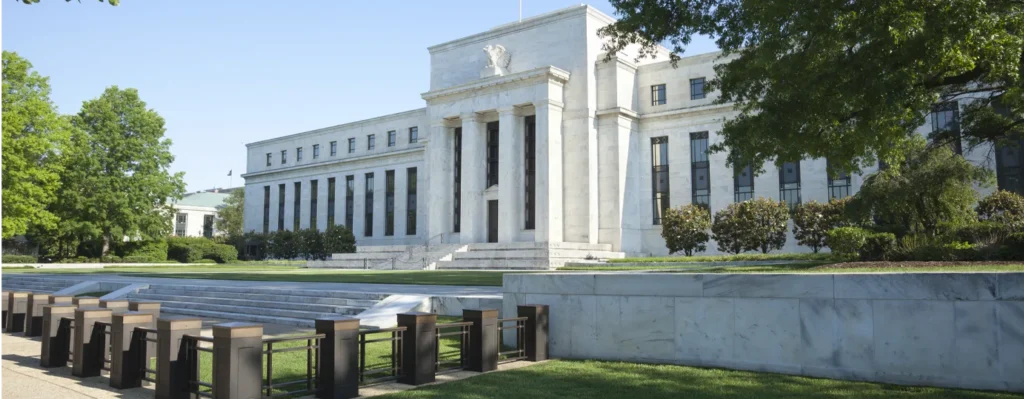
The Federal Reserve, often simply called “the Fed,” is the central bank of the United States and arguably the most powerful financial institution in the world. Established over 110 years ago, it plays a pivotal role in shaping the nation’s economy. Yet, its origins and evolution are rooted in centuries of debate over banking, money, and power in America. This article traces the history of central banking in the United States, from the Revolutionary War era to the creation of the Federal Reserve in 1913 and its lasting impact.
Early Experiments in Central Banking: The Revolutionary War and the Bank of North America
To understand the Federal Reserve, we must first examine the nation’s early struggles with financing and currency. During the Revolutionary War, the Continental Congress faced the challenge of funding the fight against Great Britain. Lacking a stable currency, they turned to printing paper money, known as “Continentals.” Gouverneur Morris spearheaded this effort, dramatically expanding the money supply from an estimated $12 million before the war to over $225 million by 1779. The result was hyperinflation and the collapse of the currency’s value, leading to the phrase “not worth a Continental.”
In 1781, Robert Morris was appointed Superintendent of Finance. He proposed the creation of the Bank of North America, the first fractional-reserve central bank in the young republic, modeled after the Bank of England. It opened in 1782 with a monopoly on issuing paper currency, backed by specie but allowing for controlled inflation. The bank lent heavily to the government, but its notes soon depreciated, eroding public confidence. By 1783, it transitioned to a state-chartered commercial bank in Pennsylvania, ending America’s first central banking experiment.
The Constitution, Hamilton, and the First Bank of the United States
The ratification of the U.S. Constitution in 1789 established a stronger central government. President George Washington appointed Alexander Hamilton as Secretary of the Treasury and Thomas Jefferson as Secretary of State, setting the stage for ideological clashes that defined early American politics. Hamilton, favoring a strong central government and national debt for credit-building, proposed a national bank in 1790, again modeled on the Bank of England. Jefferson opposed it, arguing it favored merchants over farmers and created a monopoly, violating states’ rights.
The debate centered on constitutional interpretation. Jefferson contended that the “necessary and proper” clause did not authorize a bank, as it was merely convenient, not essential. Hamilton argued otherwise, asserting implied powers. Washington sided with Hamilton, signing the bill into law in 1791. The First Bank of the United States, with a 20-year charter, was capitalized at $10 million ($2 million from the government, $8 million from private investors, many foreign). It acted as the government’s fiscal agent, collected taxes, and issued notes but did not set monetary policy or serve as a lender of last resort like the modern Fed.
The bank inflated the money supply, with wholesale prices rising 72% from 1791 to 1796. Commercial banks proliferated from four to 18 in five years. Despite opposition from Jefferson’s Democratic-Republicans, the bank operated until 1811, when its charter renewal failed by one vote in Congress.
The War of 1812 and the Second Bank of the United States
The War of 1812 forced the U.S. to finance conflict without a central bank, relying on state banks. New England banks, conservative and opposed to the war, limited lending, while mid-Atlantic, Southern, and Western banks inflated recklessly. In 1814, the government suspended specie payments, allowing banks to operate without redeeming notes in gold or silver. This led to a 87% increase in banknotes and deposits by 1815, with wholesale prices rising 35% and imported goods 70%.
The postwar contraction caused the Panic of 1819 and a depression. President James Madison, initially opposed to national banks, signed the charter for the Second Bank of the United States in 1816. Similar to the first, it was privately owned (20% government shares) and acted as fiscal agent. However, corruption plagued it: loans favored insiders, and it supported state banks’ inflation. By 1818, it faced near-bankruptcy, forcing a contraction that halved the money supply and triggered a nationwide boom-bust cycle. As economist Murray Rothbard noted, “The Bank was saved, and the people were ruined.”
Andrew Jackson and the Bank War
The Panic of 1819 fueled the Jacksonian movement, advocating hard money and opposing fractional-reserve banking. Andrew Jackson, elected president in 1828, viewed the Second Bank as a tool of the elite. Its charter renewal came early in 1832, backed by Nicholas Biddle and Henry Clay. Jackson vetoed it, calling it unconstitutional and monopolistic. He won reelection overwhelmingly, then removed federal deposits to “pet banks,” expanding to 91 to avoid favoritism.
Biddle retaliated by contracting credit, causing economic hardship and hoping to blame Jackson. Public outrage turned against Biddle after his boasts, and the bank expired as a central institution in 1836, becoming a Pennsylvania-chartered private bank. Jackson paid off the national debt—the last time in U.S. history—and distributed surpluses to states.
The Panic of 1837, often blamed on Jackson, stemmed from the Second Bank’s earlier inflation, an influx of Mexican silver, and British monetary tightening. Recovery came by 1838, but state spending on public works led to another panic in 1839. The “free banking” era (1837–1861) followed, though not truly free, as governments allowed specie suspensions. Democrats established the Independent Treasury System in 1840 (repealed 1841, reinstated 1846) to separate government funds from banks.
The Civil War and the National Banking System
The Civil War (1861–1865) exploded federal expenditures from $66 million to $1.3 billion. Specie payments were suspended in 1861, and the Legal Tender Act of 1862 introduced “greenbacks”—fiat currency not backed by specie. Secretary Salmon P. Chase advocated them as necessary, though he later ruled them unconstitutional as Supreme Court Chief Justice in Hepburn v. Griswold (1870), only for the decision to be overturned in Knox v. Lee (1871) after President Grant appointed favorable justices.
The National Banking Acts of 1863 and 1864, lobbied by banker Jay Cooke, created a centralized system with national banks issuing notes backed by government bonds. A 10% tax on state bank notes forced their decline, forming a pyramid structure with Wall Street at the base. Money supply soared from $745 million in 1860 to $1.773 billion in 1865, with wholesale prices doubling.
Postwar, industrialists favored greenbacks for cheap credit. The Panic of 1873 resulted from railroad overexpansion and speculation. Specie resumption came in 1879 via the Resumption Act, ushering in economic growth under a gold standard. Prices fell, but wages rose in the 1880s, benefiting farmers and workers alike.
Political Shifts and the Road to the Federal Reserve
By the 1890s, party alignments shifted. Democrats, once hard-money advocates, embraced populism under William Jennings Bryan, favoring “free silver.” Republicans pledged to the gold standard in 1896, passing the Gold Standard Act in 1900. Bankers like J.P. Morgan sought “elastic currency” to expand credit.
Reformers disguised their push as grassroots, starting with the 1897 Indianapolis convention. The Indianapolis Monetary Commission, including economist J. Laurence Laughlin, called for a central bank. Academia (e.g., Columbia, Chicago) and media (e.g., Wall Street Journal) amplified the narrative.
The Panic of 1907 provided justification. The Aldrich-Vreeland Act (1908) created emergency currency and a National Monetary Commission, chaired by Senator Nelson Aldrich. In 1910, a secret meeting on Jekyll Island—attended by Aldrich, Paul Warburg, Frank Vanderlip, and others—drafted the Aldrich Plan, a blueprint for a central bank.
It failed due to Aldrich’s association with Wall Street. In 1912, bankers backed Theodore Roosevelt’s third-party run to split votes from Taft, electing Woodrow Wilson. Wilson’s ties to bankers ensured support. The Federal Reserve Act, disguised as the Glass-Owen Bill, passed in 1913, creating 12 regional banks under a Federal Reserve Board. It authorized elastic currency, interest rate influence, and lender-of-last-resort functions.
The Federal Reserve’s Legacy: Stability or Instability?
Since 1913, the Fed has overseen numerous crises: crashes in 1921 and 1929, the Great Depression, recessions in the 1950s–2020s, and inflation spikes. The dollar has lost 97% of its value, with $100 in 1913 equaling about $3,188 today. Critics argue it enables wealth transfers, bailouts, and endless wars, socializing losses while privatizing profits, as noted by G. Edward Griffin and Ron Paul.
Will a modern Jackson emerge to challenge it? The Fed’s entrenchment suggests otherwise, but its history underscores ongoing debates over money, power, and freedom.
