
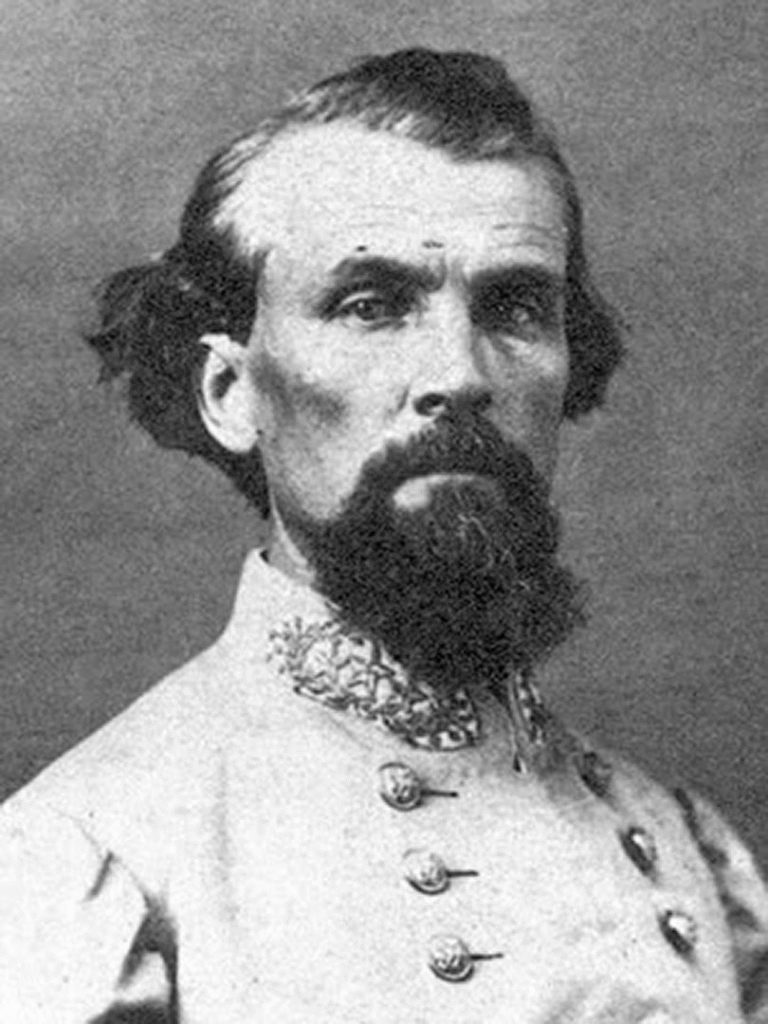
Photographed during the Civil War, c. 1863–1865
The Most Misunderstood General of the Civil War
Lieutenant General Nathan Bedford Forrest is probably the most misunderstood figure from the American Civil War. He was arguably the most brilliant cavalry commander, yet he carries one of the worst reputations from the entire conflict. Even today, simply speaking his name can provoke strong reactions in certain circles. People only associate him with Fort Pillow. Yet the historical record tells a far different story from the version most Americans were taught in school. The truth is more complex, more compelling, and far more consequential than the caricatures that have persisted for over 150 years.
From a purely command perspective, Forrest is not ranked alongside the war’s top generals the way his record suggests he should be. In my view, he represented the Confederacy’s single best chance to win—or at least dramatically change the outcome of the conflict. If Southern leadership had turned this non-West Pointer loose with real authority and resources, the war could have gone very differently. They didn’t. And it cost them everything.
Early Life: Forged in a Harsh World
To understand Forrest, one must first understand the time and place that produced him. Life in the South during the first half of the nineteenth century was nothing like anything we can fully grasp today. Forrest was a product of that raw, self-reliant frontier world.
Growing Up In The Antebellum South
He was born in Chapel Hill, Tennessee, on July 13, 1821. Not much is documented in detail about his childhood, but surviving stories reveal the character of the man he would become. Typhoid fever took his brother and three sisters—one of them his twin. His father died when Forrest was only fifteen, forcing him to become the man of the house at a very young age. That early responsibility likely shaped the tough, decisive leader he would grow into.
One story stands out as emblematic. His mother was attacked by a panther while walking home near dusk. After tending to her wounds, young Forrest went out alone into the night to hunt the animal down. He treed it and waited until first light. At dawn, he dropped the panther with a single shot. Another incident involved a violent run-in with a neighbor over livestock. After multiple warnings, Forrest shot the man’s ox. The neighbor came looking for payback, but Forrest fired on him and sent him running. These incidents paint a picture of the harsh, unforgiving world of the early nineteenth-century South—a world where a man had to be prepared to defend what was his.
A Self-Made Man
Even in his early adult years, Forrest had several life-or-death confrontations. For brevity, we will pass over most of his pre-war life, but it is worth noting that he married Mary Ann Montgomery on September 25, 1845. He built a real fortune as a young man—starting as a horse trader, then expanding into cattle, slaves, and real estate. By 1858 he was earning roughly $96,000 a year, more than $2.5 million in today’s money. That level of success in such a short time speaks to his intelligence, drive, and business instincts.
One key fact that would shape his entire military career: Forrest never attended West Point. That single detail would both hinder his advancement within the Confederate high command and, in my opinion, help make him the innovative commander he became. He was not steeped in the rigid doctrine and hierarchy of the professional officer class. He thought differently.
The Road to War
Pro-Union and Tariffs
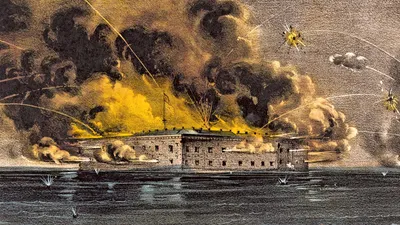
When the war broke out in 1861, Forrest was a strong Unionist. He opposed secession and saw himself as a states’-rights constitutional conservative. But everything changed when Lincoln called for 75,000 volunteers to suppress the rebellion. The threat of invasion against the Deep South pushed the Upper South—including Tennessee—to secede. Forrest made his decision at the same time.
He also understood the economic reality. Lincoln’s high tariffs, especially the Morrill Tariff that raised rates to 47 percent, threatened to bankrupt Southern plantations, farms, and businesses. The South had enjoyed an economic boom over the previous decade. That was all at risk. The South accounted for about 30 percent of the population but already paid 85 percent of the nation’s taxes, with more than 75 percent of that revenue going to internal improvements in the North. That economic pressure mattered to men like Forrest, who had built their livelihoods in the Southern system.
From Private to Lieutenant Colonel
Forrest enlisted as a private. He was perfectly content with that rank and didn’t expect any favors despite his wealth and connections. Governor Isham Harris, however, knew exactly what kind of man he was. On July 10, 1861, Harris summoned Forrest and appointed him lieutenant colonel, authorizing him to recruit a battalion of mounted rangers.
The Confederacy was desperately short on money, horses, and supplies. Forrest was wealthy and willing to spend his own fortune to arm and equip his men. He figured that if the South lost, he’d be broke anyway. His battalion eventually grew into the 3rd Tennessee Cavalry Regiment. From the very beginning, Forrest demonstrated a willingness to take initiative and use his personal resources for the cause.
Early Battles and the Emergence of a Cavalry Legend
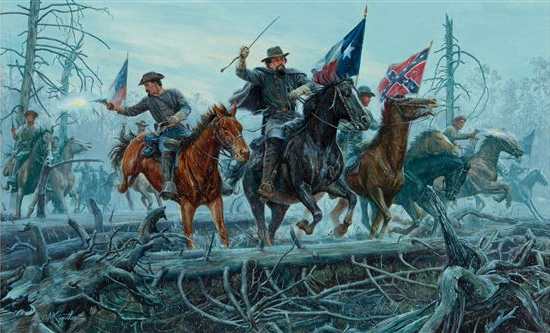
The first months were spent on reconnaissance, raids, and minor skirmishes. On December 28, 1861, Forrest fought his first real battle at Sacramento, Kentucky. He led a bold cavalry charge that routed a superior Union force. His performance earned commendations from Brigadier General Charles Clark and even Albert Sidney Johnston. The legend of Nathan Bedford Forrest was starting to form.
In early 1862, Forrest was operating along the Green River and reported to Johnston that Union forces were preparing a major offensive. Johnston was stretched across a 300-mile front with only about 40,000 men. Forrest was right. Grant had his eyes on Fort Henry and Fort Donelson, the forts guarding the Tennessee and Cumberland Rivers.
Fort Donelson: A Pattern Established
The offensive began on February 2, 1862. Fort Henry fell quickly. Attention turned to Fort Donelson. Johnston ordered the remaining forces on his western flank to Fort Donelson—Brigadier Generals Pillow, Buckner, and Floyd among them. Forrest arrived on February 10 and was placed in command of all cavalry inside the fort.
He conducted reconnaissance and warned Pillow that Union forces were advancing. Fighting erupted on February 12. On the morning of February 16, Confederate troops launched a dawn attack on the Union right flank under General McClernand. By 9:30 a.m., that flank was in full retreat.
The First Missed Opportunity
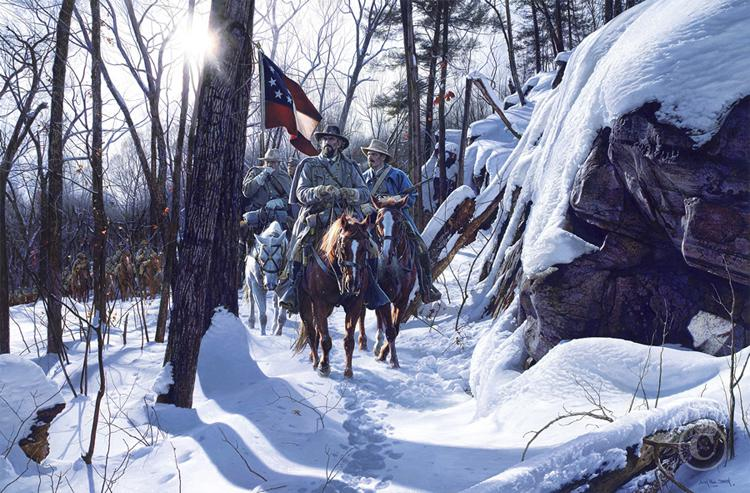
Nathan Bedford Forrest saw a decisive opportunity. If the Confederates launched a full assault, they could drive Grant’s army into Hickman’s Swamp and potentially destroy it. He rode back and begged General Johnson—Pillow’s second-in-command—to order a general attack. Johnson refused, convinced the Yankees were trying to lure them into an ambush. Forrest searched for Pillow but couldn’t find him in time. By the time they advanced again, McClernand had been reinforced. The chance to crush Grant had passed.
This became a recurring pattern throughout Forrest’s career: He would spot a critical opportunity, his superiors would hesitate or ignore him, and the moment would be lost.
The Second Missed Opportunity
With victory no longer possible, the Confederates still had a chance to escape to Nashville and save the army. Forrest and his men cleared the escape route of Union artillery. It was open. Pillow agreed with Forrest that they should withdraw. But Buckner and Floyd chose to surrender. “I’ll be damned if I’ll surrender!” Forrest shouted. He escaped with his command. Floyd surrendered more than 10,000 men—soldiers who might have made a real difference at Shiloh just weeks later.
After Fort Donelson, Forrest led his cavalry to Nashville and saved valuable Confederate supplies before the city fell to Union forces.
Shiloh: Another Missed Chance
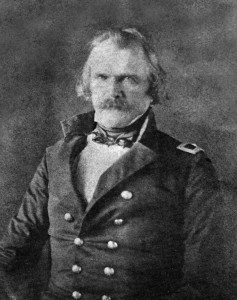
The Battle of Shiloh in April 1862 shocked the nation with its scale and brutality. Albert Sidney Johnston struck early on April 6 and nearly drove Grant’s forces into the Tennessee River. By the end of the day, Grant was pinned against the landings. Forrest, held in reserve, grew frustrated and moved his men forward into what became known as the Hornet’s Nest without orders.
During the fighting, Johnston was mortally wounded leading a charge—one of the Confederacy’s heaviest losses, second only to Stonewall Jackson’s death later in the war. Command passed to P.G.T. Beauregard. As dusk fell, Beauregard decided against further attacks.
Forrest, however, saw Buell’s vanguard arriving—20,000 reinforcements on the way. He knew they had to attack immediately or lose the chance to destroy Grant’s army. He searched for Beauregard but found General William Hardee instead. Forrest pleaded for an attack. Hardee said the plans were already set for the next day. Another opportunity slipped away.
The next day, a reinforced Grant counterattacked and forced Beauregard to withdraw. During the retreat, Sherman pursued aggressively. Forrest’s command caught Sherman separated from his main body and came very close to capturing him. It would not be the last time Nathan Bedford Forrest nearly bagged a major Union commander.
Raids, Promotions, and Rising Frustration
Murfreesboro and West Tennessee Raid
Following Shiloh, Nathan Bedford Forrest conducted two significant raids. The first, at Murfreesboro on July 13, 1862, was a complete surprise. He overran the Union garrison, captured about 1,200 soldiers, and destroyed large quantities of supplies and railroad infrastructure. This success earned him promotion to brigadier general on July 21, 1862.
In December 1862, Bragg ordered Forrest to disrupt Grant’s supply lines in West Tennessee. The raid was another success overall, though Forrest was surprised at Parker’s Crossroads—the only time he was caught off guard during the war. He escaped and forced Grant to divert troops, slowing his advance.
A Meaningless Attack
After the inconclusive Battle of Stones River, Bragg ordered Forrest to join Wheeler. Wheeler wanted to recapture Fort Donelson. Forrest protested strongly: if the first assault failed, they lacked the ammunition for a second assault, and there was no real strategic value anyway. Wheeler ignored him. The attack failed disastrously. Forrest declared he would never serve under Wheeler again. Wheeler accepted the blame.
Bragg then placed Forrest on his left flank while Wheeler remained on the right. General Earl Van Dorn arrived from Vicksburg with roughly 4,500 men, and Forrest’s brigade came under his command.
Thompson’s Station: Outflanking the Enemy
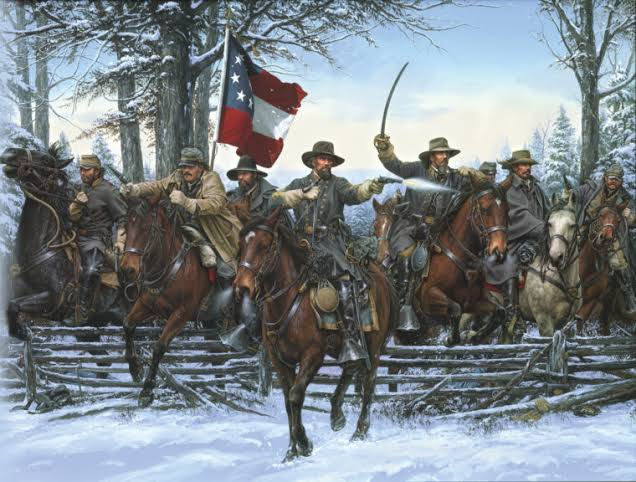
On March 4, 1863, Union forces under Colonel John Coburn advanced from Franklin toward Thompson’s Station. Simultaneously, Brigadier General Philip Sheridan advanced west from Murfreesboro. Van Dorn moved to destroy Coburn before he could link up with Sheridan. The Battle of Thompson’s Station erupted on March 5.
Van Dorn hit the Union left while Forrest attacked their cavalry, which panicked and fled. Van Dorn got bogged down with infantry, and Forrest’s favorite horse, Roderick, was killed—one of twenty-nine horses shot from under him during the war. Forrest swung the 9th and 10th Tennessee to the far right, outflanked Coburn from behind, dismounted, and personally led the charge. Coburn surrendered. Sheridan, hearing the news, turned and fled. The Union operation collapsed.
The Pursuit of Streight’s “Jackass Brigade”
In April 1863, Forrest conducted one of his most famous operations: the pursuit of Colonel Abel Streight’s “Jackass Brigade”—about 1,700 Union infantry mounted on mules. Streight’s plan was to link with Union Brigadier General Grenville Dodge, then break off and destroy the Western & Atlantic Railroad near Rome, Georgia.
What followed was nearly two weeks of relentless pursuit across northern Mississippi and into Alabama. One night, Confederates infiltrated Streight’s camp and stampeded the mules—400 ran off. Forrest’s men skirmished, attacked, and pursued without letup. Streight tried desperately to escape, burning bridges behind him, but Forrest’s cavalry kept finding ways to cross the rivers and maintain pressure.
On May 3, near Cedar Bluff, Alabama, Forrest surrounded the exhausted Federals. Streight surrendered his entire command—roughly 1,500 prisoners. Forrest became a legend. Bragg recommended him for major general and even considered making him chief of cavalry. Shortly afterward, Van Dorn was murdered, and Bragg appointed Forrest corps commander of a cavalry force operating on the Army of Tennessee’s left flank.
Strategic Vision Ignored: The Mississippi River Plan
Confederate leadership missed another chance to use Forrest effectively. Secretary of War James Seddon wanted to send him to help defend Vicksburg against Grant. Instead, President Davis gave the task to Joseph Johnston. Whether this decision was influenced by the fact that Forrest was not a West Pointer is worth considering.
Forrest was already thinking on a larger scale. On April 9, 1863, he sent a letter through proper channels to Adjutant General Samuel Cooper proposing a bold plan: Use the Mississippi River against the Federals. He requested his escort company, additional units, and a battery of Parrott guns. He would raise more forces and operate behind enemy lines to cripple or shut down Union shipping on the Mississippi and Tennessee Rivers. This would force the Union to divert dozens of brigades from Bragg and from Lee in Virginia—potentially prolonging the war by at least a year, according to historian Samuel Mitcham. Northern public support might have collapsed.
Forrest feared Bragg wouldn’t forward the proposal. Bragg did forward it—but advised Davis against approving it. Davis, who was close to Bragg, followed that advice. Another brilliant idea from the field ignored in Richmond.
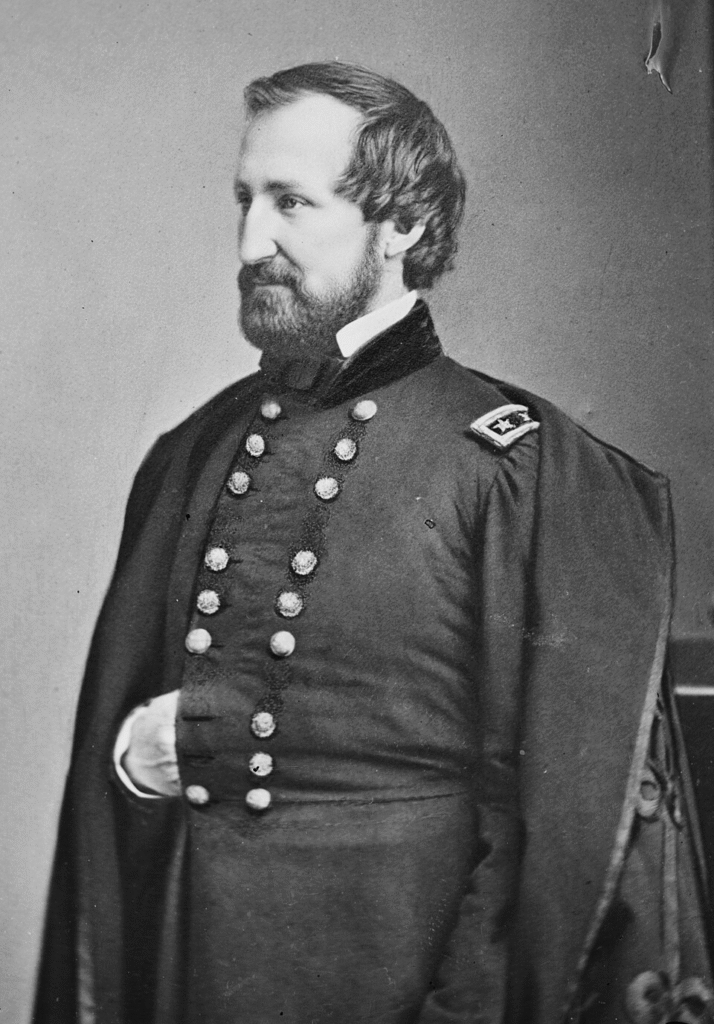
Chickamauga and the Last Real Chance for Victory
On August 16, 1863, Rosecrans advanced with three infantry corps—but made a critical error by separating them widely. Even divisions were detached from their corps. It was a golden opportunity for Bragg to destroy the Army of the Cumberland piecemeal.
If Rosecrans had been facing Robert E. Lee or Stonewall Jackson, the outcome might have been catastrophic for the Union. Instead, he faced Bragg, who initially did nothing. Bragg ordered Wheeler and Forrest to pull closer to the right flank. Wheeler had to evacuate Knoxville to Burnside’s 24,000 men on September 4. Forrest urged concentrating on Burnside and destroying him with superior numbers. Bragg ignored him.
Samuel W. Mitcham Jr. captured the moment perfectly in his biography Bust Hell Wide Open:
“Had Rosecrans been opposing Robert E. Lee and Stonewall Jackson, most of the Army of the Cumberland would almost certainly have been destroyed. Fortunately for the North, he was opposing Braxton Bragg and a set of mediocre corps commanders, so no such thing happened.”
Forrest then spotted Crittenden’s corps isolated, only six miles away. He began planning to get into their rear. But Bragg moved in the opposite direction, almost as if avoiding battle. Rosecrans finally realized his mistake and began consolidating on September 13. Bragg had four days to strike isolated elements but failed to act decisively.
The Battle of Chickamauga began September 18—one of the bloodiest of the war. Forrest fought brilliantly, operating almost like an infantry general and getting into the Union rear. Longstreet’s arrival crushed the Union line. As Federals fled, both Longstreet and Forrest wanted immediate pursuit. Bragg instead focused on Thomas’s remaining forces. Forrest continued pursuing to Missionary Ridge and saw the disordered enemy. Polk agreed an attack was possible. Forrest sent word to Bragg, who hesitated over supply concerns.
On September 22, Forrest attacked anyway but lacked infantry support and couldn’t hold the position. McLaws wouldn’t move without orders. Another critical opportunity lost—perhaps the Confederacy’s last realistic chance for victory in the Western Theater.
Independent Command and the West Tennessee Raids
In late 1863 to early 1864, Jefferson Davis met personally with Forrest and authorized him to raise an independent command in northern Mississippi, western Tennessee, and western Kentucky. He was named cavalry commander for the Department of West Tennessee and North Mississippi.
During this period, Forrest conducted his Second West Tennessee Raid. He recruited heavily—hundreds of men eager to ride with him. In about a month, he circled the Union XVI Corps, raised 3,500 soldiers, captured horses, supplies, and garrisons, mostly avoiding pitched battles. It was another smashing success.
On February 22, 1864, he won a significant victory at Okolona, destroying a force under Brigadier General William Sooy Smith that Sherman had sent to eliminate him.
In March 1864, Forrest launched his Third West Tennessee Raid. While in Jackson, Tennessee, he heard reports of Union atrocities, particularly by the 6th Cavalry under Colonel Fielding Hurst, who was extorting money from citizens under threat of burning their homes. Forrest ordered his men not to burn houses in retaliation and even posted guards at Hurst’s home to prevent it. The raid succeeded. Colonel Duckworth bluffed a garrison into surrendering at Union City. Forrest’s command returned with supplies, horses, and prisoners.
Fort Pillow: Controversy, Context, and Command
Women in Distress: Nathan Bedford Forrest’s Soft Spot
As they headed back to Mississippi, in Eaton, Tennessee, local women approached Nathan Bedford Forrest in tears, begging him to attack Fort Pillow. The fort was occupied by both white and black Union troops—the blacks being former slaves—and they were terrorizing residents, including former slave owners, with atrocities that the author chooses not to detail publicly due to their sensitive nature.
True to form, Forrest couldn’t refuse women in distress—a pattern that ran throughout his life. He had always helped ladies in need; that’s how he met his wife. Fort Pillow had been abandoned by Confederates earlier in the war. The current garrison wasn’t elite combat troops; many were used for labor, and the defenses were poorly laid out.
Forrest sent a flag of truce on April 12 demanding surrender. He promised to treat black troops as prisoners of war—an uncommon assurance at the time. Major Bradford, who had assumed command after Major Booth was killed, refused. Union soldiers in the fort taunted the Confederates with obscenities; the commander had allowed them to get drunk before the fight.
The Fight at Fort Pillow
Forrest gave the signal to charge. His men were inside quickly, and hand-to-hand fighting erupted. Uncharacteristically, Forrest did not personally lead this charge—possibly because a horse had fallen on him earlier and he was noticeably hurt. Speculation exists about why, but we will never know for certain.
The Yankees panicked. Bradford fled for his life. Many ran toward the riverbank where gunboats were supposed to evacuate them. Forrest turned captured guns on the gunboats, forcing them to withdraw and leaving the soldiers exposed.
As some tried to surrender, others who had faked surrender picked up weapons and shot Confederates in the back. At that point, Forrest’s men stopped taking chances and fired on those attempting to surrender. Forrest, directing fire from the bluff, came down and immediately stopped the killing, striking his own men with the flat of his saber to end the senseless slaughter.
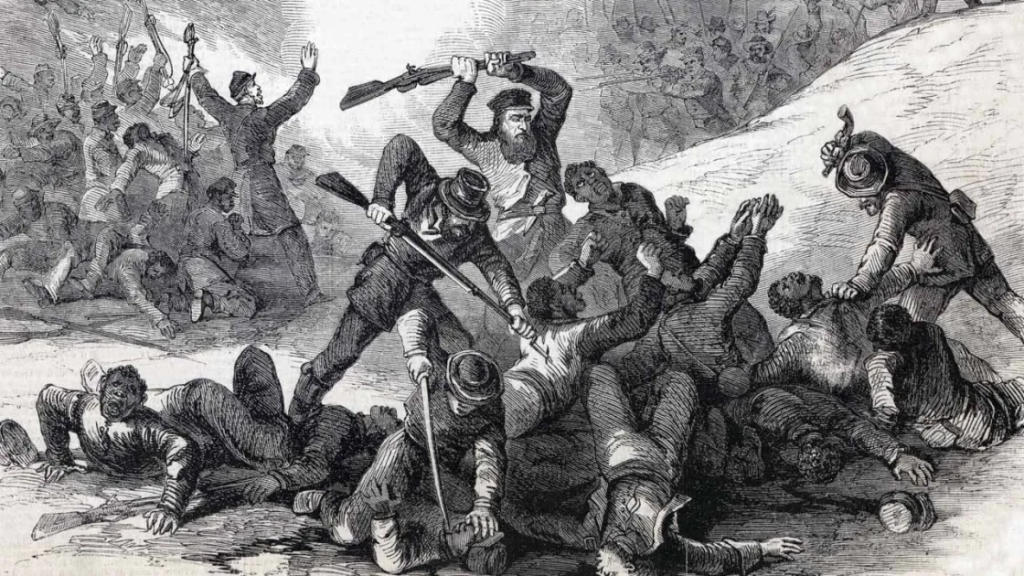
Context and Analysis: Forrest’s Role in the Incident
I am not excusing the deaths of surrendering soldiers—they happened, and as commander, Nathan Bedford Forrest bears responsibility. But context matters. Wartime propaganda was rampant. Northern newspapers sensationalized the event. Radical Republicans launched a congressional investigation with flimsy evidence. Sherman, distrusting it, ordered his own inquiry. Nothing substantive came of either. Sherman was likely aware of Union atrocities in the area as well.
Did Forrest intentionally stay out of the fort to let his men loose? Or was it his injury? It’s speculation. If intentional, it was more likely driven by anger over the atrocities Union troops had committed against civilians than by the presence of black soldiers. Notably, Forrest did have black Confederates serving in his own command.
The Atlanta Campaign: The Final Missed Opportunity
Just days after Fort Pillow, on April 15, 1864, Forrest wrote to President Davis proposing that his cavalry, combined with Stephen Lee’s, strike middle Tennessee and Kentucky to sever Sherman’s supply lines before his drive on Atlanta. This could have significantly disrupted Sherman’s campaign. Davis consulted Bragg, who rejected it over minor details, ignoring the strategic objective.
On May 5, Sherman began his Atlanta campaign, outmaneuvering Joseph Johnston, who conducted a fighting retreat. Johnston wrote six letters to Davis and Bragg urging that Forrest be turned loose on Sherman’s exposed 473-mile supply railroad—the only line sustaining his army. Corps commanders Leonidas Polk and William Hardee endorsed it. Department commander Stephen Lee did too. Even Secretary of War James Seddon and Georgia Senator Benjamin Hill appealed for approval. Davis rejected them all, following Bragg’s advice.
Davis later admitted he had been misled. The road to Atlanta remained open. Capturing Richmond or Atlanta was essential for the North to maintain public support. By failing to unleash Forrest, the Confederacy lost its final realistic chance to win independence.
Brice’s Crossroads: A Tactical Masterpiece
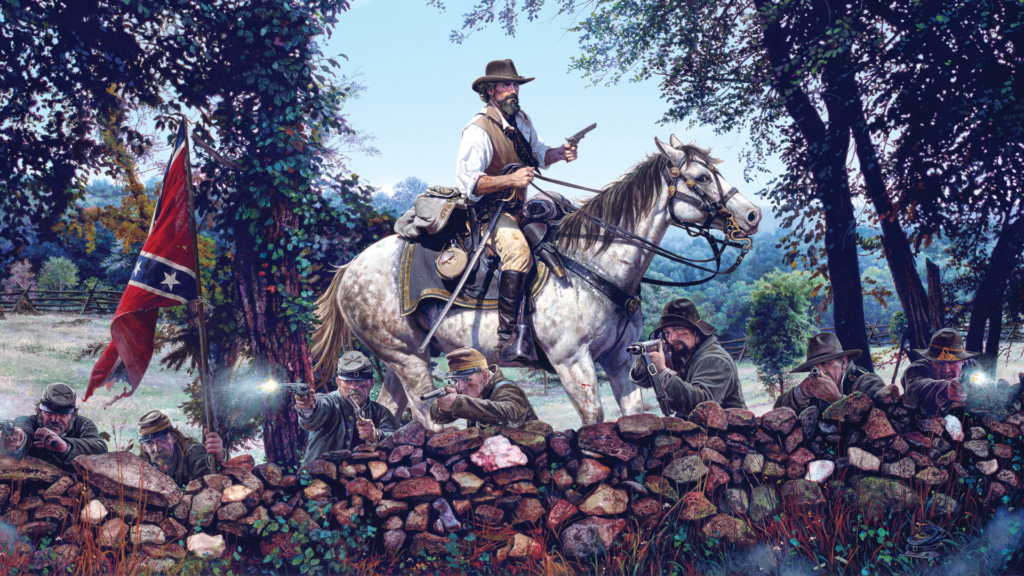
On June 10, 1864, Forrest fought what many consider his tactical masterpiece at Brice’s Crossroads. Even Field Marshal Erwin Rommel allegedly called it “the most perfect battle in world history.”
Brigadier General Samuel Sturgis led about 8,000 men from Memphis into northern Mississippi to destroy Forrest. Forrest had roughly 3,500. He struck the Union cavalry first while their infantry was strung out on the road. Then he hit both flanks of the arriving infantry, exhausted from running in the summer heat. Forrest captured the Tishomingo Creek bridge in their rear, cutting off escape. Sturgis’s command collapsed into a rout. Forrest pursued relentlessly. He captured 1,600 prisoners and massive supplies. The victory forced the Union to cancel multiple planned operations.
A month later, at Tupelo, Major General Andrew Smith led 14,000 men to neutralize Forrest. Combined with Stephen Lee, Forrest had about 8,000. Smith was cautious, dug in on a strong semi-circular position about a mile and a half long. Forrest reconnoitered and knew it was too strong. He learned Smith only had two days’ rations and would have to withdraw soon anyway. Forrest didn’t want to attack, but Lee ordered it and wanted Forrest to lead. Forrest refused, knowing it would fail. Lee attacked anyway. The fighting was heavy but unsuccessful. Smith eventually withdrew, achieving his goal of keeping Forrest away from Sherman’s supply lines.
Later Campaigns: Memphis, Johnsonville, Franklin, and Selma
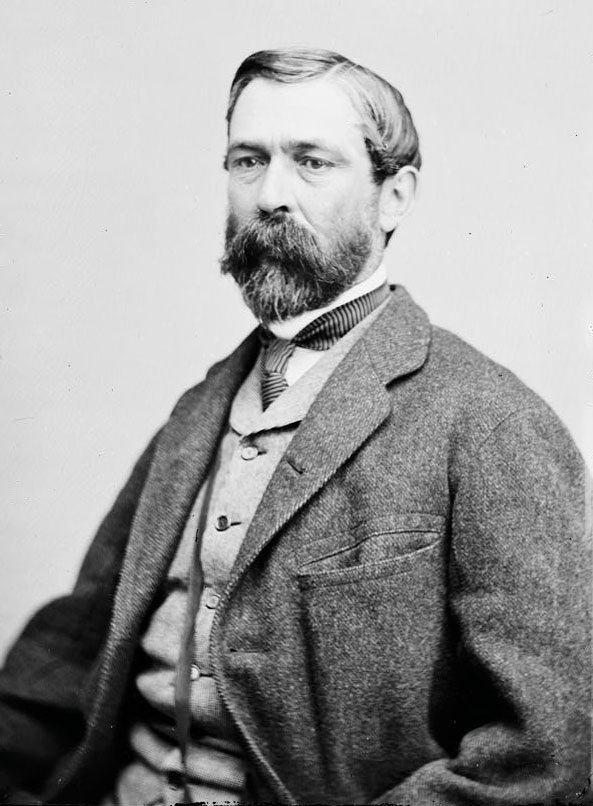
Along with Nathan Bedford Forrest and Wade Hampton III, Taylor was one of only three non-West Pointers to attain the rank of Lieutenant General in the Confederate Army.
In late summer, Forrest met Lieutenant General Richard Taylor—son of President Zachary Taylor and one of the few non-West Pointers to reach that rank, alongside Forrest and Wade Hampton III—in Meridian, Mississippi. Taylor was a strategic thinker who recognized Forrest’s value disrupting Sherman’s rear. He telegraphed Davis that he was sending Forrest against those supply lines. Unfortunately, it was too late—Sherman captured Atlanta on September 2.
Forrest conducted daring operations in Tennessee, including a nighttime raid into Memphis that nearly captured Union generals, and the highly successful Johnsonville Raid in November, where he captured a Union gunboat and steamer and used captured artillery to destroy a major supply depot.
Hood Ignores Forrest’s Warning
In November and December 1864, Forrest participated in the Battles of Franklin and Nashville under John Bell Hood. At Franklin, he urged Hood to be more cautious, but Hood was reckless. The result was defeat. After Nashville, Forrest commanded an effective rearguard that helped save thousands of Confederate soldiers during the retreat.
On April 2, 1865, now a lieutenant general, Forrest fought his final battle at Selma, Alabama—the South’s last major industrial city. Union Major General James H. Wilson led a well-equipped force of 13,000. Forrest had between 2,000 and 4,000 men. He fought a delaying action at Ebenezer Church on April 1, then defended Selma on April 2. He did all he could, but superior numbers and equipment overwhelmed his command.
Surrender
After Lee’s surrender, Forrest took his men to Gainesville, Alabama. On May 9, 1865, he issued his famous farewell address to troops who loved him and would have followed him anywhere. His military career ended. He returned to civilian life, his body worn down from years of hard campaigning. Nathan Bedford Forrest died on October 29, 1877. His funeral drew 20,000 people, including Union soldiers he had fought against for four years.
Why Was Forrest Ignored?
The West Point Problem
Forrest was brilliant. Even as “just” a cavalry commander, he consistently saw the larger strategic picture. Throughout his career, he identified at least five major instances where he spotted opportunities that his superiors ignored—opportunities that might have changed the course of the war or at least extended it significantly. There were more.
Why was he so often ignored? Much of it came down to the fact that he wasn’t a West Pointer. The professional officer class looked down on those who hadn’t graduated from the Military Academy. They didn’t give the same respect to someone who hadn’t been through that system. Bragg’s consistent resistance to Forrest’s proposals, even when endorsed by other generals and cabinet officials, reflects this institutional bias.
The Biggest Missed Opportunity of the War: Not Unleashing Forrest
Had they listened to Forrest, our country might look very different today. At the same time, I believe that if Forrest had been educated at West Point, he might not have become the commander he was. He would have been steeped in military doctrine and might have lost that innovative, out-of-the-box thinking that defined him. Having served twenty years in the Marine Corps, I know how doctrine can shape—and sometimes constrain—thinking. Forrest’s lack of formal military education was a double-edged sword: It made him more flexible and aggressive, willing to attack even when outnumbered according to conventional wisdom. But it also limited his advancement and the resources he was given.
Would he have performed as well commanding conventional infantry? I believe yes. He had an exceptional eye for opportunity and exploitation. Not having infantry assets probably hurt him in several situations. Imagine Forrest in command of the Army of Tennessee or even Jeb Stuart’s cavalry corps at Gettysburg—what might have been possible?
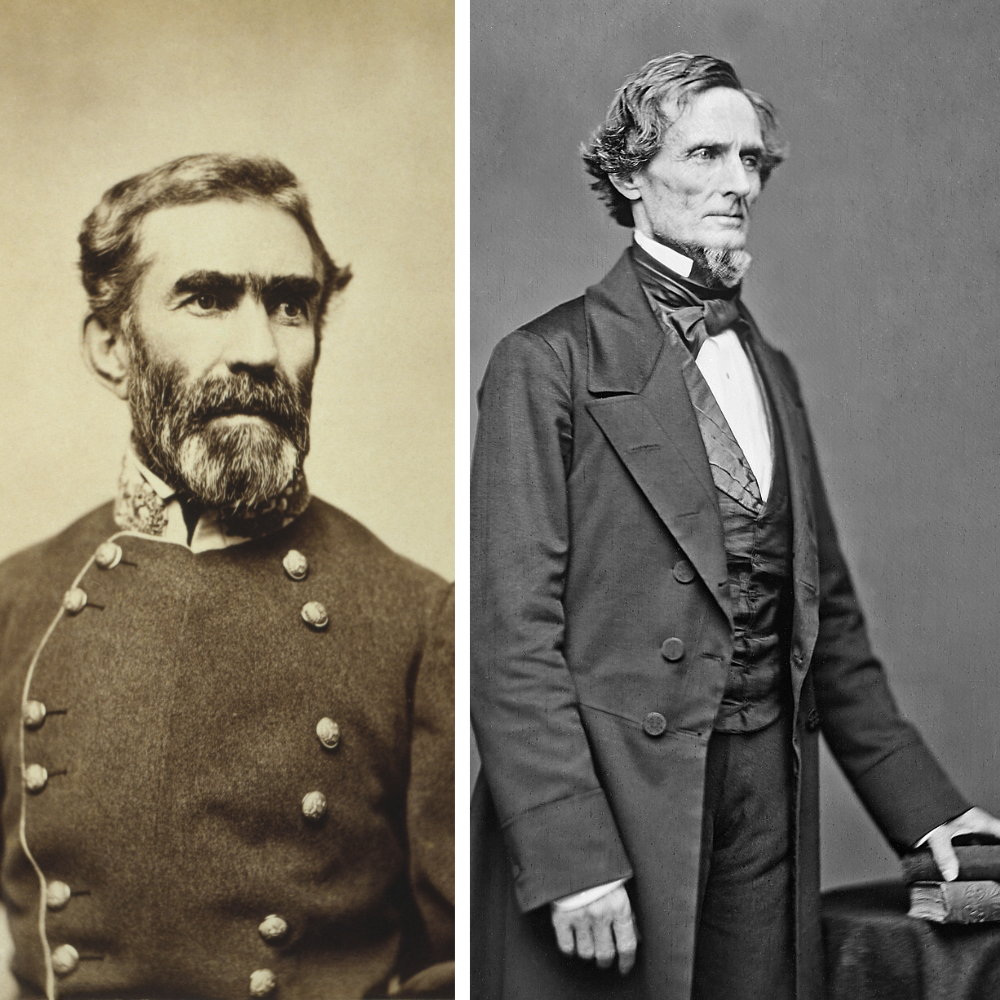
Ranking and Legacy
In my personal ranking of the top ten greatest Confederate generals, I place Nathan Bedford Forrest at number three. After deeper research for this article and my video on the subject, I think he’s much closer to number one than to number four. Given proper authority and resources, he could very well have been the greatest of them all.
Forrest’s story is ultimately a tragedy of wasted potential—not his own, but of a nation that failed to recognize and empower its most effective commander in the West. He was a product of his time: a self-made man in a society that valued pedigree and connections over raw ability. His tactics—rapid movement, concentration at the decisive point, relentless pursuit, and psychological warfare—were ahead of their time and studied by later generations of military leaders.
That’s the story of Nathan Bedford Forrest—the Wizard of the Saddle. The truth is far more interesting than the myth, and it deserves to be told with honesty, context, and respect for the historical record.
To learn more about the Civil War, visit our videos section here.
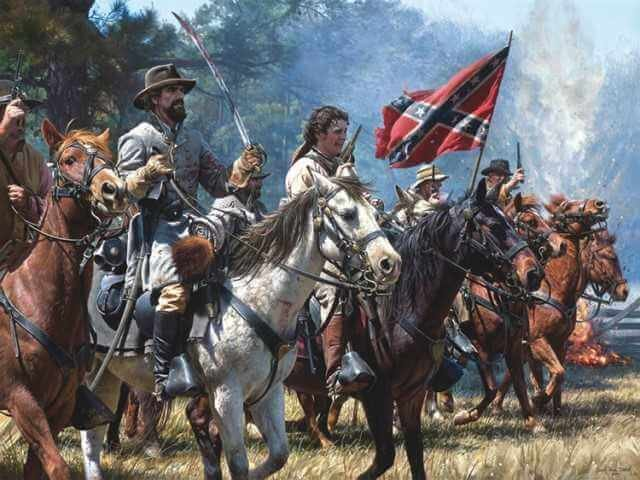
Selected Sources and Further Reading
Jordan, Thomas, and J. P. Pryor. The Campaigns of Lieut.-Gen. N. B. Forrest, and of Forrest’s Cavalry. New York: Blelock & Co., 1868. (A contemporary account drawing heavily on Forrest’s own papers and recollections; the classic early history of his campaigns.)
Mitcham, Samuel W., Jr. Bust Hell Wide Open: The Life of Nathan Bedford Forrest. Washington, DC: Regnery History, 2016. (A modern, detailed biography that challenges many traditional narratives and emphasizes Forrest’s strategic thinking.)
Additional primary material can be found in the Official Records of the War of the Rebellion (OR), particularly Series I, volumes covering the Western Theater campaigns. Forrest’s own reports and correspondence provide invaluable insight into his thinking and frustrations with higher command.
