
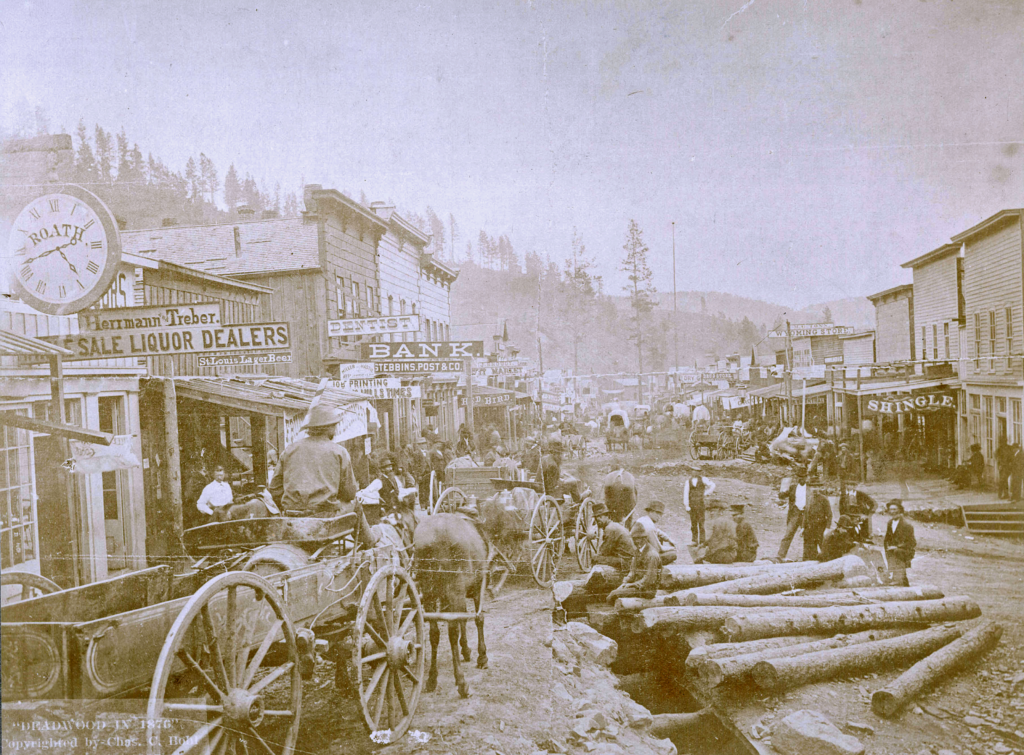
The American Wild West lasted less than twenty-five years. It rose almost overnight after the Civil War, exploded across the continent, and was largely gone by 1890. No other country has ever produced anything quite like it. How did this brief, dramatic period happen? Why was it so short? And what made it uniquely American?
Origins of the American Wild West
After the United States defeated Mexico in 1848, it acquired a vast stretch of land that included California, Nevada, Utah, most of Arizona and New Mexico, and parts of Colorado and Wyoming. Most of this territory remained unsettled. Gold was discovered in California in 1848, triggering the rush of 1849. California became a state in 1850, and other western territories began to see the first waves of settlers. Then, in 1861, war broke out between the states. For the next four years, large-scale exploration and settlement largely paused as the nation’s energy and manpower were consumed by the conflict.
The Civil War and Railroads
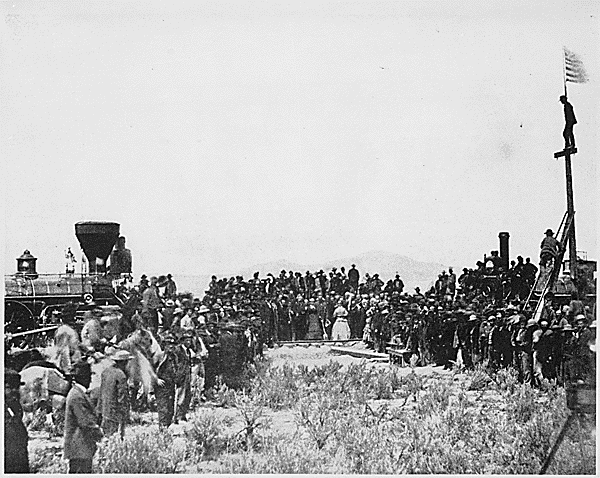
By 1865 the country was devastated, especially the South. Yet the war itself had accelerated something critical: the railroad network. During and immediately after the war, railroad construction expanded at an unprecedented pace. The first transcontinental railroad was completed on May 10, 1869, at Promontory Summit, Utah. Travel that once took months by wagon could now be measured in days. It became far easier and cheaper to move people, supplies, cattle, and equipment across the open West.
Confederate Veterans
After the war, large numbers of former Confederate soldiers and other Southerners headed west. The South lay in ruins. Farms were wrecked, the economy was shattered, and the political order many had known was gone. Many simply wanted to put the defeat behind them and start over in a place where the federal government in Washington felt more distant. The open territories offered that chance. Land was available, mining camps were appearing overnight, and the cattle trails needed men who already knew how to ride, shoot, and endure hard conditions. Veterans who had spent years in the saddle and under fire found the West a place where a man could rebuild without the constant weight of the recent past.
These men joined a broader stream of restless young Americans moving west. Their wartime experience—familiarity with weapons, comfort with hardship, and a willingness to take risks—fit the raw conditions of the mining camps and cow towns. In the Montana diggings, the Arizona silver camps, and the Kansas railheads, former Confederates mixed with men from every other part of the country, all looking for a new start and a chance at fortune.
That combination—vast newly accessible land, a generation of restless and often armed young men, and the discovery of gold and silver—ignited the classic Wild West.
Cow Towns and Mining Camps
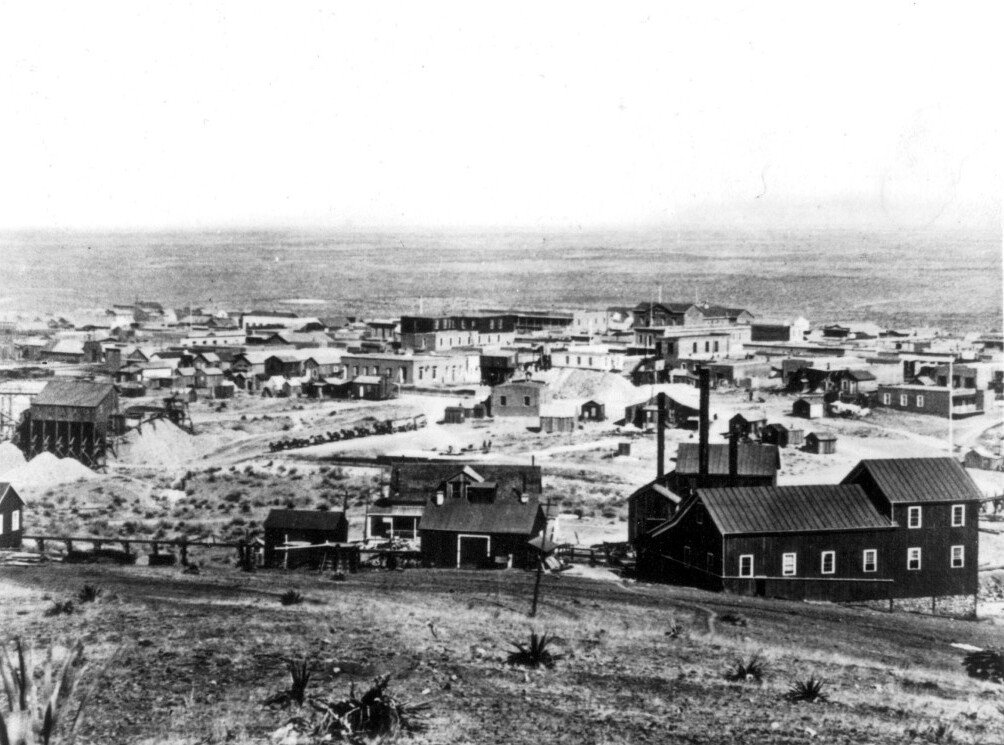
Abilene became the first major cow town, followed by Dodge City, which grew into the most famous of them. These were rough, temporary places built around the cattle trade. Cowboys who had spent months on the trail arrived with money and little patience for rules. Saloons, gambling houses, and dance halls sprang up almost overnight.
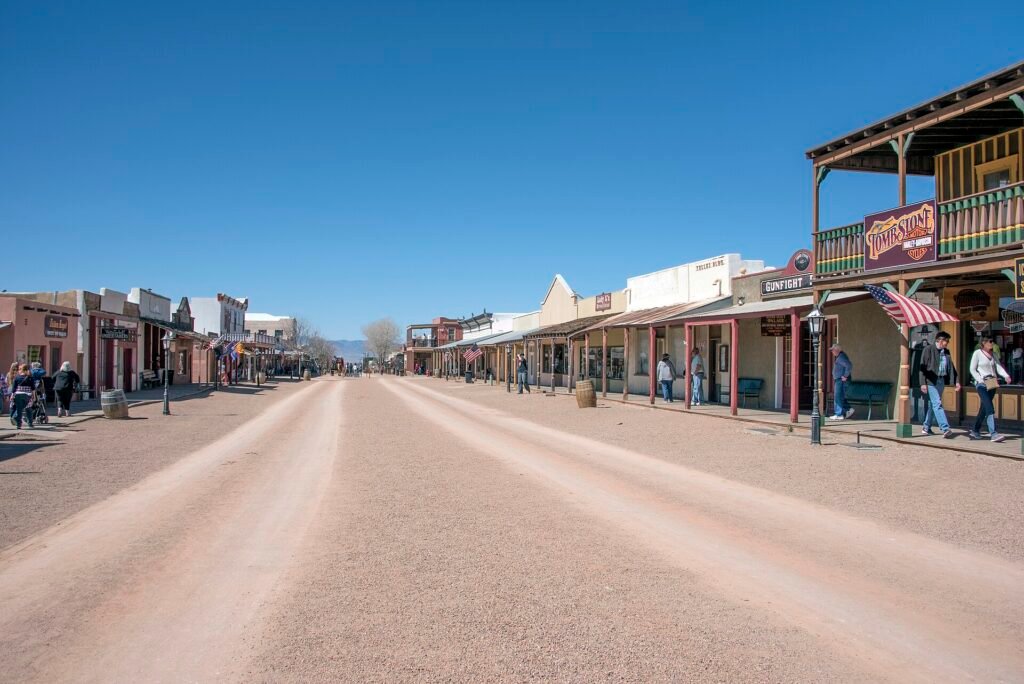
At the same time, mining rushes lit up the map. Colorado’s gold and silver discoveries created boom towns such as Leadville and Central City. In Montana, the diggings produced Virginia City and later the copper center of Butte. In 1874, gold was found in the Black Hills of Dakota Territory. Within two years the town of Deadwood had exploded into existence—crowded, muddy, and violent. Further south, silver strikes in Arizona created Tombstone in the late 1870s. The same pattern repeated across Nevada, New Mexico, and parts of Idaho and Wyoming: a strike was announced, thousands of men poured in within months, and a boomtown appeared almost out of thin air.
American Wild West Boom Towns
These were not ordinary American towns. Mining camps and cow towns typically began the same way. First came the young men—many of them single, armed, and chasing a quick fortune. Shortly afterward came the prostitutes. Saloons, gambling dens, and dance halls followed immediately. The result was a temporary society overloaded with young, aggressive men, easy money, cheap liquor, and very little formal law. Violence was common. Disputes over mining claims, card games, women, or simple insults were often settled with pistols. Towns hired temporary marshals or formed vigilance committees simply to keep order. Civilization could not keep pace with the speed of the boom.
Young and Restless War Vets
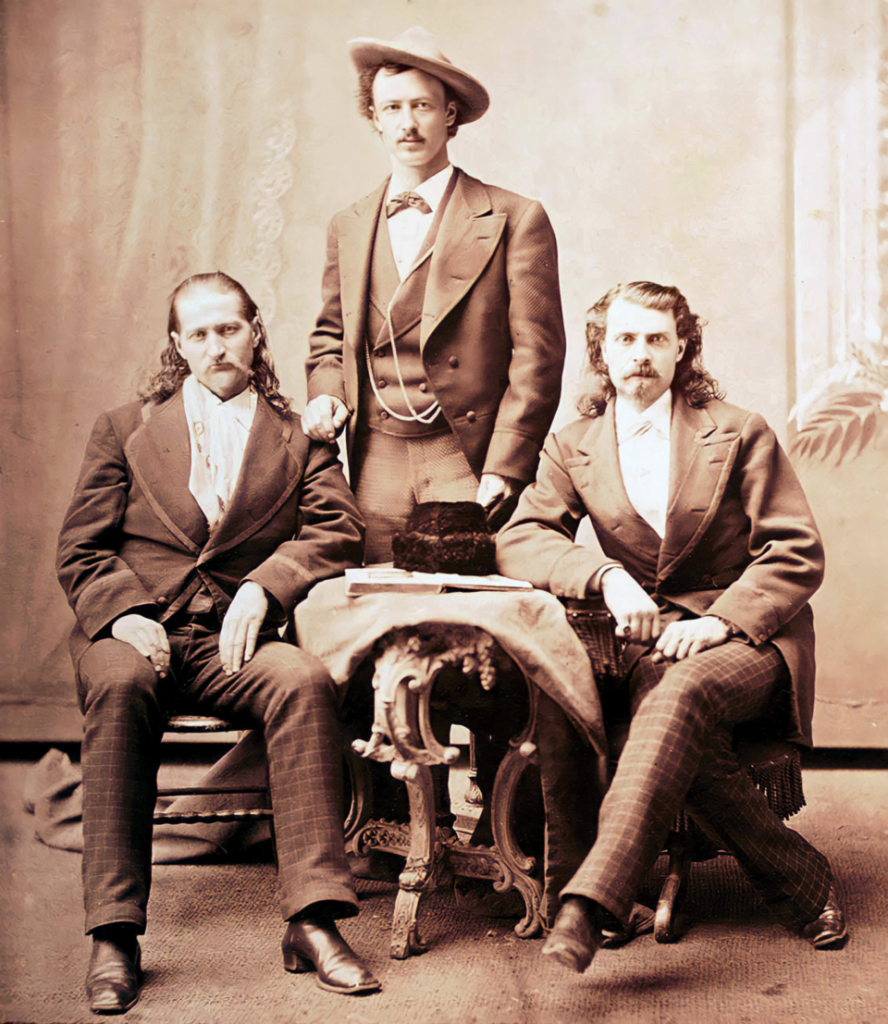
Many of the men who thrived or died in these places were products of the Civil War years. One notable example are the Confederate guerrillas from Missouri, such as Jesse and Frank James and the Younger brothers, turned skills learned as bushwhackers into bank and train robbery. Union scouts and soldiers such as Wild Bill Hickok and Buffalo Bill Cody moved west and became the archetypal lawmen, scouts, and showmen of the era. The war had trained a generation in weapons, hardship, and sudden violence, then released them into a landscape that still had almost no rules.
The Wind Down of the American West
By the late 1880s the open, chaotic phase was already ending. Several forces closed it down nearly as fast as it had begun. Railroads continued to expand, bringing not only more people but also courts, newspapers, permanent businesses, and families. Barbed wire, widely adopted in the 1880s, ended the open range and brought the great cattle drives to a close. The brutal winter of 1886–87 wiped out hundreds of thousands of cattle on the northern plains and bankrupted many ranchers. Mining camps either played out or matured into regular towns with schools, churches, and local government. Some places, such as Denver and Tucson, grew into real cities. Others shrank into quiet small towns. A few, like Deadwood and Tombstone, survived mainly as legends of what they had once been.
In 1890 the United States Census announced that the frontier line no longer existed. Settlement had become so widespread that there was no longer a clear dividing line between the settled and unsettled West. The classic Wild West, as a living period of rapid and often lawless expansion, had lasted roughly twenty to twenty-five years.
Uniquely American
What made this period uniquely American was a combination that no other nation possessed at the same moment. The United States had an enormous expanse of land available under democratic homestead laws. It had just emerged from a massive civil war that left a generation of armed, experienced, and restless young men looking for a new start. It possessed rapidly advancing technology—railroads, repeating firearms, and barbed wire—that both created the boom and then closed it. And it had a culture that began turning the entire episode into national myth while it was still unfolding, through dime novels and traveling Wild West shows.
Other countries had frontiers. None produced this exact, short-lived explosion of individual opportunity, violence, and legend in the same way. That is the real story of how the American Wild West rose—and how it was tamed.
About the Author
Ryan Sahlberg is a retired Marine Corps Infantry Officer and combat veteran with deployments to Afghanistan and Iraq. He graduated from The Citadel with a degree in History. Ryan has been visiting Civl War battlefields and Old West towns since he was a kid and he has been studying them ever since.
Sources
- Bazzi, Samuel, et al. “The Confederate Diaspora.” NBER Working Paper 31331, 2023.
- Digital History (University of Houston). “Closing the American Frontier.”
- Britannica. “Transcontinental railroad.”
- University of Montana historical accounts of the winter of 1886–87 and the end of the open-range cattle industry.
