
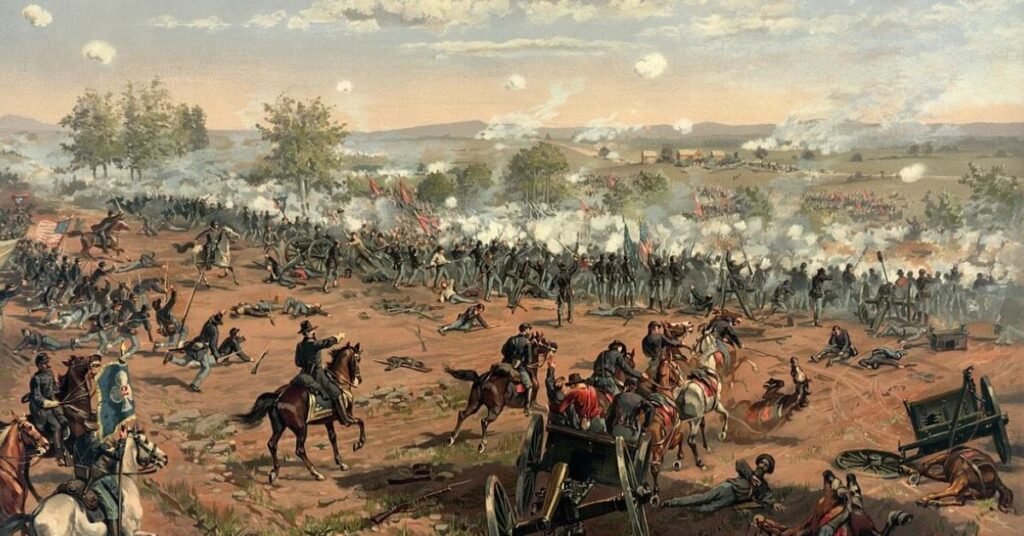
On July 1, 1863, Robert E. Lee watched Union soldiers stream through the streets of Gettysburg in disorder. Of the roughly 18,000 Federals engaged that day, only about 6,000 had reached the high ground south of town by evening.[1][2] Lee held a rare opportunity: a beaten enemy short of the ground that could save it. He did not seize it. Over the next two days, nothing catastrophic happened, but a series of decisions compounded until the chance was gone.
Gettysburg was lost through five mistakes, stacked across three days, by a high command that was no longer working as one. This is a countdown from the most visible failure to the one that made the others possible. It ends with the question students of the war have argued for more than 160 years: would Stonewall Jackson have taken the high ground that Richard Ewell left alone?
Mistake 5: Pickett’s Charge – The Attack That Should Have Never Happened at Gettysburg

The story begins at the end, on July 3, because the final assault makes it clearest that Lee should have broken contact and sought better ground.
The night before, George Meade gathered his corps commanders. They advised holding the position, and Meade agreed. Afterward, he pulled John Gibbon aside and told him that if Lee attacked the next day, it would come against Gibbon’s front.[3] Meade had read his opponent correctly.
Lee held no comparable council. He ordered roughly 12,500 men to cross nearly a mile of open ground against the center of Winfield Scott Hancock’s II Corps on Cemetery Ridge.[4] Only George Pickett’s division was fresh. The rest came from divisions already mauled on July 1, now under J. Johnston Pettigrew and Isaac Trimble.
Longstreet’s Objection
James Longstreet, who would direct the assault, objected. He later wrote that he told Lee no 15,000 men ever arrayed for battle could take that position.[5] Lee had hoped to strike early, in step with renewed fighting on Culp’s Hill. Pickett’s division was not yet up, and the Culp’s Hill fight ended by late morning. The chance for a coordinated blow passed before the main attack began.
Artillery Bombardment Failure
Around 1 p.m., between 150 and 170 Confederate guns opened the largest bombardment of the war.[4] Most of it missed. The day was hot and nearly windless, so smoke hung low, and gunners could not see their fall of shot. Doctrine called for aiming high to achieve airbursts over the Union line, but the narrow crest of Cemetery Ridge left little margin for error. Many shells sailed over and burst harmlessly in the rear.
Ammunition quality compounded the problem. After the Confederate States Laboratory on Brown’s Island in Richmond exploded in March 1863, replacement fuses from Selma and Charleston were issued.[7] Contemporary accounts and later analysis indicate those fuses burned roughly a second longer than expected, so shells burst 150 to 200 yards beyond their intended targets.[6] Organization added another handicap. After Chancellorsville, Lee reorganized the army from two infantry corps into three and abolished the general artillery reserve, distributing the guns among the corps. On July 3, the batteries were never fully massed under one hand against the point of attack. The bombardment was loud and spectacular. It failed to break the Union center.
Mistake 4: Lee Marches Blind – Stuart’s Ride
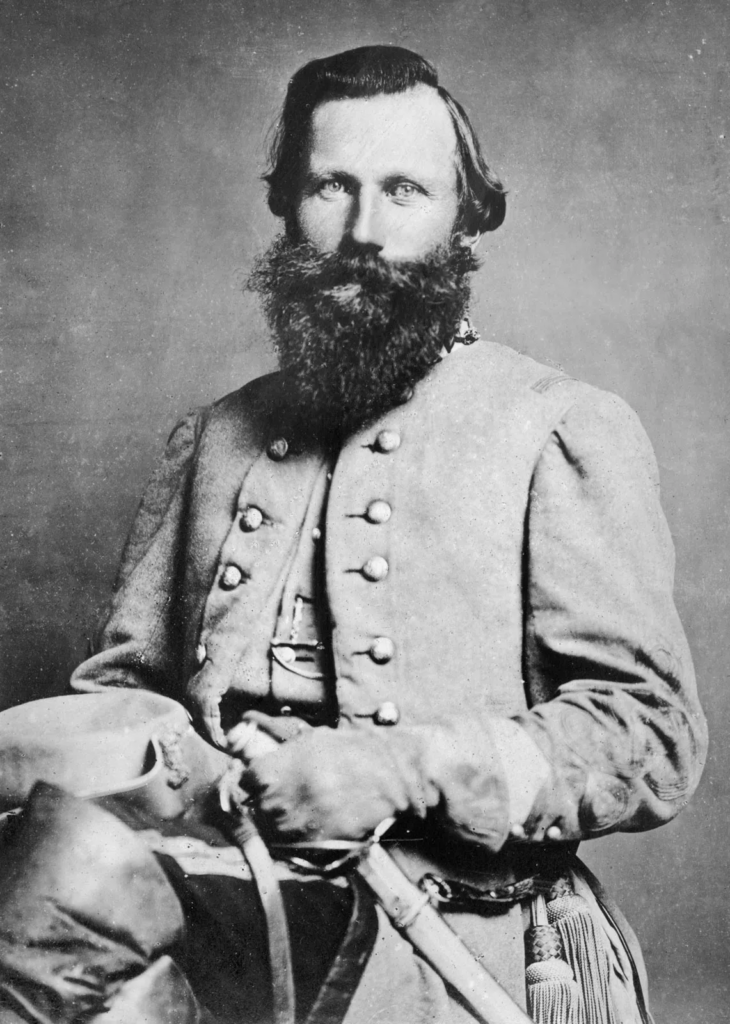
If Meade knew where the blow would fall, why did Lee still order it? Part of the answer lies more than a week earlier, when Lee lost the eyes of his army.
On June 25, J.E.B. Stuart set out with three brigades of cavalry under orders that gave him wide latitude. He was to screen the army’s advance, and if he judged he could pass around the Union army unhindered, cross the Potomac east of the mountains, gather supplies, and rejoin Ewell’s corps in Pennsylvania.[8] Stuart took the long way around. Federal columns blocked his path, and he spent valuable time capturing a large wagon train at Rockville, Maryland. His troopers rode almost without rest for more than a week.
Meanwhile Lee advanced into Pennsylvania without the cavalry screen that normally told him where the enemy was. Stuart did not rejoin the army until the afternoon of July 2, too late to provide the reconnaissance Lee needed or to fight effectively.[8] On July 3, Lee sent him east of town with orders to protect the army’s flank; Stuart hoped to strike the Union rear while Pickett’s Charge went forward. Union cavalry under David McMurtrie Gregg, reinforced by George Armstrong Custer’s Michigan brigade, met him on East Cavalry Field and stopped him.
Stuart bears much of the blame for disappearing. Lee also wrote orders loose enough to permit a raid of that scope, and as army commander he bore responsibility for letting his main cavalry force operate so far from the army during an invasion of enemy territory. Historians Eric Wittenberg and J. David Petruzzi titled their study of the episode “Plenty of Blame to Go Around.”[8]
Mistake 3: Longstreet Refuses Hood’s Request
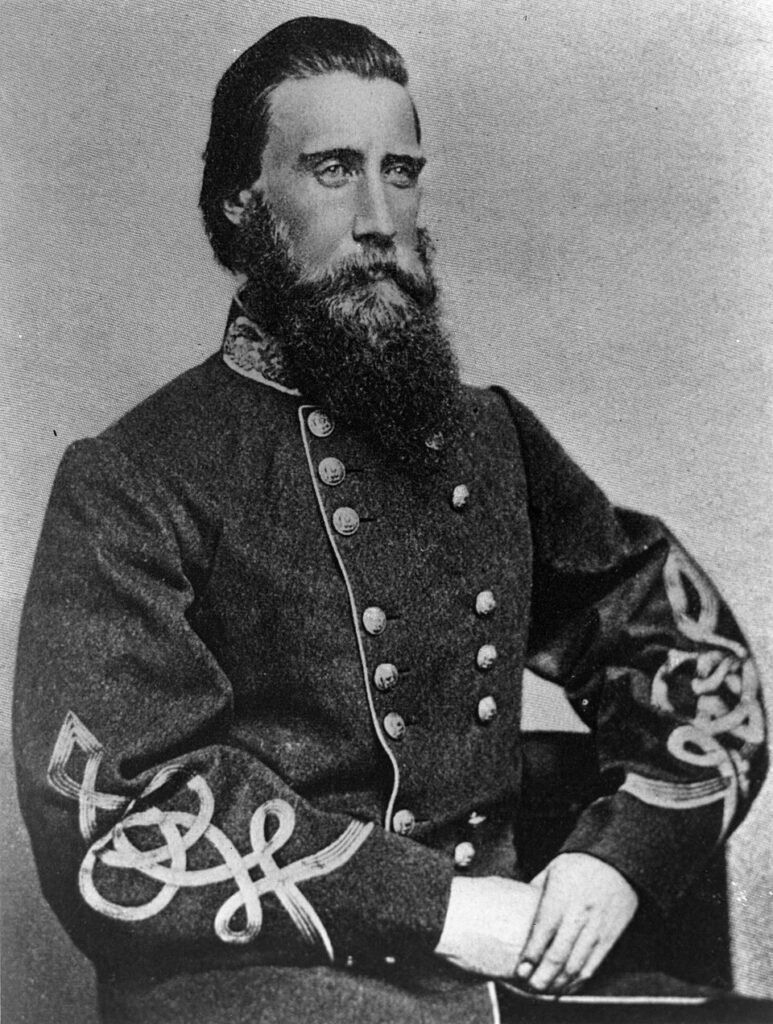
On the afternoon of July 2, on the Confederate right, John Bell Hood studied the ground in front of his division and did not like what he saw. The boulder field at Devil’s Den and the rocky slopes of the Round Tops gave defenders natural strongpoints and overlapping fields of fire against any attack driven straight up the Emmitsburg Road. His scouts reported that the way around Big Round Top to the south looked open.[9]
Hood asked Longstreet, more than once, for permission to swing right and turn the Union flank. Longstreet refused. As Hood remembered it, the answer was always the same: Lee’s orders were to attack up the Emmitsburg Road.[5] Longstreet later explained that a similar movement had already been proposed to Lee and rejected.[9]
So the division went straight in. Hood was seriously wounded early in the attack, and command passed to Evander Law. His Texans and Alabamians fought through Devil’s Den and up the slopes, where some of them ran into Strong Vincent’s brigade, including the 20th Maine, on Little Round Top. Hood read the ground correctly, and Longstreet likely knew it. In that army, no subordinate was prepared to alter Lee’s plan once the fighting had begun, or to tell Lee to his face that the plan was wrong.
Mistake 2: An Attack That Never Came Together
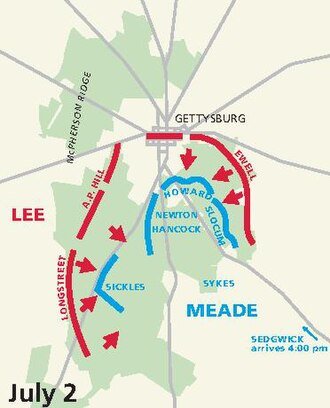
Lee intended July 2 to be a coordinated assault: Longstreet striking the Union left while Ewell pressed Culp’s Hill and Cemetery Hill. What he got was close to the opposite.
Longstreet received his orders around 11 a.m. and was allowed to wait for Evander Law’s brigade, which arrived shortly before noon.[10] His column then had to reach its starting point without being seen by the Union signal station on Little Round Top. Near Black Horse Tavern, he found his troops still in view, so he turned the column around and took a longer route screened by the trees on Seminary Ridge. His men did not reach their positions along the Emmitsburg Road until about 3:30 p.m.[10]
By then the field had changed. Without orders from Meade, Daniel Sickles had pushed his III Corps forward to the Peach Orchard, about half a mile beyond its assigned position.[9] The move created a vulnerable salient, but it also put Union troops on ground the Confederate plan assumed would be open, throwing off Longstreet’s alignment.
The attack that followed rolled forward in stages. Hood went in first, then Lafayette McLaws, then brigades of Richard Anderson’s division advancing in echelon. At the other end of the line, Ewell’s assaults on Culp’s Hill and East Cemetery Hill did not begin until evening. Because Meade held interior lines along his fishhook-shaped position, he could shift reinforcements from quiet sectors to threatened ones and plug each gap as it opened. Lee needed one coordinated blow. Instead, he delivered a series of separate ones spread across the afternoon and evening. The National Park Service’s handbook on the battle puts it simply: lack of coordination in attack counted heavily against the Confederates.[10]
A Commander Under Strain
By the evening of July 1, the strains inside Lee’s command were already plain. Stuart was missing. Henry Heth and A.P. Hill had brought on a major battle Lee had not wanted to fight yet. Ewell had hesitated in front of the hills south of town. Longstreet would soon argue openly for a different plan, something Lee had rarely faced from a senior subordinate.
The deeper problem was the absence of Stonewall Jackson, mortally wounded at Chancellorsville two months earlier. Lee’s style of command relied on broad, discretionary orders. Jackson had turned such orders into fast, aggressive action. Ewell, new to corps command, tended to read the same kind of orders as reasons for caution. That difference mattered most on the evening of July 1.[11]
Mistake 1: THe Lost Evening of July 1 – Cemetery Hill and Culp’s Hill
The most consequential mistake came on the first day. In the late afternoon, the Union I and XI Corps gave way north and west of Gettysburg, and their survivors poured back through the town toward Cemetery Hill.[1] This was Lee’s window, and the Confederates missed it in three ways.
Failure to Seal the Town
They failed to seal the town. Pender’s division still had brigades that had not been heavily engaged. Fresh units under James Lane and Edward Thomas might have pushed through the town and cut off thousands of fleeing Federals.[13] Instead, the pursuit fell largely to units already bloodied in the day’s fighting. A.P. Hill, whose corps had taken heavy losses, rested his weary men and kept Anderson’s fresh division out of the fight.[15]
Cemetery Hill
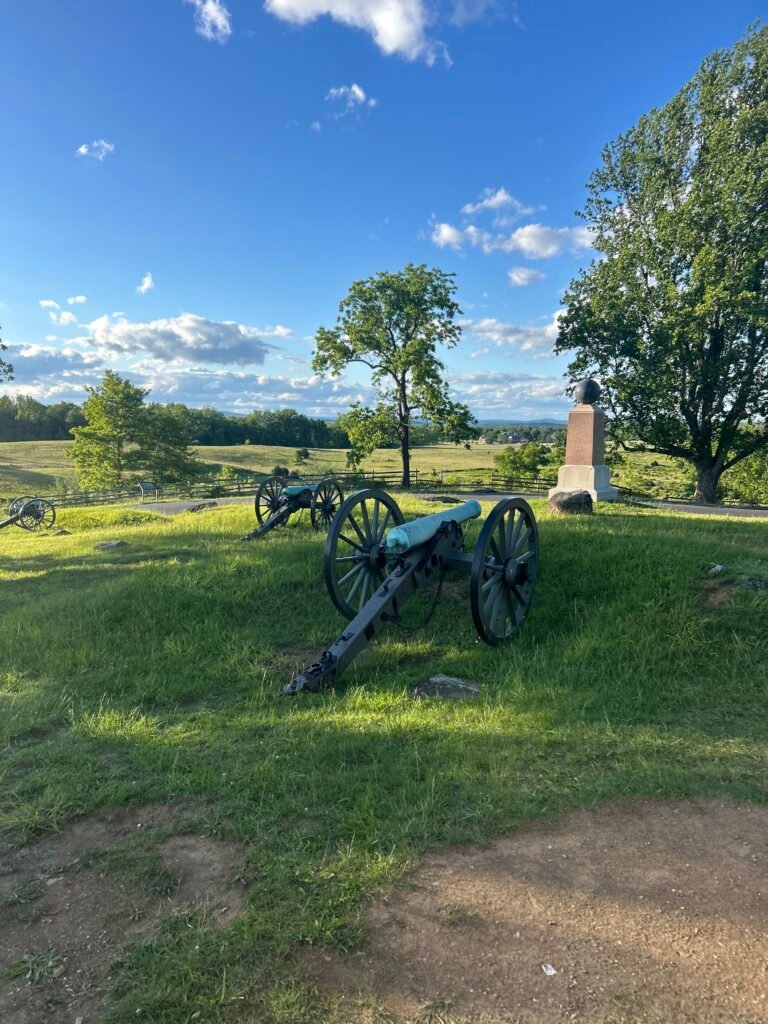
They failed to take Cemetery Hill while it was still being organized. Winfield Hancock arrived and helped rally the retreating troops on the hill, which had already been chosen as a rallying point.[1] Union artillery was massed there, and the remnants of James Wadsworth’s division, including the Iron Brigade, were sent to occupy Culp’s Hill. Ewell and Jubal Early concluded that the position would require a major attack and asked for help from Hill’s corps. Lee replied that Hill had no men to spare.
Lee’s instructions were for Ewell to take the hill “if he found it practicable,” while avoiding a general engagement until the other divisions arrived. The phrase “if practicable” first appears in Lee’s revised report of January 1864; no written copy of the original order is known to survive. Either way, Ewell heard the caution more clearly than the opportunity. When William “Extra Billy” Smith reported Union troops approaching on the York Pike, Early sent John Gordon’s brigade to join him there. Early later called it an unfounded report. Two brigades that might have joined an assault were kept out of it, and Edward Johnson’s division was still on the road. As historian Stephen Sears has observed, Hill still had Anderson’s fresh division at hand, and Lee was, in effect, waiting for Longstreet to arrive rather than forcing the issue.[12]
Culp’s Hill
They failed to take Culp’s Hill while it was nearly empty. Confederate reconnaissance found the hill apparently unoccupied that evening. What the scouts missed was a thin line of exhausted survivors from Wadsworth’s division, which had lost at least half the officers and men it took into the fight.[14] That detachment was shattered. Ewell had Harry Hays’s and Isaac Avery’s brigades formed and available, roughly two hours of daylight left, and Johnson’s division marching up behind them. That was enough combat power to take Culp’s Hill at dusk. Instead, Ewell held Hays and Avery in place to wait for Johnson. When Johnson arrived, he went forward under hesitant orders and stopped at the base of the hill.[1] That hesitation, more than bad luck, was Ewell’s real failure on July 1.
Would Jackson Have Taken the Hill?
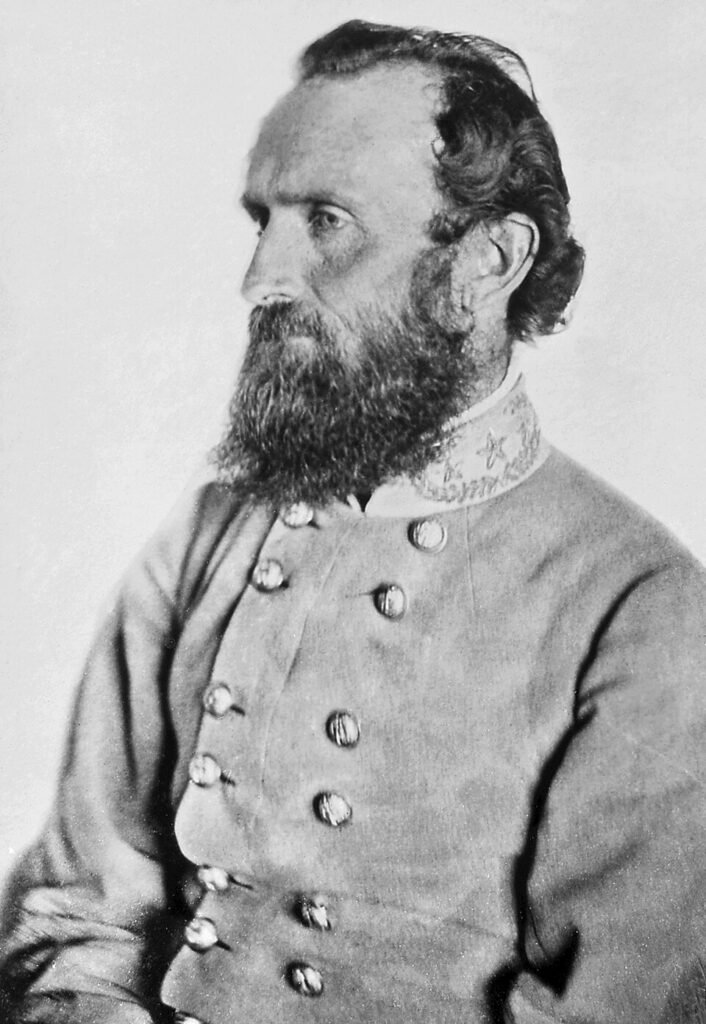
That brings us to the question every student of Gettysburg eventually confronts: would Stonewall Jackson have taken the high ground that Ewell left alone?
Probably not Cemetery Hill, at least not by frontal assault. Hancock had organized the position, Union artillery was massed on it, and every hour of daylight made it stronger. By sunset it was well on its way to becoming a fortress.
Culp’s Hill is another matter. Jackson’s record suggests he would not have waited for Johnson to close up. He would likely have sent Hays and Avery forward at dusk, with daylight still left, and held the hill by dark. A Confederate force on Culp’s Hill would have overlooked Cemetery Hill from the east and threatened the Baltimore Pike, Meade’s main line of supply and retreat. Meade would have had to fight for that ground on July 2 or abandon the position altogether.
Counterfactuals can never be proven. But if the Confederates had held Culp’s Hill on the night of July 1, there would have been no second day as we know it, and no Pickett’s Charge. Five mistakes cost Lee the battle, and the first of them, made in the fading light of July 1, may have been the one that made the other four possible.
Was Ewell simply too cautious, or did Lee’s discretionary orders put him in an impossible position? The evidence suggests a share of both.
Notes
- National Park Service, Gettysburg National Military Park, Historical Handbook Series No. 9, “The First Day,” https://npshistory.com/handbooks/historical/9/hh9c1.htm
- American Battlefield Trust, “July 1, 1863,” Hallowed Ground, https://www.battlefields.org/learn/articles/july-1-1863
- National Park Service, Gettysburg National Military Park, Historical Handbook Series No. 9, “The Third Day,” https://npshistory.com/handbooks/historical/9/hh9e.htm
- American Battlefield Trust, “Pickett’s Charge,” https://www.battlefields.org/learn/articles/picketts-charge
- Helen D. Longstreet, Lee and Longstreet at High Tide (1904), quoting James Longstreet’s 1877 account and John Bell Hood’s letter, reprinted in Hood, Advance and Retreat, 57–59.
- Earl J. Hess, Pickett’s Charge: The Last Attack at Gettysburg (Chapel Hill: University of North Carolina Press, 2001); see also Bert Barnett, “‘The Batteries Fired With Very Decided Effect’: Confederate Artillery Operations on the First Day at Gettysburg,” Gettysburg National Military Park Seminar Papers.
- “Brown’s Island Explosion,” Civil War Richmond, https://civilwarrichmond.com/events/brown-s-island-explosion.
- Eric J. Wittenberg and J. David Petruzzi, Plenty of Blame to Go Around: Jeb Stuart’s Controversial Ride to Gettysburg (El Dorado Hills, CA: Savas Beatie, 2006); “Why Was Jeb Stuart Too Late?” Civil War Times, February 2007.
- American Battlefield Trust, “Longstreet at Gettysburg, the Second Day,” https://www.battlefields.org/learn/articles/longstreet-gettysburg-second-day.
- National Park Service, Gettysburg National Military Park, Historical Handbook Series No. 9, “The Second Day,” https://npshistory.com/handbooks/historical/9/hh9d1.htm.
- Kristopher D. White, “Richard Ewell at Gettysburg,” Civil War Times, August 2010, https://historynet.com/richard-ewell-at-gettysburg/.
- Stephen W. Sears, Gettysburg (Boston: Houghton Mifflin, 2003).
- National Park Service, Official Report of Brig. Gen. Edward L. Thomas, https://www.nps.gov/gett/learn/historyculture/official-report-of-brig-general-edward-l-thomas.htm.
- National Park Service, Official Report of Gen. James Wadsworth, https://www.nps.gov/gett/learn/historyculture/official-report-of-general-james-wadsworth.htm.
- Harry W. Pfanz, Gettysburg—The First Day (Chapel Hill: University of North Carolina Press, 2001).
