
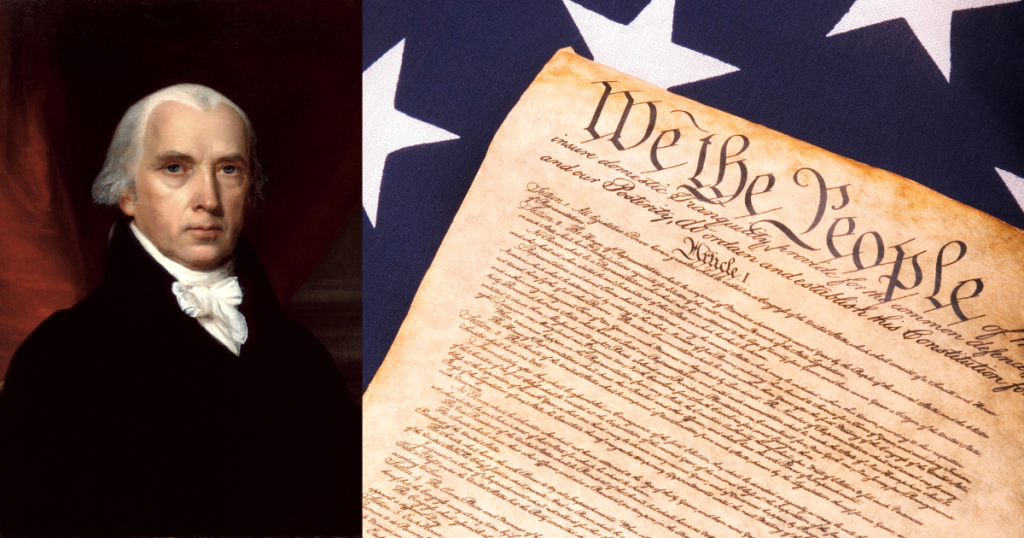
James Madison brought a national veto over the states and a Senate based on people, not states. By mid-July, both were dead.
On July 16, 1787, the men meeting in Philadelphia voted five states to four and gave the small states equal votes in the Senate. James Madison had spent that summer arguing that this would let a minority of the people control the government. He lost that vote. Before the summer was over, he would lose the other thing he came for, too.[1] The final U.S. Constitution was not what Madison envisioned.
Why They Were in Philadelphia
The government they had was the Articles of Confederation, and it did not work. Congress could ask the states for money. It could not make them pay. It could not regulate trade between the states. Treaties were a joke if one state refused to honor them. Any change to the Articles required every single state. Rhode Island could kill anything.
They had already tried once, at Annapolis in 1786. Five states out of thirteen showed up. So Congress called another meeting in Philadelphia and gave that meeting one job, in writing: the delegates were authorized “for the sole and express purpose of revising the Articles of Confederation,” and of reporting back to Congress and the states.[2]
The Plan Madison Brought
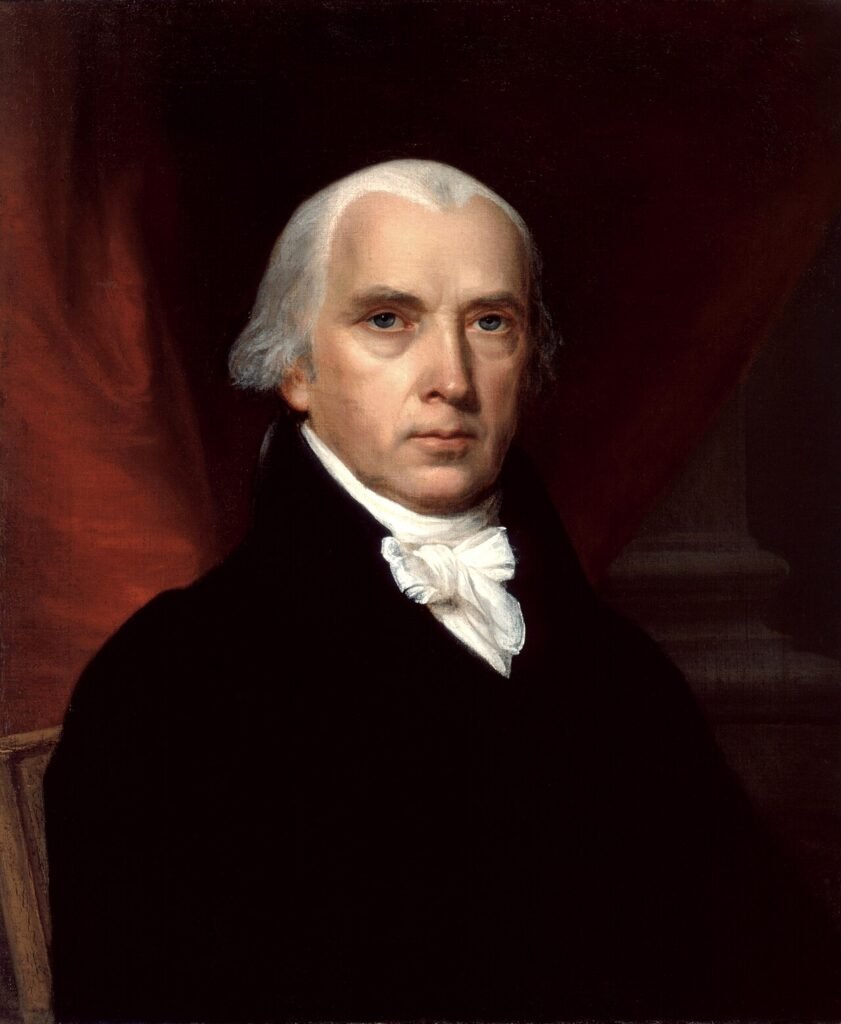
Madison did not come to revise. He came with a design. On May 29, Governor Edmund Randolph stood up and introduced what we call the Virginia Plan. Madison’s fingerprints are all over it. Two houses of Congress. Representation in both based on population or wealth, not on states as equals. The first house elected by the people. The second chosen by the first house from candidates named by the state legislatures. A national executive. A national judiciary.[3]
Then the part James Madison cared about most. Congress would have the power “to negative all laws passed by the several States, contravening in the opinion of the National Legislature the articles of Union.” A federal negative. A national veto over the states. Not a court reviewing a state law after the fact. Congress itself deciding whether a state law stood. That was the piece he came for.[4]
The Room Turns
The small states were not going to sit still for it. On June 15, William Paterson of New Jersey put a different plan on the table. Keep the structure of the Articles. One house. One vote per state. Give Congress more power to tax and to regulate trade. Do not erase the states as equals.[5]
Paterson made his case, and then the room voted. When they voted on his plan on June 19, only three states stood with him: New York, New Jersey, and Delaware. Maryland split. Connecticut—the state that would end up brokering the compromise—voted the other way. But put yourself in Delaware’s seat for a second. If population decides everything, what are you? That is the argument they made all summer, and it was not going away.
The Great Compromise
By July the convention was stuck, and a committee got to work. Roger Sherman and Oliver Ellsworth of Connecticut proposed the deal that became the Great Compromise: the House of Representatives by population, the Senate with equal suffrage for every state, senators chosen by the state legislatures. On July 16 they voted. Five states to four. Yes: Connecticut, New Jersey, Delaware, Maryland, North Carolina. No: Pennsylvania, Virginia, South Carolina, Georgia. Massachusetts divided. A narrow win for the small states, and a straight loss for Madison.[6]
He fought it. His argument was that equal votes in the Senate meant a minority of the people could control the government. He made that argument to the end. He just did not have the votes.
The Federal Negative Dies
The very next day, July 17, he lost the other thing. The federal negative went down. Only three states voted with him. And the same day, the convention agreed that the Constitution and federal law would be supreme over state law. A court would police the line after the fact. Not Congress before it. Madison had argued all along that the courts were not enough.[7]
Thomas Jefferson, in Paris, had already made the case to Madison a month earlier. He did not like the negative. “Primâ facie I do not like it,” he wrote on June 20. Not more than one state law in a hundred, he said, concerned the union at all. Then he asked the question that ended up mattering: would not an appeal from a state court to a federal court be just as effective a remedy, and exactly proportionate to the defect? That was the substitute the room picked. Jefferson asked for it in June. They adopted it in July.[8]
What They Built Instead
So look at what was left on the table by midsummer. A proportional Senate: dead. A veto over the states: dead. What survived was a federal government of listed powers, operating directly on individuals, with the states still sitting in the Senate as states.
That last part matters more than people realize. The Senate was the one place where the states themselves had structural leverage inside the federal government—elected by state legislatures, not by the people directly.
Three Men Would Not Sign
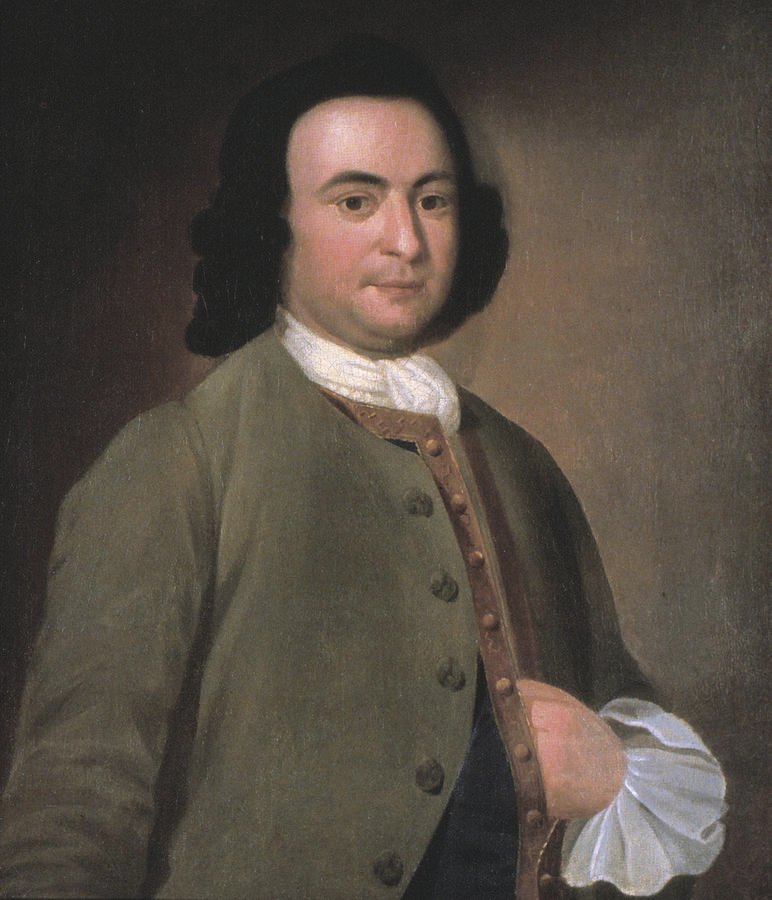
On September 17 the document was finished and the delegates gathered to sign. Thirty-nine men signed it. Three who were in the room refused: George Mason and Edmund Randolph of Virginia, and Elbridge Gerry of Massachusetts. Randolph had introduced the Virginia Plan back in May. By September he would not put his name on the result. The man who opened the convention by proposing a new government would not sign the one it produced.[9]
George Mason’s Warning
George Mason did not just refuse to sign. He put his reasons in writing that September and had them printed. He wanted a bill of rights. The convention had voted that down as unnecessary. And he went after one clause in particular: Article I, Section 8—the necessary and proper clause.[10]
“Under their own construction of the general clause, at the end of the enumerated powers, the Congress may grant monopolies in trade and commerce, constitute new crimes, inflict unusual and severe punishments, and extend their power as far as they shall think proper; so that the state legislatures have no security for the powers now presumed to remain to them, or the people for their rights.” – George Mason
He lost that argument too. The phrase is still in the document.
Madison’s Letter
Here is the part of the story that matters most. On October 24, 1787, Madison wrote to Jefferson in Paris. He was explaining the hardest problem the convention had faced: the partition of power between the general government and the local governments. He was honest about it. Some, he told Jefferson, had contended for abolishing the state governments altogether. Some for a negative on their laws. The majority settled on a system of limited power without the negative.[11]
Then he argued his own case one more time. It may be objected, he wrote, that the judicial authority under the new system would keep the states within their proper limits and supply the place of a negative on their laws. His answer was that it is more convenient to prevent the passage of a law than to declare it void after it is passed. That is the man we call the Father of the Constitution, a month after the document was signed, telling a friend that the design he brought with him did not survive the room. He knew what the substitute cost him. He wrote it down.[12]
The Constitution Madison Didn’t Write
James Madison is called the Father of the Constitution. If he is the father, he is the father of a child he did not fully recognize. The proportional Senate he wanted is not in the document. The veto over the states he wanted is not in the document. The bill of rights he argued was not necessary was proposed by the First Congress two years later and ratified in 1791, in part because men like George Mason would not let it go.
What we have is a federal government of listed powers, operating on individuals, with the states still in the Senate as states, and a necessary and proper clause that later generations would treat as a blank to fill in.
The states had one piece of structural leverage left inside the federal government. State legislatures picked the senators. The Seventeenth Amendment took that away in 1913. Was that progress, or was that the last thread being cut? That is a question, not a verdict.[13]
Notes
- Madison’s Notes of the Federal Convention, July 16, 1787, Avalon Project, Yale Law School. The convention adopted equal suffrage in the Senate five states to four, Massachusetts divided.
- Resolution of Congress, February 21, 1787, calling the Philadelphia convention “for the sole and express purpose of revising the Articles of Confederation.” Avalon Project.
- Madison’s Notes, May 29, 1787; Avalon Project, “Variant Texts of the Virginia Plan, Text A.” Randolph introduced the resolutions; Madison drafted the substance.
- Virginia Plan, Resolution 6: the national legislature “to negative all laws passed by the several States, contravening in the opinion of the National Legislature the articles of Union.” Avalon Project.
- Madison’s Notes, June 15 and June 19, 1787. Paterson’s New Jersey Plan; the convention rejected it, with New York, New Jersey, and Delaware in the minority and Maryland divided.
- Madison’s Notes, July 16, 1787. The Connecticut Compromise vote as recorded by Madison.
- Madison’s Notes, July 17, 1787: the convention rejected a congressional negative on state laws and adopted the principle that became the Supremacy Clause. Founders Online, “Power of the Legislature to Negative State Laws, [17 July] 1787.”
- Thomas Jefferson to James Madison, June 20, 1787, Founders Online, National Archives. Jefferson’s “primâ facie I do not like it,” the one-in-a-hundred remark, and the proposed appeal from state courts to a federal court.
- Madison’s Notes, September 17, 1787. Thirty-nine signatures; Mason, Randolph, and Gerry declined.
- George Mason, “Objections to the Constitution of Government Formed by the Convention” (1787). National Constitution Center historic-document library; also Online Library of Liberty.
- James Madison to Thomas Jefferson, October 24, 1787, Founders Online, National Archives. Madison reviews the rejected negative and the limited-power settlement.
- Same letter. Madison answers the claim that judicial review could replace a congressional negative on state laws; he preferred stopping a statute before it passed.
- U.S. Constitution, Amendment XVII (ratified 1913), providing for popular election of senators.
