
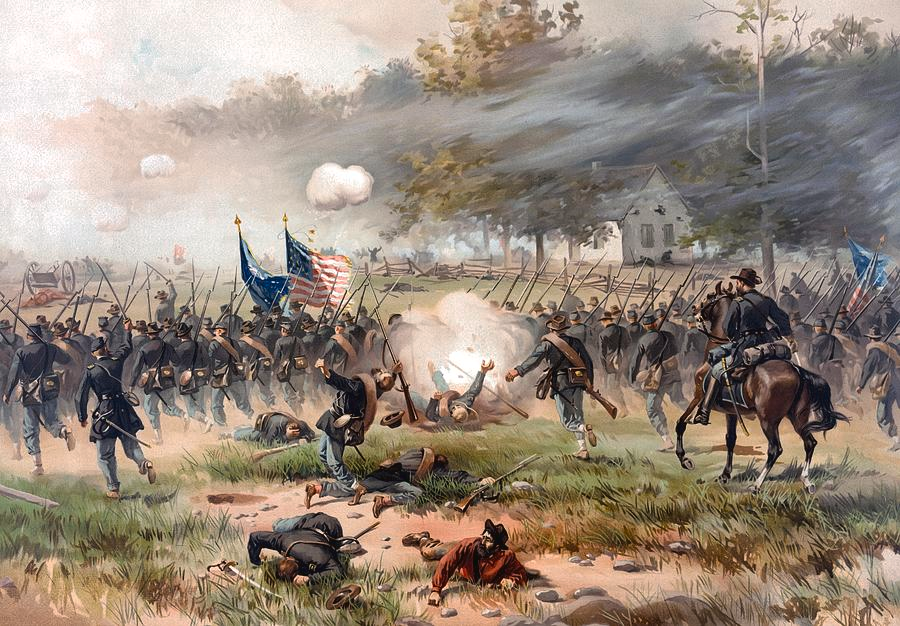
Gettysburg was the bloodiest battle of the Civil War. Antietam was the bloodiest single day of combat in American history. Both statements are true, and both are counting the same thing: bodies. The trouble with counting bodies is that it mostly tells you how many men showed up. Roughly 165,000 soldiers were on the field at Gettysburg. Of course, the number is large.
So ask a different question. Not how many men died, but what were your odds of dying if you were the one standing there?
Rank the war that way and the familiar list comes apart. Gettysburg drops to second. Antietam barely hangs on at tenth. Eight battles you have heard a good deal less about were worse for the men who fought them than the three days in Pennsylvania. And the engagement at the top of the list — the one that killed a larger share of the men present than any other battle of the war — lasted about four hours.
The Criteria
A list like this is only as good as the rules behind it, and if I don’t state the rules up front, there’s no reason to trust the order. There are three, plus one exclusion.
First: fatalities, not casualties.
A casualty figure lumps together the dead, the wounded, the captured, and the missing. At some battles in this war, the casualties are almost entirely men who surrendered. Harpers Ferry looks catastrophic on paper — some 12,000 Union casualties — but that is a garrison laying down its arms, not a garrison being destroyed. A disaster, certainly. A different kind of disaster than the one this list measures.
Second: fatalities as a share of every man engaged, both sides.
One number for the whole battlefield, not “Union losses” or “Confederate losses.” Everybody who was there.
Third: a minimum of 5,000 men on the field.
Without a floor, a couple hundred men in a bad afternoon outranks Shiloh, and that isn’t a list anyone wants.
Finally, no sieges and no campaigns. Vicksburg ran forty-seven days. Comparing that to an afternoon’s fighting isn’t a comparison; it’s a category error.
That last rule cost several battles worth including. Before the countdown, the ones that just missed.
Four That Didn’t Make It
Two were too small to qualify. Two depend on which historian you believe.
Ball’s Bluff — 259 dead of ~3,400 engaged (7.55%)

On October 21, 1861, a Union force crossed the Potomac about thirty-five miles upriver from Washington on a badly organized reconnaissance, got pinned against a hundred-foot cliff with the river at its back, and was destroyed. 259 men died there out of roughly 3,400 engaged on both sides.
That is 7.55 percent — fatalities, not casualties. Nothing else in this war comes close. The battle that takes first place on the main list sits just under six percent. Ball’s Bluff beats it by more than a point and a half. Measured this way, Ball’s Bluff is the deadliest battle of the American Civil War. It is not on the list because 3,400 men falls under the 5,000 line.
One Caveat
Many of those 259 did not fall to gunfire; they drowned. Men went off the bluff into the Potomac in the dark, some wounded, some under fire, and bodies turned up downstream in Washington for days afterward. Some older sources count only 49 killed and place 714 men in the missing column. The drowned are counted as fatalities here, because they died in the battle and because most modern accounts do the same — but it is a judgment call, and if you reject it, the number moves.
Among the dead was Colonel Edward Baker, a sitting United States Senator from Oregon and a close enough friend of Abraham Lincoln that the president had named a son after him. He remains the only sitting member of Congress ever killed in combat.[1] When word reached Washington that a senator had fallen in a pointless river crossing, Congress reacted. That December it created the Joint Committee on the Conduct of the War, a body of legislators that spent the next three years investigating, second-guessing, and in some cases ruining Union generals. Charles Stone, the commander responsible for the crossing, was arrested, imprisoned for roughly six months, and never charged with anything.[2]
3,400 men on a riverbank. It reshaped how the North ran the war.
Rappahannock Station — 121 dead of ~4,000 engaged (3.02%)
On November 7, 1863, a Union night assault overran a Confederate bridgehead on the Rappahannock; 121 men died out of about 4,000 engaged. That would have landed around ninth. 4,000 is under the line, so it’s out.
The rule is applied twice in view. It is not a rule invented to produce a preferred list.
Brice’s Cross Roads — 2.75% or 2.88%
This one is a genuine coin flip.
On June 10, 1864, in northern Mississippi, Nathan Bedford Forrest brought 3,500 cavalry against a Union column of roughly 8,100 infantry and cavalry under Samuel Sturgis. Outnumbered better than two to one, on ground of his choosing, in brutal heat, Forrest took them apart. Sturgis lost more than 2,000 men — over 1,600 of them captured — along with sixteen guns and his supply train. Forrest’s own losses came to 492, including 96 dead.[3] War colleges still teach the battle as a model of how a smaller force beats a larger one.
So why isn’t it on the list? Because the Union fatality count is disputed. The standard breakdown gives 223 killed.[4] The American Battlefield Trust uses a higher overall casualty figure, closer to 250.[3]
Twenty-seven men. At 223, Brice’s Cross Roads is eleventh. At 250, it’s ninth.
This ranking uses the lower number, so it’s out. If you would rather trust the Trust, slot it in at nine and bump Antietam.

Spotsylvania Court House — 2.4% to 2.8%, depending on strength estimates
Spotsylvania, May 1864. The Bloody Angle. Twenty hours of hand-to-hand fighting in the rain, in a trench, over a few hundred yards of earthworks. Around 4,200 men died across the whole engagement.
The problem is the denominator. Nobody agrees on how many men were actually engaged. Estimates for Grant’s force run from 100,000 to 115,000; Lee’s from 52,000 to 63,000. Run the low estimates and Spotsylvania comes out near 2.8 percent — tied for tenth. Run the high ones and it drops to 2.4, and it isn’t close.
There is a second problem, and it’s the one that decides the matter. Spotsylvania lasted fourteen days. That is not a battle in the sense used here. That is a campaign, and campaigns are excluded. So it’s out. Even though it is more well-known.
10. Antietam
September 17, 1862 — 3,675 dead of 132,000 engaged (2.78%)

We begin with the one everybody knows. Antietam is the bloodiest single day of combat in American history, a record that has held for more than 160 years. Roughly 3,600 men died in about twelve hours along a creek in western Maryland.
And it lands tenth. That is not a knock on Antietam; it is the entire point of the exercise. When you put 132,000 men on a field, the raw number becomes enormous no matter what happens to them.
A farm road ran through the center of the battlefield, worn down below the level of the surrounding fields by decades of wagon traffic. Confederate infantry filed into this sunken road and found themselves in a ready-made trench. For about three hours, roughly 2,200 defenders — later reinforced — held off Union attacks by a force approaching 10,000. Federal brigades came up over the rise in front and were cut down at close range. Then Union troops finally reached a position from which they could fire straight down the length of the road, and the best cover on the battlefield became the worst place on it. When the fighting subsided, some 5,500 men lay dead or wounded along a few hundred yards of farm lane.[5]
They stopped calling it the sunken road that afternoon. It has been Bloody Lane ever since. Antietam gave Lincoln the victory he needed to issue the Emancipation Proclamation. It also gives us our number ten, and a useful reminder that the biggest number and the worst odds are not the same thing.
9. Olustee
February 20, 1864 — 296 dead of 10,500 engaged (2.82%)

Florida barely appears in general accounts of the war: small population, few railroads, no major cities worth taking. Olustee is the exception. It is the largest battle fought in the state, and it was a disaster.[6]
In February 1864, a Union force under Truman Seymour pushed inland from Jacksonville, aiming to cut Confederate supply lines and install a loyal state government in time for the fall election. Seymour had beaten Florida militia before and expected more of the same. What he did not know was that Confederate reinforcements had come down from Charleston.
The two forces collided in open pine woods near Ocean Pond — roughly 5,500 Federals against 5,000 Confederates under Joseph Finegan. There were no earthworks and no good ground to hold, just men standing in the trees shooting at each other at close range.[7] Seymour fed his regiments in piecemeal, one at a time, into a Confederate line already formed, and they were shot to pieces one at a time.
By evening the Union force had lost about a third of its strength: 1,861 casualties out of 5,500 men, including 203 killed.[8] The 54th Massachusetts covered the retreat. Remember that regiment; they will appear again on this list.
8. Shiloh
April 6–7, 1862 — 3,482 dead of 110,053 engaged (3.16%)
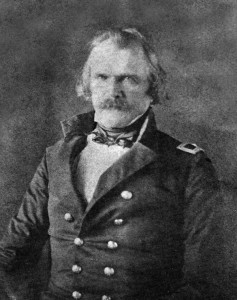
Number eight is the battle that told America what kind of war this was going to be. Before Shiloh, North and South were both operating on a fantasy: one big battle, one clean decision, home by autumn. Manassas had been ugly, but it was a single afternoon and about 900 dead.
Then April 1862. Albert Sidney Johnston brought 44,000 Confederates out of Corinth and fell on Grant’s army at Pittsburg Landing at dawn on a Sunday. Grant was not present when it started. His men were in camp; some were cooking breakfast. The first day was a rout that very nearly worked. Union divisions were pushed back through their own tents. A pocket of Federal troops held a sunken farm road in the center long enough to buy Grant the afternoon; the survivors called it the Hornet’s Nest, for the sound the bullets made coming through the brush. Johnston himself was hit in the leg, bled to death behind his own lines, and became the highest-ranking officer on either side killed in combat during the war.[9]
Overnight, Buell arrived with reinforcements. On the second day, Grant attacked and pushed the Confederates back toward Corinth.
23,000 casualties in two days — more, by the standard comparison, than the Revolution, the War of 1812, and the Mexican War combined. Roughly 3,500 dead. Newspapers demanded Grant’s removal; Lincoln refused, reportedly with the line that he could not spare the man because he fought.[10] Nobody talked about a short war after Shiloh.
7. Chickamauga
September 18–20, 1863 — 3,969 dead of 125,000 engaged (3.18%)

Number seven is the second-costliest battle of the war in raw numbers and the largest Confederate victory in the West. It was also, by most accounts, the most confused major battle either side ever fought.
Northwest Georgia, September 1863. Rosecrans had maneuvered Bragg out of Chattanooga without a fight and had grown overconfident; his corps were strung out through mountain gaps, beyond supporting distance of one another. Earlier, Bragg had missed multiple opportunities to destroy each one of Rosecrans’ Corps individually.
The ground was dense second-growth woods, with visibility in places under 50 yards. Units went in, lost contact with everything on their flanks, and fought whatever appeared in front of them. Nobody above brigade level had a clear picture of anything for two days.
The Battle
On the twentieth, Rosecrans was told there was a gap in his line. There wasn’t. He ordered a division to shift over and close it, and in doing so created the exact gap he was trying to fill. James Longstreet’s men, newly arrived from Virginia, walked into it by accident. The Union right collapsed, and Rosecrans was swept off the field with the wreckage, all the way back to Chattanooga.[11]
What saved the army was George Thomas, who took what remained of the Union left, formed a line on Snodgrass Hill and Horseshoe Ridge, and held until dark against everything Bragg could throw at him.[12] He has been the Rock of Chickamauga ever since.
Bragg won. He also lost around 20 percent of his army — ten generals down and a catastrophic number of junior officers.[13] He did not pursue, and within two months the Confederate advantage in Tennessee was gone for good. Nearly 4,000 dead in three days of fighting that the men could barely see.
6. Wilson’s Creek
August 10, 1861 — 562 dead of 17,550 engaged (3.20%)

Number six comes from the theater most narratives skip entirely, and it helps explain how a battle in August 1861 produced a higher fatality rate than Antietam.
Missouri was a slave state that never left the Union, its population split roughly down the middle. There was no front line. Neighbors fought neighbors. The irregular war that developed here produced Quantrill’s raiders, the Lawrence massacre, and eventually General Order No. 11, which forcibly emptied the rural districts of four western counties of their entire population regardless of loyalty.[14] More than a thousand separate engagements were fought in Missouri; only Virginia and Tennessee saw more. The fighting had a viciousness the eastern armies largely avoided, because out here it was not two armies. It was a civil war inside a civil war.
Wilson’s Creek was the first major battle of it. Nathaniel Lyon had about 5,400 men near Springfield. Facing him were more than 12,000 Confederates and Missouri State Guard. Lyon was outnumbered more than two to one, his enlistments were expiring, and he had been refused reinforcements.[15]
So he attacked anyway, splitting his force in two. Half of it — Sigel’s column — was routed early. Lyon took the rest onto a rise the survivors named Bloody Hill and held it through repeated Confederate assaults across roughly six hours in punishing heat. During the third assault, Lyon was hit in the chest and died on the hill, the first Union general killed in the war.[16]
His successor pulled out. Twelve percent of everyone on that field became a casualty; three percent of them died. And Missouri spent the next four years tearing itself apart.
5. Franklin
November 30, 1864 — 1,939 KIA of ~56,000 engaged (3.46%)

Franklin did not have to happen.
November 1864. John Bell Hood had taken what remained of the Army of Tennessee north, trying to draw Sherman out of Georgia. The night before, at Spring Hill, he had Schofield’s Union army caught on a road in the dark — and through some combination of confused orders and exhausted subordinates, the entire Federal column marched past his campfires and got away clean.[17]
Hood woke humiliated. Every account of that morning describes a man in a rage.
He caught Schofield at Franklin that afternoon. The Federals were dug in behind earthworks on the edge of town, with artillery, and had spent hours preparing. Hood’s own corps commanders told him not to do it. Forrest offered a flanking movement instead. Hood ordered a frontal assault across two miles of open ground.
The Assault
Most of his artillery had not come up, so there was no bombardment to speak of. Around 20,000 men stepped off in the late afternoon in full view of the Union line with nothing in front of them but empty field. For scale: Pickett’s Charge went in with about 12,500 men across roughly three-quarters of a mile after two hours of artillery preparation.[18] Franklin was larger, longer, and went in cold
The fighting lasted about five hours, much of it after dark and hand-to-hand at the works. When it ended, six Confederate generals were dead or mortally wounded, including Patrick Cleburne, arguably the best division commander the South had in the West. Fourteen general officers in all were casualties — six killed or mortally wounded, seven wounded, one captured — along with fifty-five regimental commanders.[19] Hood lost roughly 6,000 men in an afternoon and gained nothing.[20]
Two weeks later at Nashville, the Army of Tennessee ceased to exist as a fighting force.
4. Murfreesboro (Stones River)
December 31, 1862 – January 2, 1863 — 2,971 dead of 76,400 engaged (3.89%)

Number four is the battle nobody remembers, and by the numbers it is one of the worst of the entire war. The American Battlefield Trust runs the arithmetic independently and reaches the same conclusion: of any major battle in the Civil War, Stones River produced the greatest percentage of casualties — 3.8 percent killed, 19.8 percent wounded, 7.9 percent missing or captured. Higher than Shiloh. Higher than Antietam.[21]
That is a casualty figure, not a fatality figure, so it is not the measurement this list uses. The gap between the two is worth pausing on, because these two battles demonstrate the entire argument better than any pair. Roughly 31 percent of the men at Murfreesboro were killed, wounded, or lost — a slightly larger share than at Gettysburg. But a smaller share of them died: 3.89 percent against Gettysburg’s 4.26. Stones River produced more suffering per man engaged; Gettysburg produced more graves. Rank by casualties and Murfreesboro leads.
The Battle
The battle begins with one of the strangest coincidences of the war. Rosecrans and Bragg camped within earshot of each other outside Murfreesboro, Tennessee, on the last night of 1862. Both men had written the same battle plan: attack the enemy’s right at dawn. The story that the regimental bands serenaded one another across the fields that night, trading tunes and finishing together on “Home, Sweet Home,” is probably too good to be entirely true, but a number of veterans wrote it down.
Bragg struck first, and the timing decided the shape of the battle. The Confederate attack rolled up the Union right and bent Rosecrans’s army back on itself into a hook, its back to the river.
What held was the center. Union troops stood in a four-acre patch of cedar and rock — the Round Forest — and refused to move through repeated assaults. The men who survived called it Hell’s Half Acre.[22]
Then it stopped. On New Year’s Day both armies sat in the freezing cold and stared at each other. On the second, Bragg attacked again, this time into massed Union artillery, and Breckinridge’s assault lost more than 1,800 men in well under an hour — about 36 percent of the attacking force, a casualty rate exceeded only by Pickett’s Charge.[23]
3,000 dead across three days, nearly four percent of everyone present. Lincoln later wrote to Rosecrans that the country could scarcely have survived losing that battle.
3. Battery Wagner
July 18, 1863 — 282 dead of 6,800 engaged (4.15%)

Number three is the smallest battle on this list, and it is here because of what happened in about ninety minutes on a strip of sand.
Battery Wagner was a Confederate earthwork guarding the approach to Charleston harbor, and its position was almost perfectly chosen. On one side the Atlantic; on the other, impassable marsh. The only approach was a narrow neck of beach — in places under sixty yards wide — that funneled attackers directly into the guns. The Union had already tried it once and failed. On July 18, 1863, they tried again.
The regiment that led the assault was the 54th Massachusetts, commanded by Robert Gould Shaw. They went in at dusk, up that strip of sand, into concentrated fire. Some reached the parapet; a handful got over it and fought inside the fort. Shaw died on the wall. The regiment lost roughly 40 percent of its strength — 281 men, of whom 54 were killed or mortally wounded and another 48 were never accounted for.[24] The assault failed.
Roughly 5,000 Union troops made the attempt. Two hundred forty-six of them died in about an hour and a half.
2. Gettysburg
July 1–3, 1863 — 7,058 dead of 165,620 engaged (4.26%)

Number two has to earn its place twice.
Gettysburg has the highest absolute death toll of any battle in the war, just over 7,000 men. That is the number everybody knows. But it also lands second by rate, which is the harder test, because 165,000 men were present. Sustaining a four percent fatality rate across an army that size is very difficult.
Gettysburg managed it in three days.
Day One
Day one was a meeting engagement, two armies stumbling into each other at a crossroads town, neither commander wanting a fight there. The Confederates won it and drove the Federals back onto the high ground south of town — which turned out to be the worst possible outcome for Lee, because that high ground is where the Union army spent the next two days.
Day Two
Day two was the slugfest, and it was the real battle. Longstreet attacked the Union left in the late afternoon and the whole southern half of the field ignited at once: Devil’s Den; the Wheatfield, which changed hands six times and swallowed regiments whole; the Peach Orchard, where Sickles had pushed his corps forward into a salient it could not hold and watched it destroyed; Little Round Top, where the extreme left of the Union line held by a margin that does not bear thinking about. Farther north, Confederate attacks nearly took Culp’s Hill and East Cemetery Hill in the dark. It was hours of grinding, disconnected, close-range fighting across a five-mile front. At the end of it, the Union line was still there.
Day Three
Day three was the haymaker. Lee had tried both flanks, so on the afternoon of July 3, after the largest artillery bombardment yet seen in the war, he sent roughly 12,500 men across three-quarters of a mile of open, rising ground at the center of the Union position.
Pickett’s Charge lasted less than an hour. Only a single Confederate brigade briefly reached the stone wall at the top. Casualties in the attacking force ran better than fifty percent — some 6,555 men.[25] When Lee ordered Pickett to reform his division afterward, Pickett is supposed to have answered that he no longer had one.[26]
7,000 dead in three days. Lee never mounted another offensive campaign in the North.
The Crater
July 30, 1864 — 865 dead of 14,600 engaged (5.92%)
Not Gettysburg. Not Antietam. A four-hour disaster outside Petersburg, Virginia, that began as the most ingenious plan of the war and ended as one of its worst massacres.
Summer 1864. Grant and Lee were locked in trenches around Petersburg and neither could move. Then Lieutenant Colonel Henry Pleasants — a mining engineer in civilian life, commanding a regiment full of Pennsylvania anthracite miners — came to his superiors with a proposal. His men would dig a tunnel under the Confederate line and blow it up.
The army engineers dismissed the idea as impractical, largely because the tunnel would have to run longer than four hundred feet, a distance they believed could not be ventilated. They refused to lend assistance or expertise.[27] Pleasants did it anyway, improvising ventilation and hauling spoil out in cracker boxes. His men completed 511 feet of tunnel, ending in galleries packed with four tons of black powder directly beneath a Confederate fort.[28]
The Explosion
At 4:44 on the morning of July 30, it went off. The explosion vaporized a section of the Confederate line and left a hole in the earth more than 170 feet long, 60 feet across, and 30 feet deep, killing at least 278 men instantly.[28] The defense had a hole blown straight through it. The road to Petersburg was open.
And then it fell apart.

The division trained for weeks specifically to lead the assault had been drilled to go around the crater and fan out along the line. It was pulled at the last minute. Burnside had his remaining division commanders draw lots for the job.[29] The officer who drew it was, by most accounts, drunk, and never briefed his men.
They went in with no plan and no instructions. And instead of going around the hole, they climbed down into it.
The Disaster
Thousands of men funneled into a pit thirty feet deep with sheer walls and could not get out the far side. The Confederates recovered, formed on the rim, and fired down into the mass of them. The reserve division was finally sent in behind them, into the same trap.
Four hours. Fourteen thousand six hundred men engaged. 865 dead — 5.92 percent, the highest fatality rate of any battle of the war that meets these criteria.
Grant wrote afterward that it was the saddest affair he had witnessed in the war. He also noted, correctly, that they would never have a better opportunity, and had thrown it away.
One note on the arithmetic
The Union strength figure of 8,500 is the assault force. Some sources count the entire Ninth Corps at around 16,500, which would drop the Crater to roughly 3.8 percent and place it mid-list. This ranking uses the number of men actually committed to the attack, because that is what the rest of the list measures. If you would rather use corps strength, the math changes.
What the Ranking Shows
The Crater. Gettysburg. Battery Wagner. Stones River. Franklin. Wilson’s Creek. Chickamauga. Shiloh. Olustee. Antietam.
Four are household names. Four get a paragraph in most general histories. And two — Olustee and Battery Wagner — most people have never heard of at all.
That is the thing about counting bodies instead of odds. It sorts battles by how many men were available to die, which is really a measure of logistics. Rank them by what it was actually like to be there, and a sand fort outside Charleston and a pine woods in Florida sit above the bloodiest single day in American history.
Every man on this list faced roughly the same odds as the man beside him, whatever flag flew over him. Somewhere between one in seventeen and one in thirty-six of them did not come home.
If you think the criteria is wrong — and some of you will — say where. Particularly on Brice’s Cross Roads, which genuinely could go either way. How would you rank the most lethal battles? Let me know in the comments.
Notes
Casualty and strength figures for Civil War battles vary considerably between sources. The numbers here follow the most widely used modern compilations, ultimately derived from the Official Records of the War of the Rebellion and from Thomas L. Livermore’s Numbers and Losses in the Civil War in America, 1861–65 (Boston: Houghton Mifflin, 1900). Where sources disagree materially, that disagreement is stated in the text.
Citations
- “10 Facts: The Battle of Ball’s Bluff,” American Battlefield Trust. https://www.battlefields.org/learn/articles/10-facts-battle-balls-bluff
- On Stone’s arrest and imprisonment without charges, and the founding of the Joint Committee, see the Ball’s Bluff material at the American Battlefield Trust (above) and J. Matthew Gallman’s discussion of the battle’s political aftermath.
- “Brice’s Cross Roads,” American Battlefield Trust. https://www.battlefields.org/learn/civil-war/battles/brices-cross-roads
- “The Battle of Brice’s Cross Roads,” Warfare History Network. https://warfarehistorynetwork.com/article/brices-cross-roads/
- “Tour Stop 7: Sunken Road,” Antietam National Battlefield, National Park Service. https://www.nps.gov/anti/learn/photosmultimedia/tour-stop-7-sunken-road.htm
- “History of Olustee,” Florida State Parks. https://www.floridastateparks.org/learn/history-olustee
- “Olustee,” American Battlefield Trust. https://www.battlefields.org/learn/civil-war/battles/olustee
- “The Battle Itself,” Battle of Olustee. https://battleofolustee.org/battle.html
- “Shiloh,” American Battlefield Trust. https://www.battlefields.org/learn/civil-war/battles/shiloh
- “Shiloh,” American Battlefield Trust. https://www.battlefields.org/learn/articles/shiloh
- “Battle of Chickamauga,” New Georgia Encyclopedia. https://www.georgiaencyclopedia.org/articles/history-archaeology/battle-of-chickamauga/
- “Chickamauga,” American Battlefield Trust. https://www.battlefields.org/learn/civil-war/battles/chickamauga
- “The Battle of Chickamauga,” Essential Civil War Curriculum. https://www.essentialcivilwarcurriculum.com/the-battle-of-chickamauga.html
- “General Order No. 11,” Civil War on the Western Border (Kansas City Public Library). https://civilwaronthewesternborder.org/encyclopedia/general-order-no-11
- “The Battle of Wilson’s Creek and the Struggle for Missouri,” American Battlefield Trust. https://www.battlefields.org/learn/articles/battle-wilsons-creek-and-struggle-missouri
- “Bloody Hill,” Wilson’s Creek National Battlefield, National Park Service. https://www.nps.gov/places/wilson-s-creek-bloody-hill.htm
- “Battle of Franklin,” Tennessee Encyclopedia. https://tennesseeencyclopedia.net/entries/battle-of-franklin/
- “10 Facts: Gettysburg,” American Battlefield Trust. https://www.battlefields.org/learn/articles/10-facts-gettysburg
- “Battle of Franklin Facts,” American History Central. https://www.americanhistorycentral.com/entries/battle-of-franklin-facts/ — The six killed or mortally wounded were Patrick Cleburne, John Adams, Hiram Granbury, States Rights Gist, Otho Strahl, and John C. Carter, who died of his wounds on December 10. George W. Gordon was captured. Note that the accounting varies: “Eyewitness to the Apocalypse: The Battle of Franklin, November 30, 1864,” Essential Civil War Curriculum (https://www.essentialcivilwarcurriculum.com/eyewitness-to-the-apocalypse-the-battle-of-franklin,-november-30,-1864.html) counts sixty-five commanders of divisions, brigades, or regiments among the casualties rather than separating general officers from regimental commanders.
- “Franklin,” American Battlefield Trust. https://www.battlefields.org/learn/civil-war/battles/franklin
- “Stones River,” American Battlefield Trust. https://www.battlefields.org/learn/civil-war/battles/stones-river
- “10 Facts: Stones River,” American Battlefield Trust. https://www.battlefields.org/learn/articles/10-facts-stones-river
- Ibid
- “Fort Wagner and the 54th Massachusetts Volunteer Infantry,” American Battlefield Trust. https://www.battlefields.org/learn/articles/fort-wagner-and-54th-massachusetts-volunteer-infantry
- “Pickett’s Charge,” American Battlefield Trust. https://www.battlefields.org/learn/articles/picketts-charge
- “Gettysburg,” American Battlefield Trust. https://www.battlefields.org/learn/civil-war/battles/gettysburg
- “The Battle of the Crater,” Essential Civil War Curriculum. https://www.essentialcivilwarcurriculum.com/the-battle-of-the-crater.html
- “Crater, Battle of the,” Encyclopedia Virginia. https://encyclopediavirginia.org/entries/crater-battle-of-the/
- “Petersburg: The Crater, July 30, 1864,” American Battlefield Trust. https://www.battlefields.org/learn/maps/petersburg-crater-july-30-1864
