
In February 1911, Kentucky Governor Augustus E. Willson issued a stark warning against ratifying what would become the Sixteenth Amendment. Writing in The New York Times, he cautioned that granting Congress broad authority to tax income would invite abuse. “Give Congress the right to tax, and Congress will use it,” he observed in substance, noting the presence of countless schemes in public life to expand spending and patronage. Willson urged limits and alternatives, including a state-level approach. Kentucky’s legislature ratified the amendment anyway. Two years later, in 1913, three foundational changes took effect that together transformed America: the Sixteenth Amendment, Seventeenth Amendment, and the Federal Reserve Act.
1913 Legislation
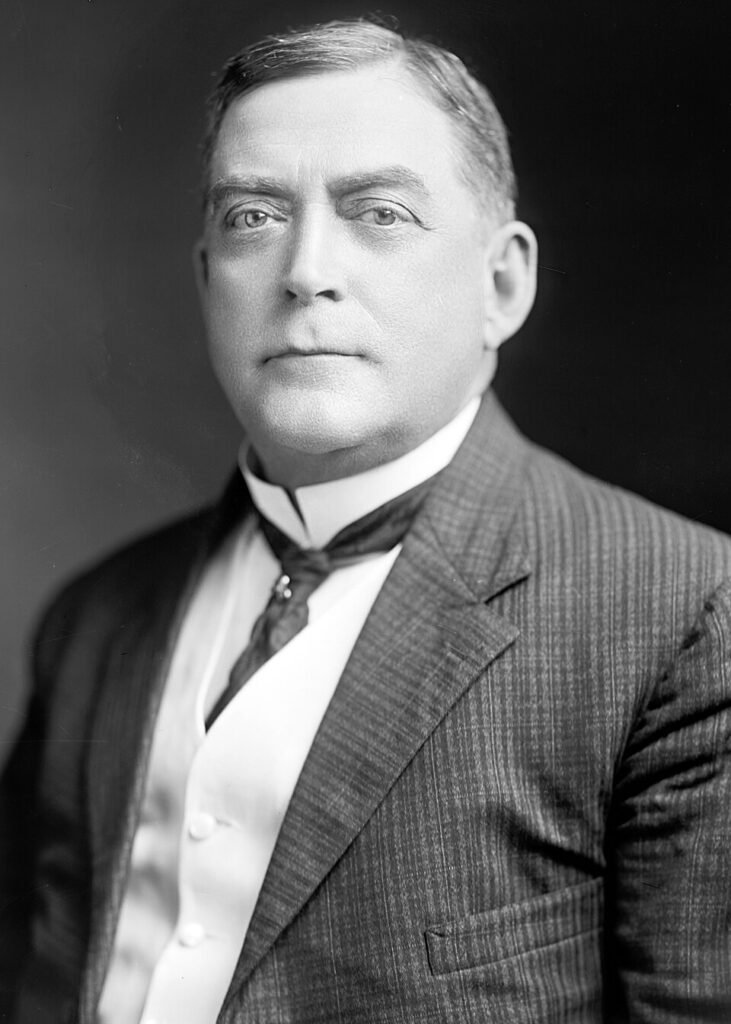
That year saw the ratification of the Sixteenth Amendment (February 3), the Seventeenth Amendment (April 8), and the signing of the Federal Reserve Act (December 23).
Individually, these measures addressed problems of the time—tariff disputes, occasional deadlocks and corruption in the selection of senators, and banking panics. But they dramatically shifted power to the federal government, creating their own lasting problems and inequalities. Taken together, the three completely transformed not only America, but the entire world.
1913 ushered in the Progressive Era in the United States, and our nation has never been the same since. Collectively, they removed key restraints that had limited federal power, constrained the money supply, and preserved a meaningful role for the states. The result was a durable shift toward centralized authority, elastic credit, and a vastly expanded capacity for federal taxation and spending.
The United States Before 1913
For more than a century after the Founding, the federal government operated under tight fiscal and structural limits. Tariffs and land sales supplied the bulk of revenue. There was no permanent peacetime income tax. The dollar remained linked to gold (and for a time silver), which constrained the ability of banks and the government to expand the money supply without corresponding reserves. From the late eighteenth century through 1912, average annual inflation stayed extremely low—near zero over long stretches once periods of deflation and inflation are taken together—preserving the purchasing power of money across generations.
Election of Senators
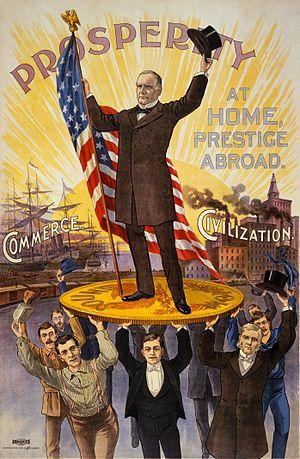
Article I, Section 3 of the original Constitution designed the Senate as a Federal chamber, with State Legislatures choosing Senators. James Madison, in Federalist No. 62, described the Senate as a body whose members would serve as “agents” of the states, providing a structural check against legislation that diminished state authority. State legislatures could, in principle, hold senators accountable to state interests rather than purely national or factional ones.
Federal civilian employment remained modest by later standards—about 380,000 in the early twentieth century—reflecting a government with limited peacetime reach.
Pre-1913 Issues
These arrangements were imperfect. Protective tariffs often favored manufacturing regions at the expense of agricultural exporters. Occasional deadlocks in state legislatures left Senate seats vacant. Poor banking practices and manipulation could lead to panics, culminating in 1907. Whether big banks deliberately engineered the Panic of 1907 to build support for a central bank is a topic for another day. What is certain is that reformers sought remedies for the system’s instability. The solutions chosen in 1913, however, went far beyond narrow technical fixes.
The Sixteenth Amendment: An Unlimited Revenue Stream
The income tax was, in significant measure, a reaction to the long-running disputes over tariffs. Tariffs had funded the federal government effectively for decades, but Congress could design them to protect one region’s industry while another region paid the cost. That pattern appeared early and often.
History of Tariff Abuse
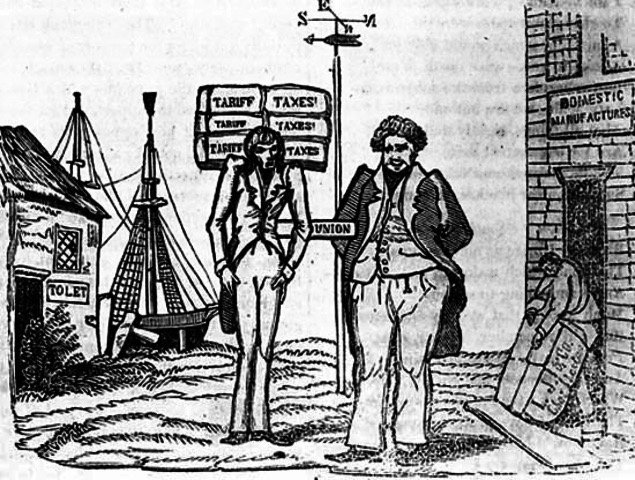
The Tariff of Abominations in 1828 raised duties on imports as high as 50 percent to shield Northern manufacturing. The South, heavily dependent on European manufactured goods and on exporting cotton to Britain, bore a disproportionate share of the burden. Contemporary estimates held that the South paid roughly 80 percent of taxes while 75 percent of revenue went to Northern infrastructure and internal improvements. Sectional resentment grew accordingly. A North Carolina congressman stated the grievance plainly in 1859: “Your manufacturers have flourished, but at our expense. Your revenues for a time increased, but we paid the tax. We are neglected—aye, more oppressed by Government.” These tariff conflicts formed one of the enduring economic components of the sectional crisis that culminated in the Civil War.
A “Free Trade” Era
There was, however, a brief interlude of relative balance. From about 1846 to 1857, under the Walker Tariff and subsequent revenue-oriented schedules, Congress set duties primarily to raise money rather than to protect domestic industry. Both Northern industry and Southern agriculture prospered. By 1856, manufacturers themselves were largely no longer demanding protective rates. That period remains one of the strongest historical demonstrations that American industry did not require permanent government favoritism to thrive.
The interlude did not last. High protective schedules returned, and the Civil War itself brought the first federal income tax—a temporary wartime measure of 3 percent on incomes between $600 and $10,000 that Congress repealed in 1872. Congress tried again in 1894 with a 2 percent tax on incomes over $4,000. The Supreme Court struck it down in Pollock v. Farmers’ Loan & Trust Co. (1895) by a 5–4 vote, holding that taxes on income from property were unapportioned direct taxes and therefore unconstitutional. An amendment became necessary.
Calls for an Income Tax
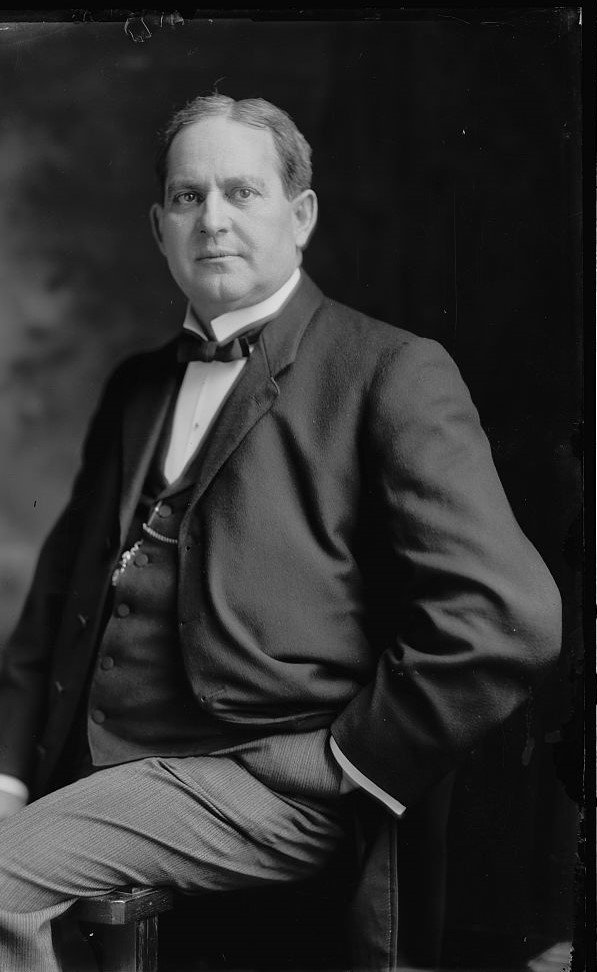
In 1909 Senator Norris Brown of Nebraska introduced the measure that became the Sixteenth Amendment. The Finance Committee rewrote the language, inserting the expansive phrase “from whatever source derived.” Nobody ever offered a clear public explanation. The final text read: “The Congress shall have power to lay and collect taxes on incomes, from whatever source derived, without apportionment among the several States, and without regard to any census or enumeration.”
Opposition
Critics immediately recognized the implications. Representative Samuel W. McCall of Massachusetts warned on the House floor that the power was “not primarily to raise money for the state, but to regulate the citizen.” Governor Willson raised similar objections, urging that limits be written into the text so the tax could not reach state officials, state bonds, or state revenues. No such limits were adopted.
Ratification of the Sixteenth Amendment
The House passed the amendment 318–14; the Senate approved it 77–0. On February 3, 1913, the Sixteenth Amendment was declared ratified—the first amendment to the Constitution in forty-three years.
Later that year the Revenue Act imposed modest initial rates: 1 percent on income above $3,000 and a top rate of 7 percent above $500,000. It touched only about 2 percent of the population and was sold as a temporary tax on the wealthy. World War I and subsequent crises expanded the rates dramatically; by World War II the top rate reached 90 percent.
What began as limited and targeted became permanent and broad. Withholding later rendered the tax largely invisible to ordinary wage earners. The federal government had acquired a direct, scalable claim on private earnings that no longer depended primarily on consumption taxes or imports.
The Seventeenth Amendment: Severing the States’ Structural Check
Sixty-four days after the Sixteenth Amendment’s ratification, the Seventeenth Amendment provided for the direct popular election of senators. The original design had been a deliberate compromise at the Constitutional Convention. Large states accepted equal representation in the Senate in exchange for proportional representation in the House. Senators answering to state legislatures were expected to defend residual state powers.
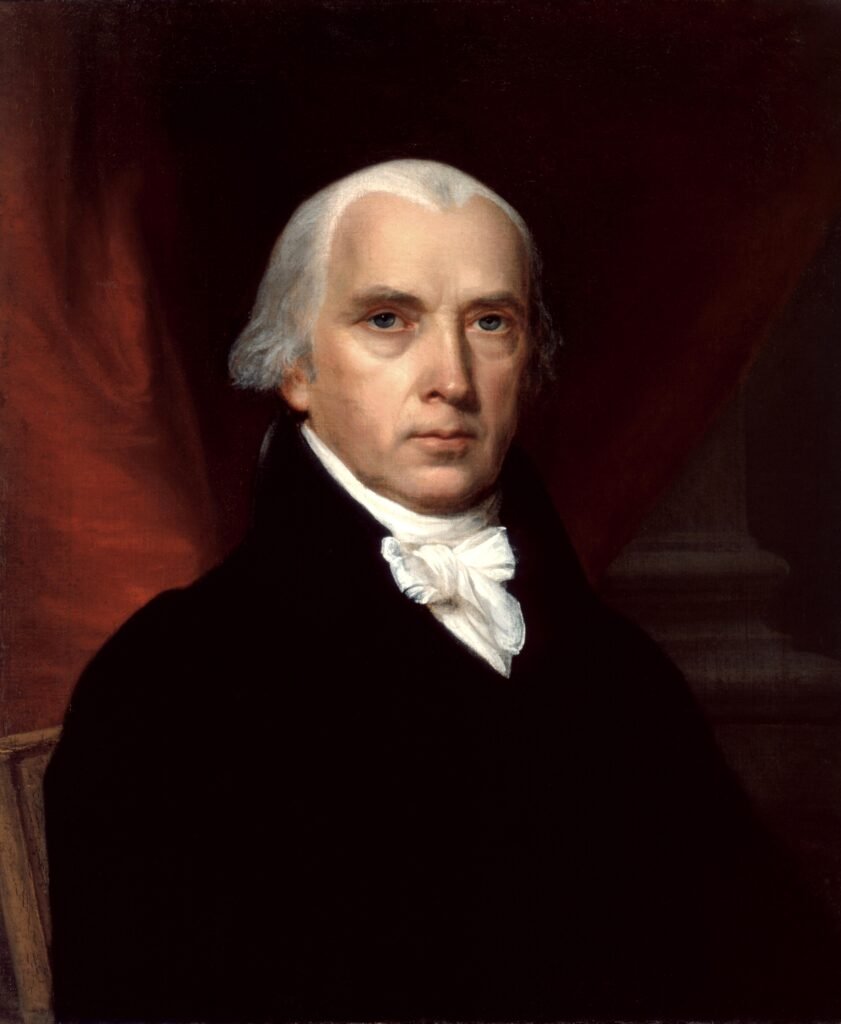
James Madison, in Federalist No. 62, described senators as agents of the states—there to protect state authority rather than simply to mirror shifting public opinion. For 120 years that structural check largely held. Any federal measure that encroached on state power had to pass through men who answered to state governments, not solely to national donors or Washington interests.
Calls for Direct Elections of Senators and Opposition
The system was imperfect. Corruption scandals occurred, and deadlocks sometimes left seats vacant for months. Narrow remedies—stronger anti-bribery statutes, fixed deadlines for legislative selection, or state-level preference systems already appearing in places such as Oregon—could have addressed the most visible defects. Progressive reformers, however, sought a more sweeping change. Contemporary critics understood the institutional stakes. The Macon Telegraph warned that when a state no longer appointed its senators, “the State as a sovereign is no more.” Senator Elihu Root cautioned that the amendment would “destroy the state governments as political entities.” Once senators answered to national electorates and national fundraising networks, the incentive to defend state authority diminished. Influence concentrated in Washington; the lobbying industry consolidated on K Street.
The Seventeenth Amendment was ratified on April 8, 1913. The last significant structural check the states held over the federal legislature was removed.
The Federal Reserve Act: Elastic Money and Centralized Credit
Americans had long been wary of central banks. The First and Second Banks of the United States faced constitutional and political opposition; Andrew Jackson’s successful campaign against the Second Bank reflected widespread suspicion of concentrated financial power. By the early twentieth century, the national banking system still lacked a reliable mechanism for expanding currency in crises or coordinating reserves.
The National Banking System
Outside the national banking system, state banks continued to grow; by 1913 they constituted roughly 71 percent of all banks in America. Many American businesses were financing expansion from profits rather than borrowing. For large lenders this was an unwelcome trend. What they sought was an elastic currency—a money supply that could expand on demand, lowering interest rates and making credit more readily available. A central bank was the instrument. Yet J.P. Morgan and other leading bankers understood that a reform movement openly led by Wall Street would face public rejection.
A carefully constructed campaign followed. Monetary conventions were organized in the Midwest and presented as spontaneous gatherings of ordinary businessmen. Academic support was cultivated through substantial funding directed to leading universities. James Laurence Laughlin, an Economics professor at the University of Chicago, became the leading academic proponent of a central bank. The Panic of 1907 supplied the necessary crisis atmosphere. Congress responded by creating the National Monetary Commission under Senator Nelson Aldrich of Rhode Island. The commission spent two years studying European central banks.
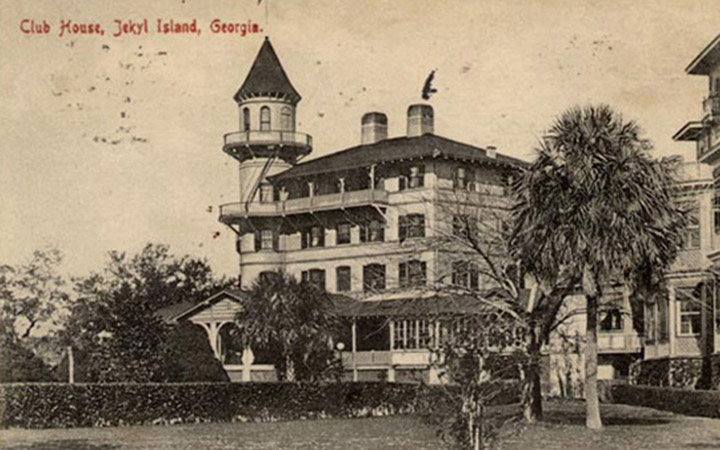
The Secret Meeting on Jekyll Island
In November 1910, six men boarded a private railcar in Hoboken, New Jersey, under assumed names and traveled to the Jekyll Island Club off the Georgia coast. They were Senator Nelson Aldrich, Assistant Secretary of the Treasury A. Piatt Andrew, Frank A. Vanderlip (president of National City Bank of New York), Henry P. Davison (senior partner at J.P. Morgan), Benjamin Strong (head of Bankers Trust), and Paul M. Warburg (partner at Kuhn, Loeb & Company and representative of the Rothschilds banking dynasty).
These men represented a significant concentration of the world’s private banking capital. Over nine days they drafted the outlines of what would become the Federal Reserve Act. Warburg had already argued publicly that the new institution must not be called a central bank; the less alarming label “reserve bank” should be used instead.
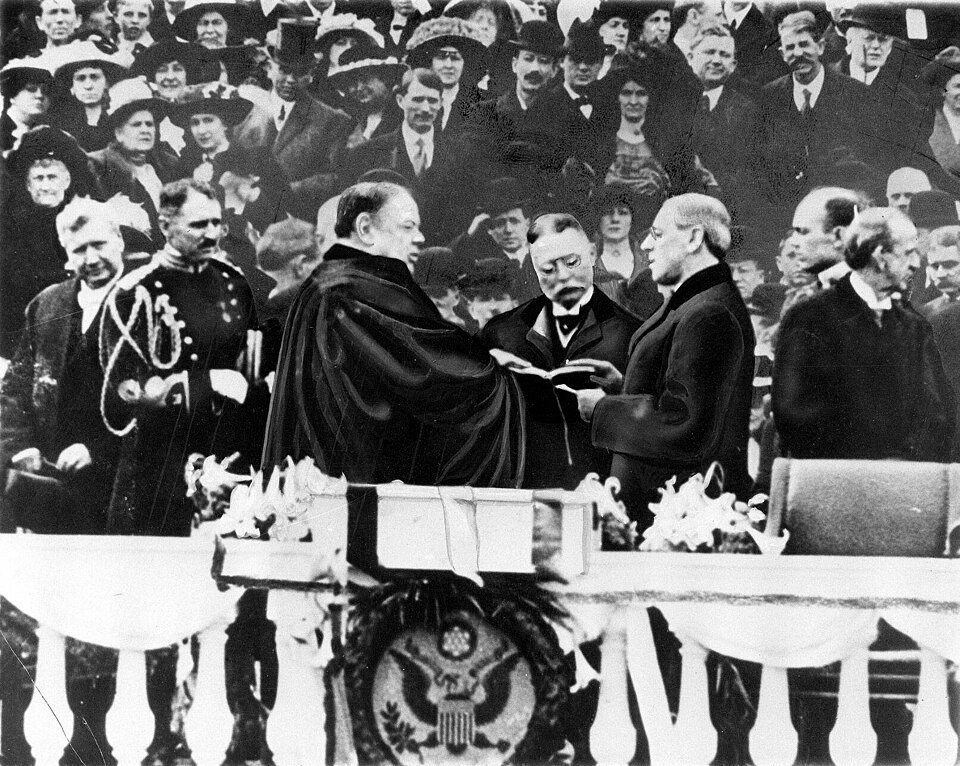
The first public version, associated with Aldrich’s name, failed. It was rewritten as the Glass-Owen bill. On December 22, 1913, while most members of Congress had left for the Christmas holidays, the Senate passed the measure. Two days later President Woodrow Wilson signed the Federal Reserve Act into law. The most powerful central banking system the United States had ever known was created largely out of public view.
The Machine Built in 1913
Taken together, the three measures of 1913 formed a mutually reinforcing system. The income tax supplied a direct and expandable revenue stream. Direct election of senators reduced the institutional voice of the states that might otherwise have resisted federal expansion. The Federal Reserve provided the means to monetize deficits and expand credit without immediate recourse to higher taxes or gold reserves. New money enters the economy first through financial channels and asset markets; the resulting inflation is felt later by wage earners and savers. The combination favors those positioned to receive the early flows of credit and to hold assets that rise with monetary expansion.
Impact on the Middle Class
Before these changes, the ordinary citizen’s interaction with the federal government was limited—primarily through the post office. Afterward, federal taxation, regulation, and monetary policy reached far more deeply into daily economic life. The purchasing power of the dollar has declined dramatically since 1913. Federal civilian employment and the scope of federal activity have grown correspondingly. These outcomes were not accidental by-products; they followed from the removal of earlier constraints.
1913 did not cause every later expansion of America’s government. Wars, depressions, and political decisions in the decades that followed also played major roles. But the core tools that made continuous growth possible—unlimited direct taxation, a Senate no longer accountable to the states, and the ability to create money at will—were all put in place that single year. Understanding those changes is essential to understanding how American government grew, and why the middle class has faced rising pressure ever since.
1913’s Impact Today
The legislation of 1913 has shaped modern America in ways most citizens never realize. Many of the problems we face today—persistent inflation, the rising cost of living, endless wars, and bureaucracy that reaches into every part of life—can be traced directly back to that year. If we look even further, the Civil War and the Fourteenth Amendment helped clear the path for what happened in 1913. That is a subject for another day.
Whether the original Constitutional design of limited federal power, hard money, and robust federalism can be recovered is a question for citizens and legislators. The record of 1913 shows how quickly structural restraints, once removed, are difficult to restore.

The income tax and Federal Reserve system created in 1913 gave the federal government the fiscal and monetary tools to finance large-scale, prolonged wars on a scale that would have been far more difficult under the earlier hard-money and limited-tax order.
References
- Federalist No. 62 (Madison).
- Pollock v. Farmers’ Loan & Trust Co., 157 U.S. 429 (1895); 158 U.S. 601 (1895).
- “Gov. A.E. Willson on the Income Tax Amendment,” The New York Times, February 26, 1911.
- U.S. Department of State, proclamation of the ratification of the Sixteenth Amendment, February 25, 1913 (and related ratification records).
- Historical Statistics of the United States and related federal employment series (Bureau of the Census / NBER compilations for early-twentieth-century civilian employment).
- Federal Reserve Bank of Minneapolis, Consumer Price Index historical series (and related long-term inflation reconstructions).
- Federal Reserve History, “The Meeting at Jekyll Island” and contemporaneous accounts of the Aldrich plan and Glass-Owen legislation.
- Congressional Record and contemporary newspaper commentary on the Seventeenth Amendment debates (including statements associated with Elihu Root).
- Revenue Act of 1913 (Underwood-Simmons Tariff Act) and subsequent rate histories.
- Secondary historical treatments of Progressive Era constitutional change, banking reform, tariff policy, and fiscal history drawing on primary legislative and archival sources.
