
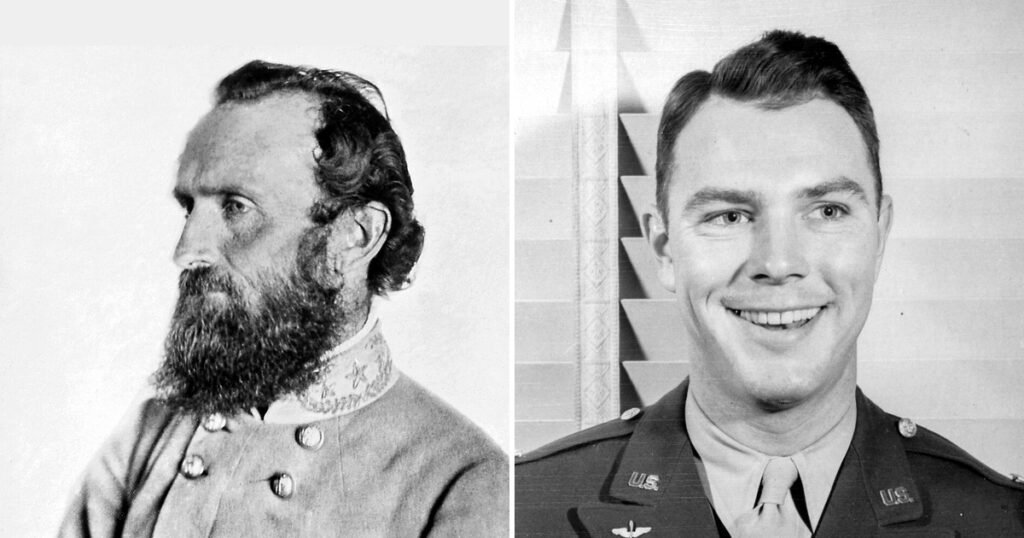
Some of the best officers who served the Confederacy left behind more than battlefield reputations and contested legacies. They left families. Decades after Appomattox, their sons, grandsons, and great-grandsons carried those family names into the United States armed forces. While they were in every American conflict, most notably, there were legendary Confederate descendants in WWII, the most destructive conflict in world history. The technology, the scale, and the flag were different. The military tradition, however, continued through bloodlines.
These men were not replicas of their ancestors. They served a reunited nation under a different constitution of arms—tanks, aircraft, and amphibious fleets instead of cavalry and infantry lines. Their stories reveal how military families transmitted habits of service across the chasm of 1865.
The Five Family Connections
The five pairings examined here are not exhaustive. Other Confederate officers left descendants who served with distinction in the world wars. These particular lines were chosen because they connect some of the most recognizable names from both eras: two of the Confederacy’s most famous commanders (Nathan Bedford Forrest and Stonewall Jackson), two of the most celebrated American figures of World War II (George S. Patton Jr. and Chesty Puller), and the Buckners, a father-and-son pair who both rose to the highest levels of command in their respective armies.
Nathan Bedford Forrest and Nathan Bedford Forrest III
Nathan Bedford Forrest’s Confederate Service
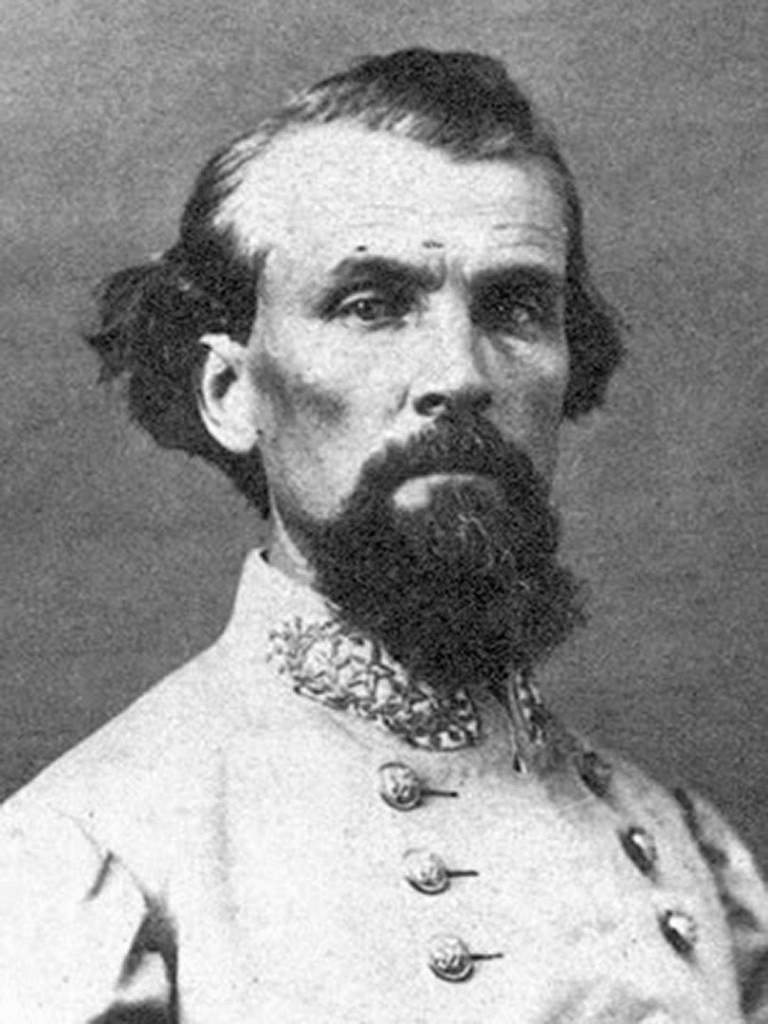
Nathan Bedford Forrest entered Confederate service with no formal military education, yet he rose from private to lieutenant general through sheer aggressive talent. He specialized in rapid movement, surprise attacks, and the disruption of Union supply lines and communications across the Western Theater. Early in the war, he escaped the surrender at Fort Donelson with his men rather than capitulate. He fought at Shiloh, conducted daring raids into Tennessee and Kentucky, and earned a reputation for appearing where the enemy least expected him.
His most impressive independent victory came at Brice’s Cross Roads, Mississippi, in June 1864, where his smaller force defeated a much larger Union command through superior use of terrain, timing, and aggressive pursuit. Forrest’s maxim—“get there first with the most men”—captured his approach. His record went well beyond the controversy of Fort Pillow. A gifted and aggressive commander, he was frequently underutilized by General Braxton Bragg and the Confederate high command in Richmond, despite repeated calls from subordinates for greater freedom of action.
Nathan Bedford Forrest III’s Service
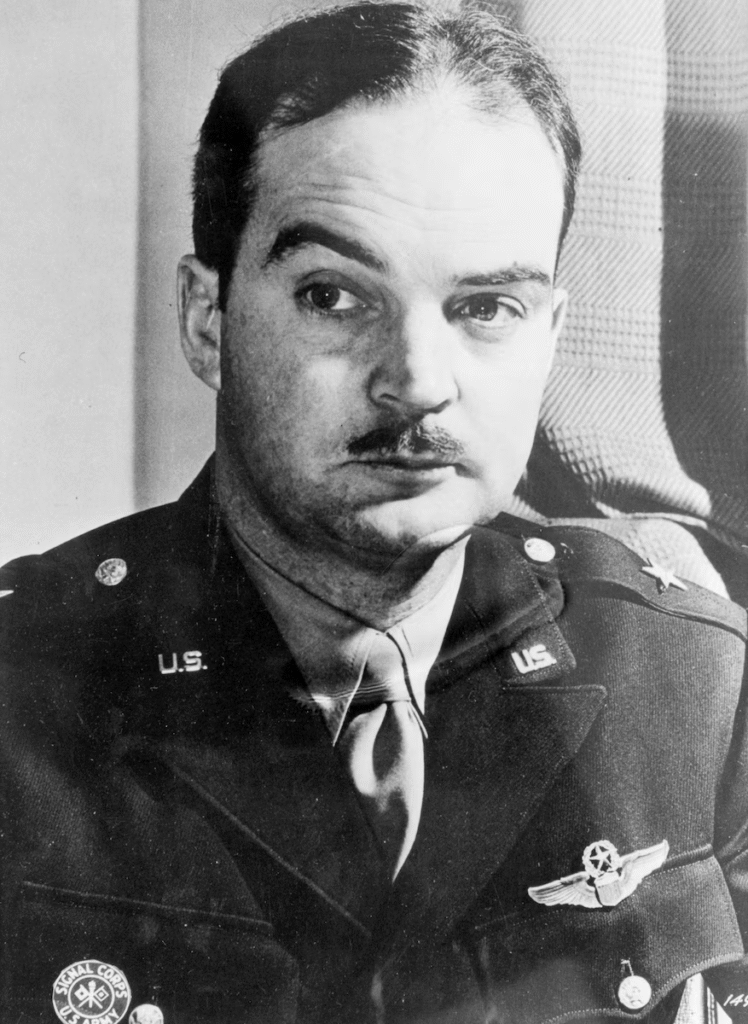
His great-grandson, Nathan Bedford Forrest III, was born in Memphis in 1905. He graduated from West Point in 1928, transferred into the Army Air Corps the next year, and advanced steadily as the United States modernized its air arm. By late 1942 he had reached the rank of brigadier general and was serving as chief of staff of the Second Air Force. In May 1943 he was assigned to the Eighth Air Force in England.
On 13 June 1943, Brigadier General Nathan Bedford Forrest III led a bomber division against the German submarine yards at Kiel — the heaviest opposition the Eighth Air Force had yet faced. He flew as an observer aboard a B-17, though he was in command of the formation. Antiaircraft fire and fighters tore through the division. His own aircraft was damaged before it reached the target. He led the formation in, finished the bomb run, and went down over the Baltic.
Other crews reported parachutes, and for a while there was hope. Forrest stayed listed as missing for more than three months, until his body washed ashore on the island of Rügen on 23 September. The Germans buried him near Wiek. He was the first American general officer killed in action in the European Theater, received the Distinguished Service Cross posthumously, and was returned home at his widow’s request and buried at Arlington in November 1949.
Many accounts say he held the bomber steady while his crew bailed out, but the DSC citation makes no such claim, and he was a general riding as an observer with a pilot and copilot aboard. Treat it as legend.
Connecting the Forrests
The great-grandson of the Confederate cavalryman who built his reputation on mobility and surprise died while helping direct American strategic bombing against Nazi Germany. The family name was the same. The army, the weapons, and the cause were entirely different.
Stonewall Jackson and Thomas Jonathan Jackson Christian Jr.
Stonewall Jackson’s Confederate Service
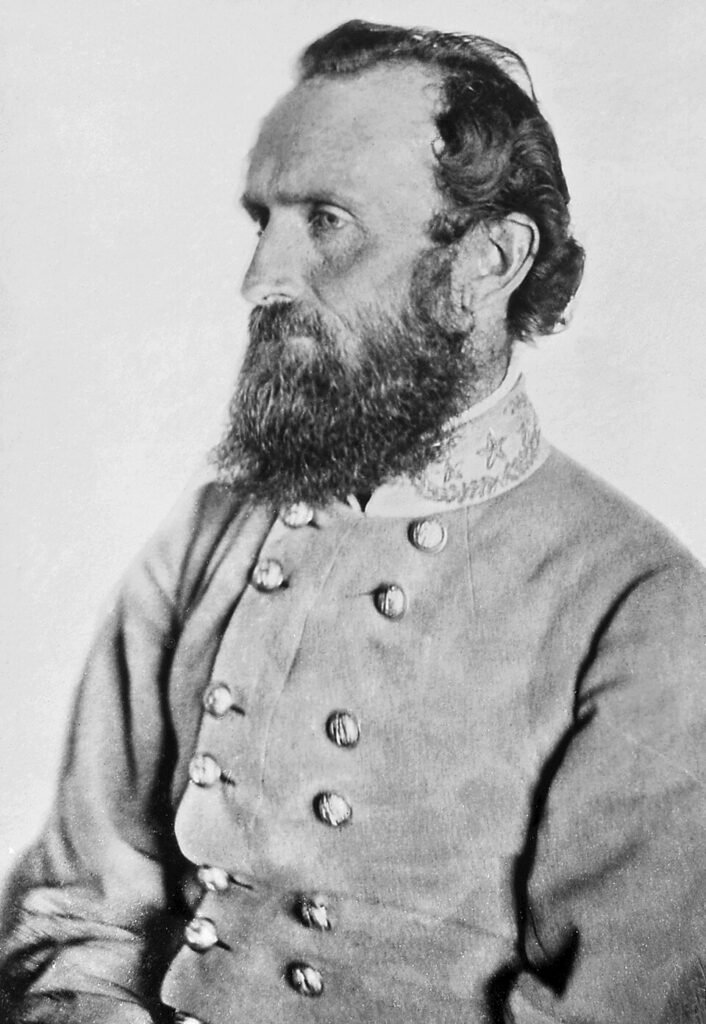
Thomas Jonathan Jackson graduated from West Point, served in the Mexican-American War, and later taught at the Virginia Military Institute. When Virginia seceded, he joined the Confederate Army. He earned the nickname “Stonewall” at First Manassas when his brigade held firm under pressure.
His 1862 Shenandoah Valley Campaign remains a classic of maneuver warfare. With a relatively small force, he marched hundreds of miles, fought six battles (Kernstown, McDowell, Front Royal, Winchester, Cross Keys, and Port Republic), and tied down far larger Union armies that might otherwise have reinforced the campaign against Richmond.
Later, at Chancellorsville in May 1863, Jackson executed a daring flank march that struck the Union right with devastating effect. That night he was mistakenly fired upon by his own troops, wounded, and had his left arm amputated. He died of pneumonia several days later at the age of thirty-nine. Arguably, losing Jackson was the worst loss the Confederacy suffered.
Thomas Jonathan Jackson Christian Jr.’s Military Service
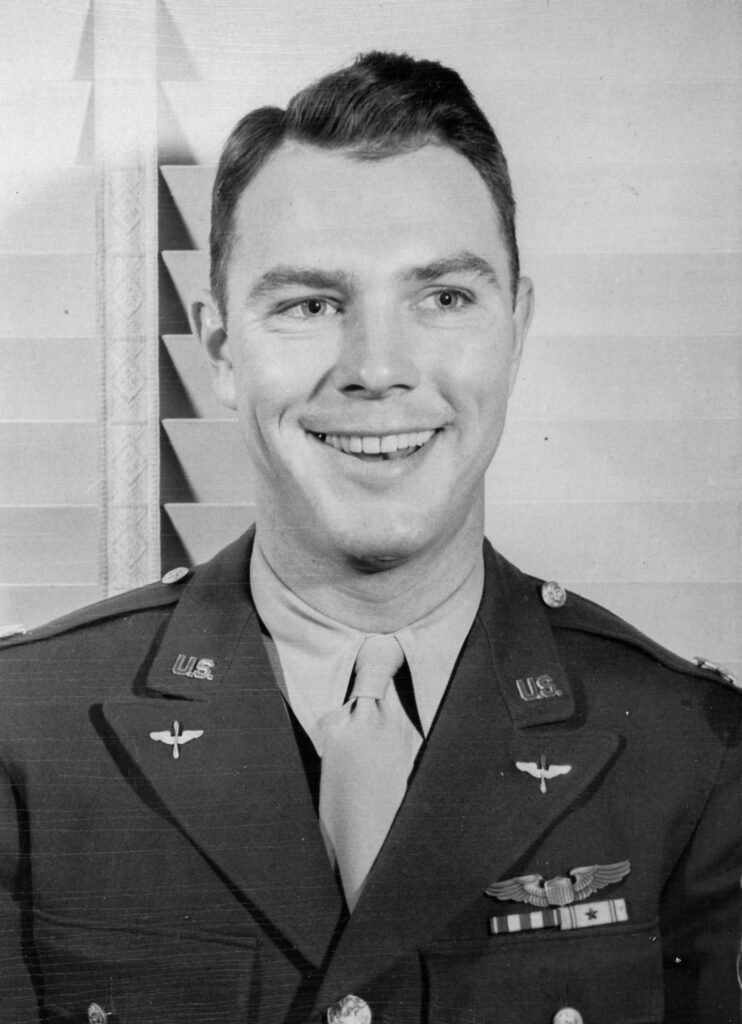
Jackson’s only surviving child, Julia, married into the Christian family. Their grandson, Thomas Jonathan Jackson Christian Jr., was Stonewall Jackson’s great-grandson. Born in 1915, Christian graduated from West Point in 1939. He began in Field Artillery, transferred to the Army Air Corps, and was serving with the 19th Bombardment Group in the Philippines when the Pacific war began.
He flew combat missions from Guadalcanal with the 67th Pursuit Squadron and received the Silver Star. Returning to the United States, he helped form and then commanded the 361st Fighter Group (the “Yellowjackets”), which deployed to England in late 1943 as part of the Eighth Air Force. Christian flew more than seventy combat missions in P-47 Thunderbolts and later P-51 Mustangs. He named successive aircraft after his infant daughter, Lou Ellen; the last was Lou IV.
On 12 August 1944, while leading a dive-bombing attack on rail yards near Arras, France, he was shot down and killed. He was twenty-eight. His body was never recovered.
Connecting the Generations
The great-grandson of the commander who once moved infantry rapidly through the Shenandoah Valley and struck from unexpected directions died leading American fighter aircraft over occupied France. The technology and the battlefield had changed completely; the family connection remained visible in the name and the record of service.
The Buckners
Simon Bolivar Buckner Sr.’s Confederate Service
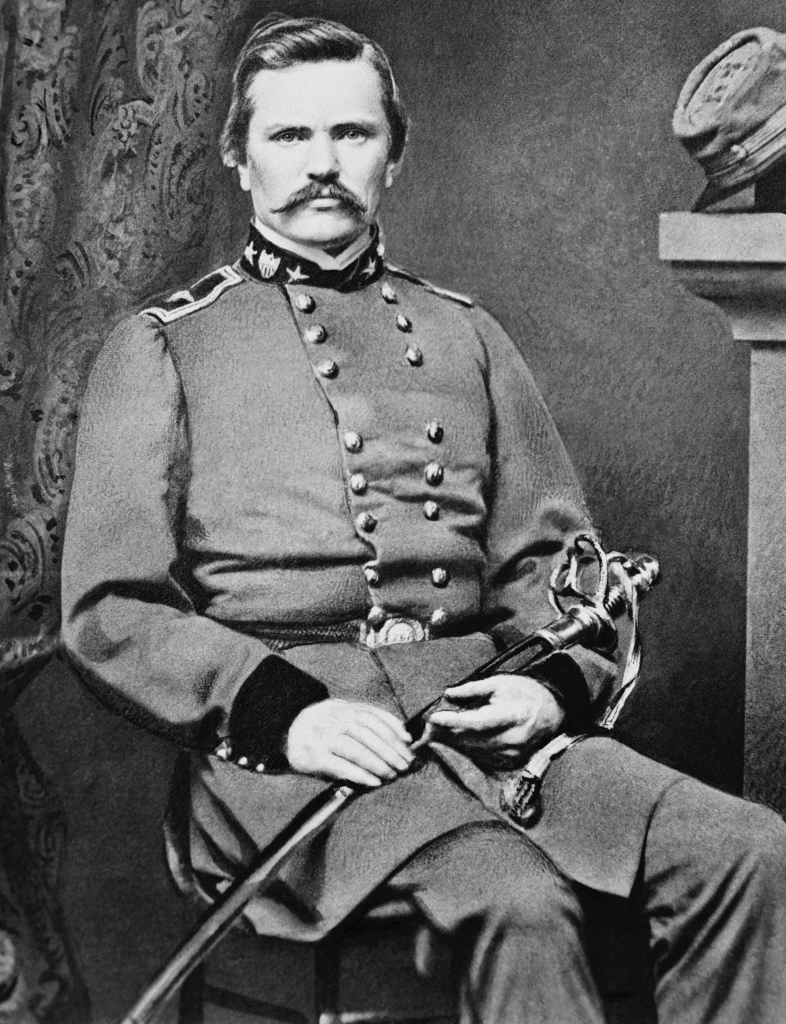
Simon Bolivar Buckner graduated from West Point and served in the Mexican-American War before resigning from the U.S. Army. When the Civil War began, he became a Confederate brigadier general. In February 1862, he was left in command at Fort Donelson after senior officers fled. He negotiated the surrender of the garrison to Ulysses S. Grant under the terms of “unconditional surrender,” becoming the first Confederate general to surrender an army.
After a prisoner exchange, he returned to service, fought at Perryville and Chickamauga, commanded in East Tennessee, and later served in the Trans-Mississippi Department. He rose to lieutenant general and was among the last senior Confederate officers to surrender in 1865. After the war, he entered politics and served as governor of Kentucky from 1887 to 1891.
Simon Bolivar Buckner Jr.’s Service
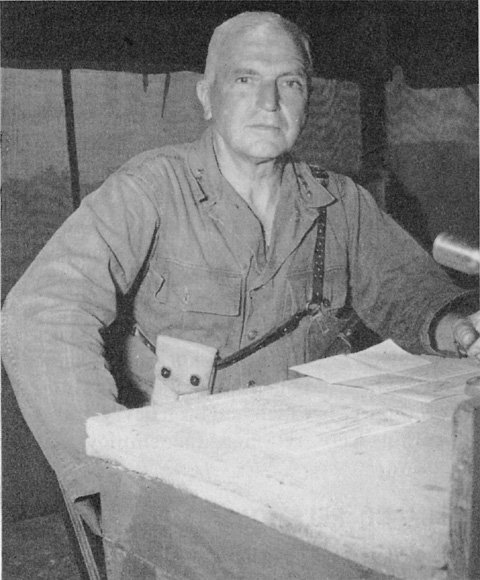
His only son, Simon Bolivar Buckner Jr., graduated from West Point in 1908 and spent more than three decades in the regular Army. During World War II he commanded the Alaska Defense Command, overseeing operations in the difficult Aleutian Islands after Japanese forces occupied Attu and Kiska. In 1944 he was given command of the newly formed U.S. Tenth Army for the invasion of Okinawa.
Okinawa was one of the bloodiest campaigns of the Pacific war. Japanese defenders used caves, tunnels, reverse-slope positions, and massed kamikaze attacks. Buckner regularly visited forward areas. On 18 June 1945, while observing the fighting from a forward post, he was struck by fragments from a Japanese artillery shell and died. He was the highest-ranking American officer killed by enemy fire during the war and was posthumously promoted to four-star general.
Connecting the Buckners
The son of the officer who surrendered a Confederate army at Fort Donelson died commanding a U.S. army in the last major land battle of the Pacific. Both men reached the highest levels of command available to them in their respective wars.
George Smith Patton Sr. and George S. Patton Jr.
The elder Patton’s Confederate Service
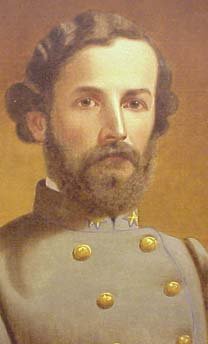
George Smith Patton graduated from the Virginia Military Institute in 1852, second in his class, and practiced law in what is now West Virginia. When the war began, he raised a company that became part of the 22nd Virginia Infantry and rose to colonel of the regiment. He was wounded at Scary Creek in 1861 and again at Giles Court House in 1862.
In 1864, his brigade fought in the Shenandoah Valley under Jubal Early. At the Third Battle of Winchester on 19 September 1864, while trying to rally his men during a Union cavalry attack, Patton was struck in the hip by a fragment from an exploding shell. He refused amputation, developed gangrene, and died on 25 September at the age of thirty-one. He never saw the end of the war or the military career of the grandson who would make the family name famous.
George S. Patton Jr.’s WWII Service
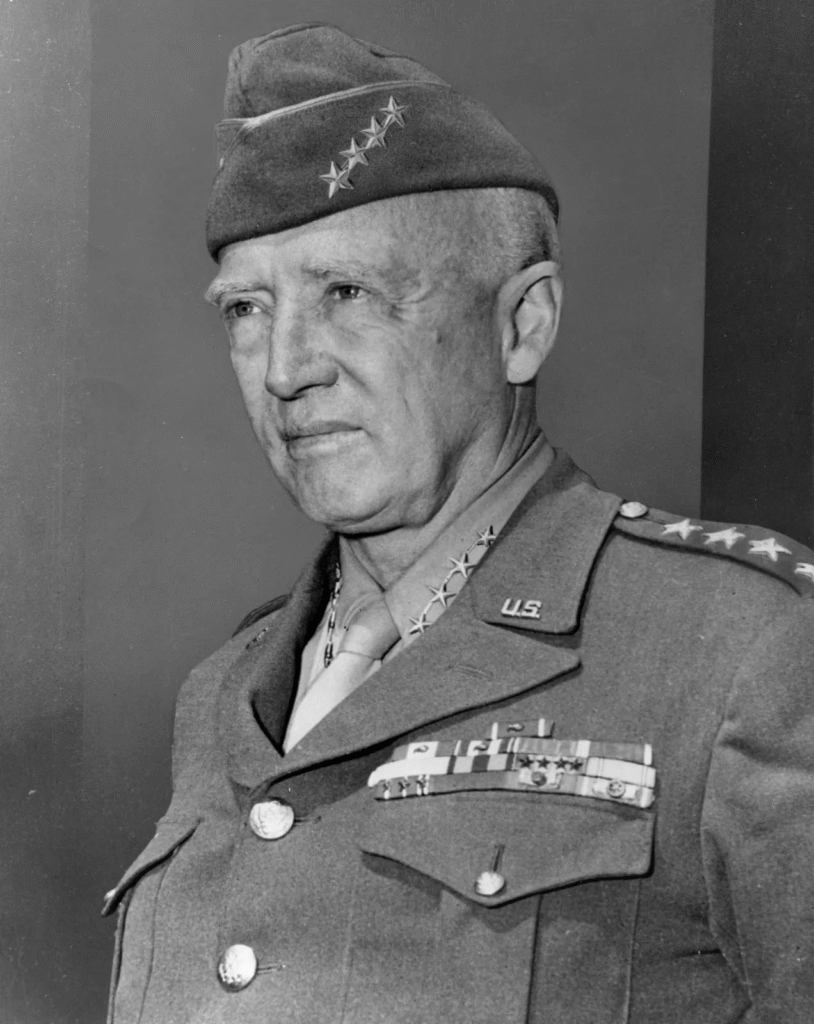
His grandson, George S. Patton Jr., was born in 1885 into a household steeped in stories of Confederate service and Virginia military tradition. After a year at VMI he entered West Point, graduated in 1909, and spent the interwar years developing armored doctrine and studying military history. In World War II he commanded American forces in North Africa and Sicily. After the Normandy breakout, he led the U.S. Third Army in a rapid advance across France. During the Battle of the Bulge, his forces turned north and helped relieve the surrounded garrison at Bastogne.
Patton was a gifted battlefield commander but was also known to be abrasive, impatient with higher headquarters, and prone to errors of judgment in his treatment of soldiers and in his public statements. Patton had his flaws. All great men do. But that should not detract from his operational success and tactical brilliance.
Connecting the Pattons
The grandson of a Confederate colonel who died rallying troops in the Shenandoah Valley became one of the principal American field commanders in the European Theater. An inherited surname and a family culture of military service. The younger Patton grew up fascinated by the stories of his grandfather. It would help shape the general he became.
John William Puller and Lewis B. “Chesty” Puller
John William Puller’s Confederate Service
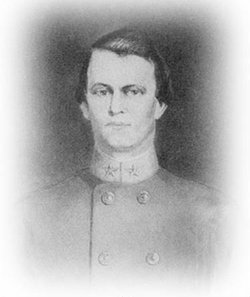
John William Puller served as a major in the 5th Virginia Cavalry under J.E.B. Stuart. On 17 March 1863, at the Battle of Kelly’s Ford—the first large-scale all-cavalry engagement of the war in the East—he was killed while attempting to rally his men under fire. Official Confederate reports listed him among the gallant officers lost that day. Other than that, not much is known about the elder Puller’s military service during the Civil War.
Lewis B. “Chesty” Puller’s Marine Corps Service
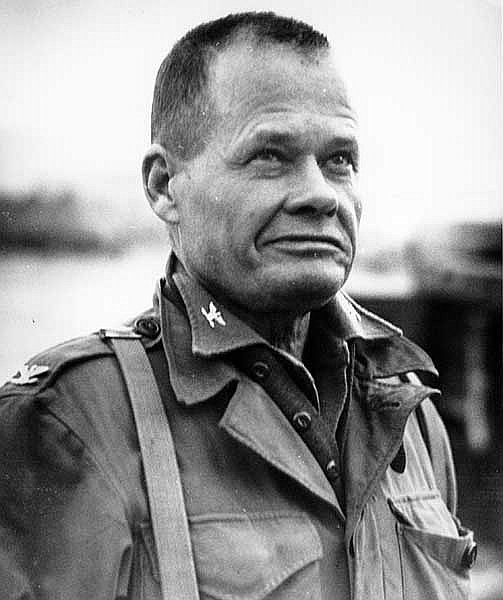
His grandson, Lewis Burwell Puller, was born in 1898 in West Point, Virginia, and grew up on family stories of the war. After a year at VMI, he enlisted in the Marine Corps in 1918. He served in Haiti and Nicaragua, earning two Navy Crosses for actions against guerrillas. Chesty would go on to be arguably the most famous Marine in American History.
In World War II, he commanded the 1st Battalion, 7th Marines at Guadalcanal, where he received a third Navy Cross for holding a critical sector during the defense of Henderson Field against repeated Japanese assaults. As executive officer and later commander of the 1st Marines, he earned a fourth Navy Cross at Cape Gloucester and led the regiment at the brutal fighting on Peleliu. In Korea he earned a fifth Navy Cross while commanding the 1st Marine Regiment at Inchon and the Chosin Reservoir. He remains the most decorated Marine in the history of the Corps.
Connecting the Generations
The grandson of a Confederate cavalry major killed under J.E.B. Stuart became the living embodiment of the modern Marine Corps. He never denied the family past; he simply carried its expectation of aggressive leadership into a different uniform and a different century.
Continuity and Transformation
These five lines—Forrest, Jackson, Buckner, Patton, and Puller—illustrate a larger pattern. Military families often transmit a culture of service that outlasts the political causes of any single generation. The descendants did not fight for the Confederacy. They fought under the flag their ancestors had opposed. Yet they inherited names, stories, and expectations of competence under fire.
The Civil War did not erase Southern military talent from the American officer corps. It redirected it. Horses gave way to tanks and fighters; river lines and mountain gaps gave way to the Atlantic, the Pacific, and the skies over Germany and Japan. The men who carried those famous surnames into World War II proved that family memory and national service could coexist—and that the martial legacy of the Confederacy did not end at Appomattox. It continued, transformed, under a different flag.
About the Author
Ryan Sahlberg is a retired Marine Corps Infantry Officer. He graduated from The Citadel in 2003, majoring in History. Ryan has spent his entire adult life reading and studying American History and Military History. Marine Corps History has also been a focus for him throughout his career.

Thanks for writing this. Didn’t know about Chesty Puller’s history nor that WW2 Gen Buckner was the son of CSA Gen Buckner
Thanks for reading. Its an interesting topic, isnt’ it? I find it fascinating.
Thanks for writing this. Didn’t know about Chesty Puller’s history nor that WW2 Gen Buckner was the son of CSA Gen Buckner