
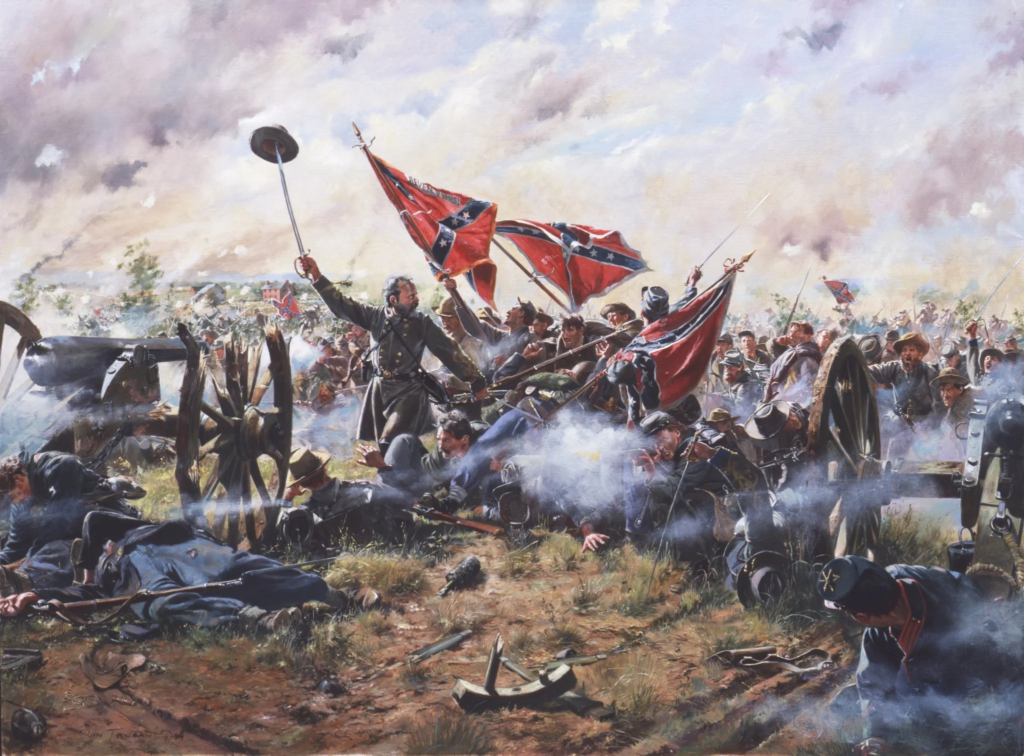
On the afternoon of July 3, 1863, more than 12,500 Confederate soldiers stepped out of the treeline on Seminary Ridge near Gettysburg, Pennsylvania. Arrayed in disciplined lines with bayonets fixed and battle flags flying, they advanced across nearly three-quarters of a mile of open farmland toward the Union center on Cemetery Ridge. Fences, the Emmitsburg Road, and a deadly combination of artillery and rifle fire awaited them. This assault became known as Pickett’s Charge.
The assault on Cemetery Ridge represented Robert E. Lee’s attempt to shatter the Union center, split the Army of the Potomac, and potentially decide the Battle of Gettysburg and the Civil War in a single bold stroke. While it is often called the “High Water Mark of the Confederacy,” the charge has been debated for generations as either a courageous necessity born of strategic desperation or one of the greatest tactical blunders in American military history.
Background: Why Lee Invaded the North
By the summer of 1863, the American Civil War had raged for more than two years. Meanwhile, the Confederacy was fighting for survival, but Virginia—the heart of the South—had been devastated by Union armies. Farms were destroyed, towns burned, and resources depleted.
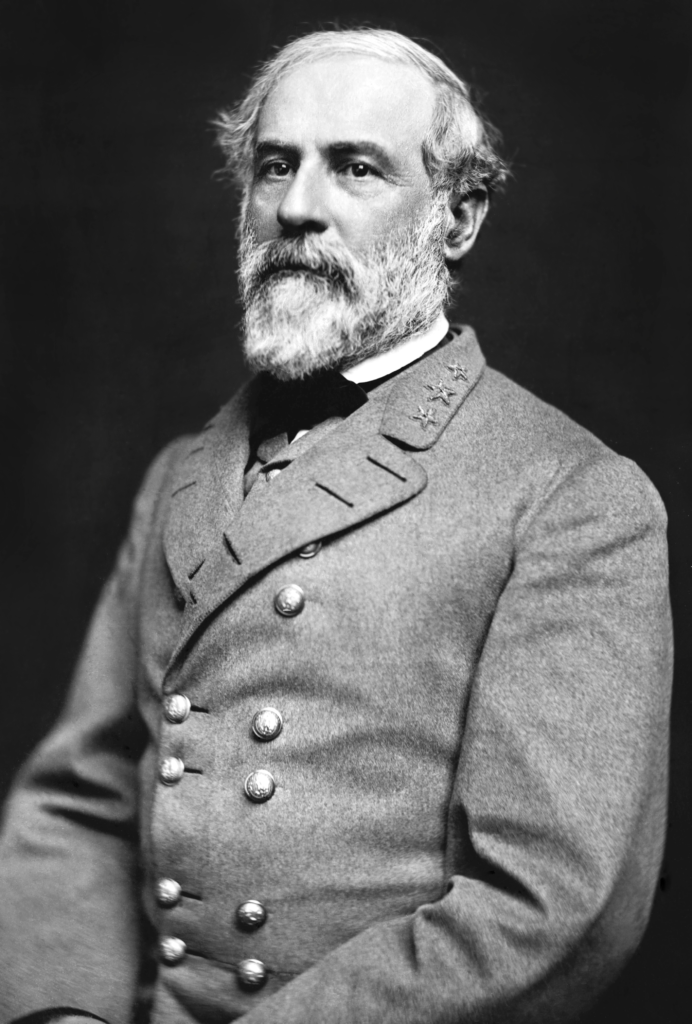
Robert E. Lee, commanding the Army of Northern Virginia, had just achieved a stunning victory at Chancellorsville in May 1863. Outnumbered more than two to one, he split his army, flanked Maj. Gen. Joseph Hooker’s force, and drove it from the field in what many regard as his greatest tactical masterpiece. The triumph, however, came at an irreplaceable cost: the mortal wounding of Lt. Gen. Thomas “Stonewall” Jackson by friendly fire on the night of May 2. Jackson died eight days later. Lee later remarked that he had lost his “right arm.”
Lee’s Dilemma
Lee understood that the South could not win a prolonged war of attrition. The Confederacy was an agrarian society with few factories, a sparse free population, limited railroads, and an economy built largely on cotton. The North possessed booming industry, a much larger population continually augmented by immigration, superior manufacturing capacity, and growing naval power that enforced a tightening blockade. Every month of continued fighting widened the disparity in men, material, and political endurance.
Lee’s answer was to take the war north. In June 1863, he led the Army of Northern Virginia into Pennsylvania, intending to live off Northern farms, threaten cities such as Washington or Philadelphia, boost Southern morale, and land a decisive blow that might shatter Northern will to continue the war—or even draw Britain or France into recognition of the Confederacy.
By late June the Confederate army was spread across Pennsylvania. Almost by accident, the two armies collided at the crossroads town of Gettysburg on July 1.
Subscribe to continue reading
Become a subscriber to unlock the complete article and all subscriber-only posts.
After login or registration, you will return to this article to continue subscribing.
